Daughter’s dengue deteriorated rapidly without warning signs, physician parents realise too late
Whenever patients sought advice on dengue, physician Muhammad Omar Faruq Raihan would instruct them to monitor closely for red flags: severe abdominal pain, persistent vomiting, or bleeding in vomit and stool. Yet, when his own daughter, Famiya Mashnur Rumaisa, contracted the virus, none of these typical warning signs manifested. Before her parents could even register that her condition was turning critical, the young girl passed away.
Famiya Mashnur was 8 years, 10 months, and 14 days old. She was a Class-III (English version) student at the Banasree branch of Ideal School in the capital. Her fever spiked on the morning of 29 September; within three days, on the afternoon of 1 October, she breathed her last.
Muhammad Omar Faruq Raihan works as an anaesthesia and ICU specialist at the National Institute of Burn and Plastic Surgery. His wife, Farzana Sultana, is an ophthalmologist at Vision Eye Hospital in Dhaka. Famiya was the couple’s elder daughter.
She had meticulously planned her upcoming birthday on 17 November—a trip to Cox’s Bazar to cut a cake and spend quality time with her parents and younger sister. She went shopping with her mother and bought matching outfits for herself and her younger sister.
“After she was found dengue positive in a test, there was no sign whatsoever that her condition was deteriorating,” physician Omar Faruq told Prothom Alo. “We simply couldn’t gauge it. Upon reaching Square Hospital, she couldn’t even survive half an hour in the Paediatric Intensive Care Unit (PICU) before passing away.”
The physician couple’s younger daughter, Farjin Mahnur Warisa, aged 5 years and 8 months, was constantly attached to her elder sister, who often bathed and took care of her. Unaware of the permanence of death, Farjin has been told that her sister—whom she affectionately called ‘Iya’—has gone to God, and she has processed the loss in her own innocent way.
Omar Faruq and Farzana Sultana recounted that on the night of Sunday, 27 September, Famiya complained of feeling feverish. Her temperature rose the following morning, preventing her from attending school. On Tuesday, diagnostic tests confirmed she was dengue-positive. An intravenous cannula was inserted at home to administer saline. As Omar Faruq had to travel outside Dhaka for urgent professional duties, no further blood tests were performed on Wednesday.
On Thursday morning, Famiya mentioned feeling unwell. Soon after, she suffered a sudden seizure and was rushed to a local hospital in Banasree. Lacking PICU facilities, she had to be transferred across the city to Square Hospital. Traffic delays compounded the critical situation; by the time they reached Square Hospital, her condition had severely worsened, and she began bleeding from her nose. Shortly after, she succumbed to the illness. Prior to this rapid decline, she had been alert, conversing with family members, and drinking coconut water sent by her grandmother.
Her mother, Farzana Sultana, now paces through their home, surrounded by memories of a daughter who loved organising her keepsakes. The grieving parents are attempting to find solace in the thought that her lifespan was destined to be short. Heartbreaking regrets linger—the girl had asked for mango juice the day before her death but could not drink it, and her birthday dress remains untouched in the wardrobe.
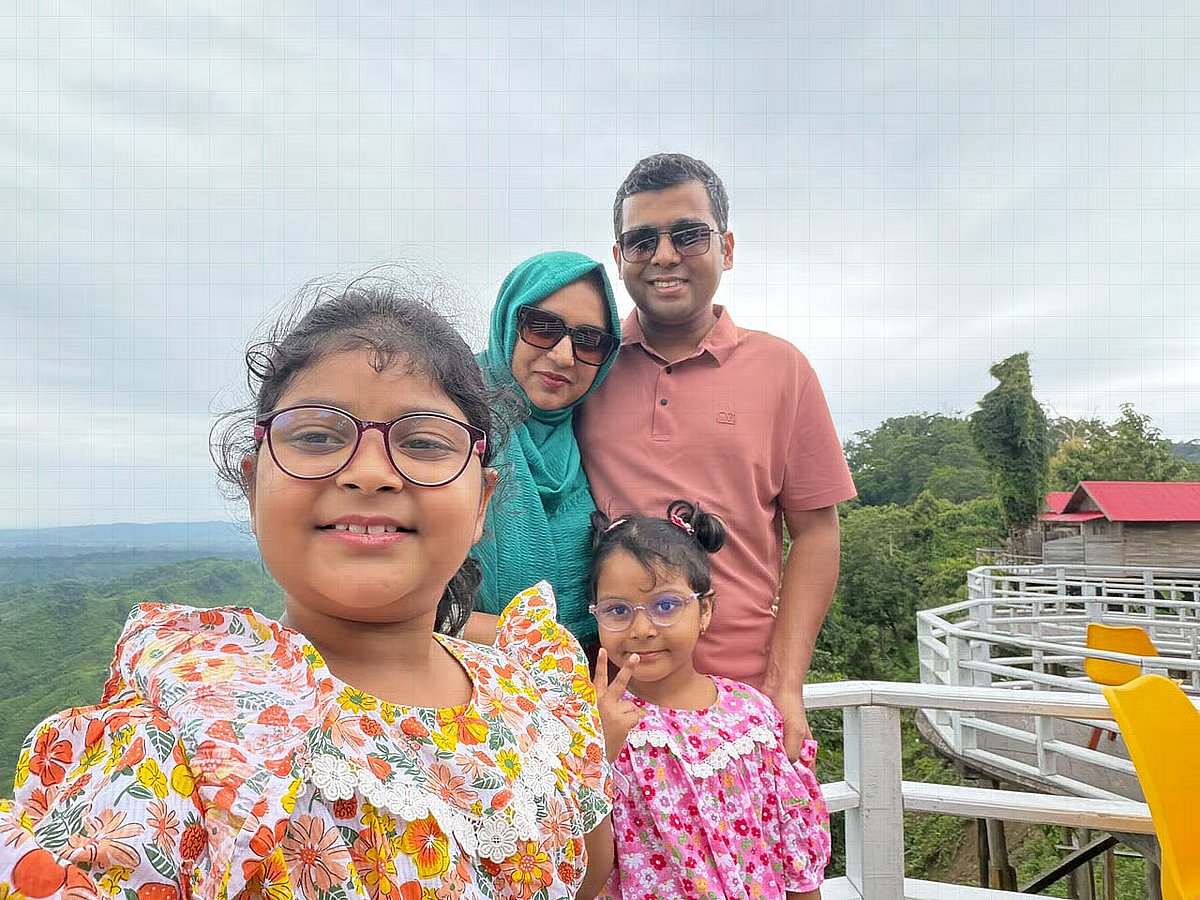
They cannot bring themselves to forget such memories: at this time last year, the whole family travelled together for Hajj, while the daughter took her last selfie with her parents and sister during a trip to Sajek in July.
Omar Faruq recalled his daughter’s sensitive nature, noting how she felt embarrassed when her mother changed her clothes in front of a domestic worker after a bout of vomiting.
He added that Famiya’s mother had also contracted dengue shortly before Famiya fell ill, but recovered with home care and IV saline. Unfortunately, those same interventions proved ineffective for their daughter.
Omar Faruq Raihan reflected that the outcome might have been different if adequate PICU facilities were available across hospitals, if public healthcare services were more robust, and if local authorities had initiated effective Aedes mosquito control measures ahead of the dengue season.
Pointing to an open waste dump near his Banasree residence where stagnant water accumulates, he noted that urban sanitation oversight remains severely neglected.
A specialist who daily treats severely burned children at the Burn Institute, Omar Faruq Raihan admitted he was always terrified that his daughter might hurt herself in the kitchen and repeatedly urged her to stay away from it. “In the end,” the grieving father lamented, “she suffered and died from the bite of a tiny mosquito.”