At least 311 members of various banned organisations are currently fugitives. They are accused in cases related to extremist activities.
In addition, on 5 August 2024, the day of the mass uprising, nine convicts serving sentences in extremist-related cases escaped from Kashimpur High Security Central Prison in Gazipur.
Security agencies remain concerned about the whereabouts and activities of these absconding extremists.
The figures come from data updated through April by the Police's specialised Anti-Terrorism Unit (ATU). According to the information, the fugitives include 185 members of Jama'atul Mujahideen Bangladesh (JMB), 83 members of Ansar Al Islam, 16 members of Harkat-ul-Jihad al-Islami Bangladesh (HuJI-B), 16 members of Neo-JMB, nine members of Allahar Dal, one member of Jama'atul Ansar Fil Hindal Sharqiya, and one member of Imam Mahmuder Kafela.
Separately, the ATU data show that 59 members of the banned organisation Hizb ut-Tahrir are also absconding in connection with various cases.
Security analysts believe that escaped prisoners, individuals who secured bail and went into hiding, and other fugitive extremists wanted in criminal cases all pose potential security risks.
Most of the firearms looted from police facilities and prisons during the July 2024 mass uprising have yet to be recovered. Given this situation, they say close surveillance of fugitive extremists is essential, as they could attempt to reorganise if given the opportunity.
When asked on 4 April whether the fugitives posed any security threat, Mohammad Rezaul Karim, additional inspector general of police and head of the ATU, declined to comment directly.
However, he said, "There is no place for extremism in Bangladesh. The peace-loving people of this country do not support extremism."
On the evening of 5 August 2024, attackers stormed Kashimpur High Security Central Prison.
They broke through the prison's main gate and set fire to a storage facility on the third floor. During the attack, 202 inmates, including nine prisoners convicted in extremist-related cases, escaped.
According to ATU sources, law enforcement arrested 2,143 members of banned extremist organisations across the country in various cases between 2021 and 2024.
Between 2021 and December 2025, 1,611 detainees secured bail and were released from prison over a five-year period. Of those, 380 were released on bail after the mass uprising on 5 August 2024. At present, 162 extremist suspects and convicts remain in prison.
ATU data further show that 59 death-row inmates, 46 prisoners serving life sentences, and 25 individuals serving fixed-term sentences for involvement with extremist organisations are currently held in 16 prisons across the country.
In addition, 32 other imprisoned suspects are still awaiting the conclusion of their trials.
Police sources said that several high-profile extremist leaders were among those released on bail following the July 2024 mass uprising. Jasim Uddin Rahmani was released on bail on 20 October last year.
Court sources said that two additional cases against him remain under trial—one before the Anti-Terrorism Tribunal in Dhaka and the other before the Cyber Tribunal.
Police have identified him in the case as a leader of Ansarullah Bangla Team. Since his release, however, he has repeatedly claimed in public speeches that he is not a leader of the organisation.
According to the information, the fugitives include 185 members of Jama'atul Mujahideen Bangladesh (JMB), 83 members of Ansar Al Islam, 16 members of Harkat-ul-Jihad al-Islami Bangladesh (HuJI-B), 16 members of Neo-JMB, nine members of Allahar Dal, one member of Jama'atul Ansar Fil Hindal Sharqiya, and one member of Imam Mahmuder Kafela.
Maulana Saidur Rahman, chief of the banned Jama'atul Mujahideen Bangladesh (JMB), was released on bail from Kashimpur-2 Central Prison on 21 March.
In addition, Sheikh Al Amin, whom police consider the principal figure behind an explosion at a women's madrasa in Keraniganj last December, and several of his associates were also released on bail after 5 August 2024. Following the Keraniganj incident, police rearrested them.
Law enforcement officials said that extremist activities created serious security concerns in Bangladesh between 2013 and 2016.
During that period, extremists carried out a series of murders targeting bloggers, writers, publishers, teachers and foreign nationals.
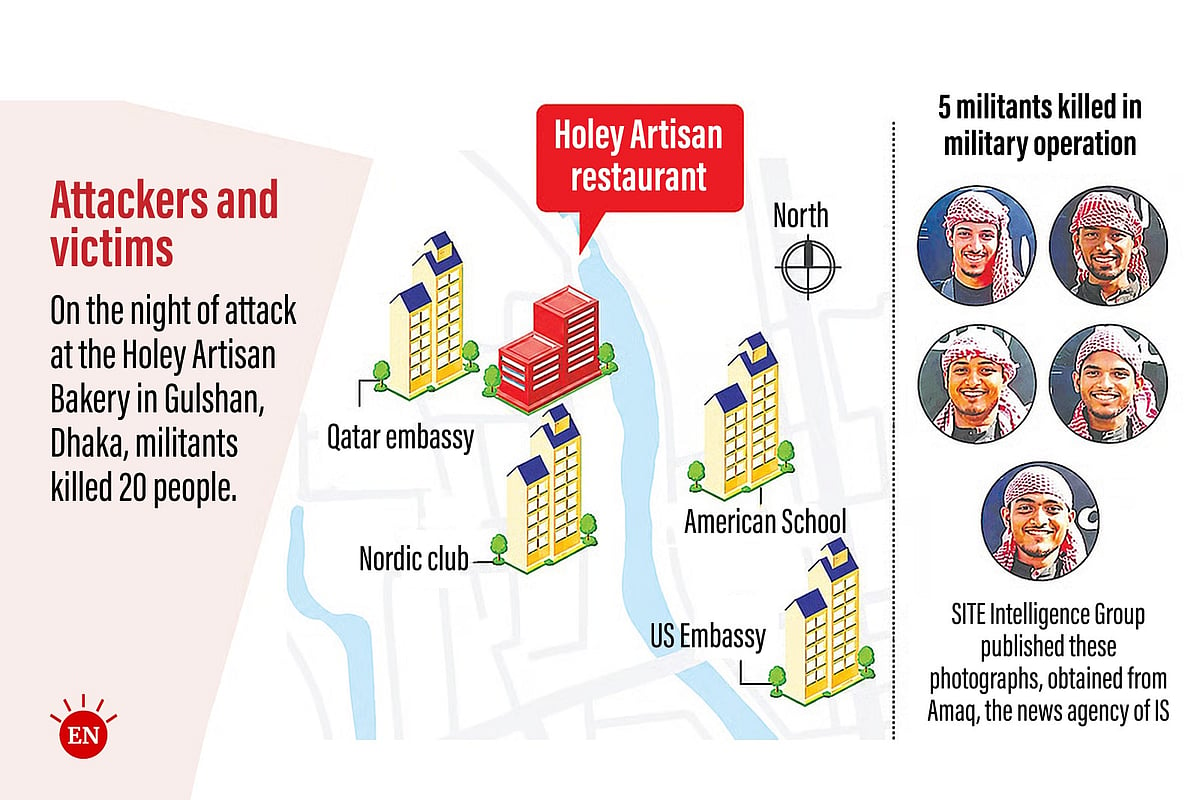
In 2016, militants launched the deadly attack on the Holey Artisan Bakery in Gulshan, Dhaka. Earlier, in 2005, Jama'atul Mujahideen Bangladesh (JMB) detonated 500 bombs simultaneously across 63 districts.
Officials familiar with the issue said that past experience leaves no room for relaxing surveillance of fugitive extremists or those released on bail.
In particular, they stressed that identifying the whereabouts of escaped prisoners, individuals who disappeared after obtaining bail, and suspects who remain at large is vital to maintaining national security.