Environment
Bangladesh to withdraw from global treaty on shipbreaking waste management
In 1986, a ship named Pelican, loaded with fly ash, set sail from the port of Philadelphia in the United States. The ship drifted in the sea for two years.
No country allowed it to anchor because it carried 14,000 tonnes of polluted ash harmful to the environment and human health.
On a morning in October 1988, the captain of the ship announced that they had dumped the ash off the coast of a country, but he did not mention the name of the country. It was later revealed that the country was Haiti.
This led to a storm of protests worldwide. The detailed account of this incident is documented in a report titled "Planet of the Year: A Sinking Mess" on the 2 January 1989 issue of the world-renowned Time Magazine.
Facing global protests, on 22 March 1989, the United Nations initiated the ‘Basel Convention’ to regulate waste movement from one country to another. Its full name is ‘The Basel Convention on the Control of Transboundary Movements of Hazardous Wastes and Their Disposal. ’ A total of 170 countries, including Bangladesh, have signed the convention.
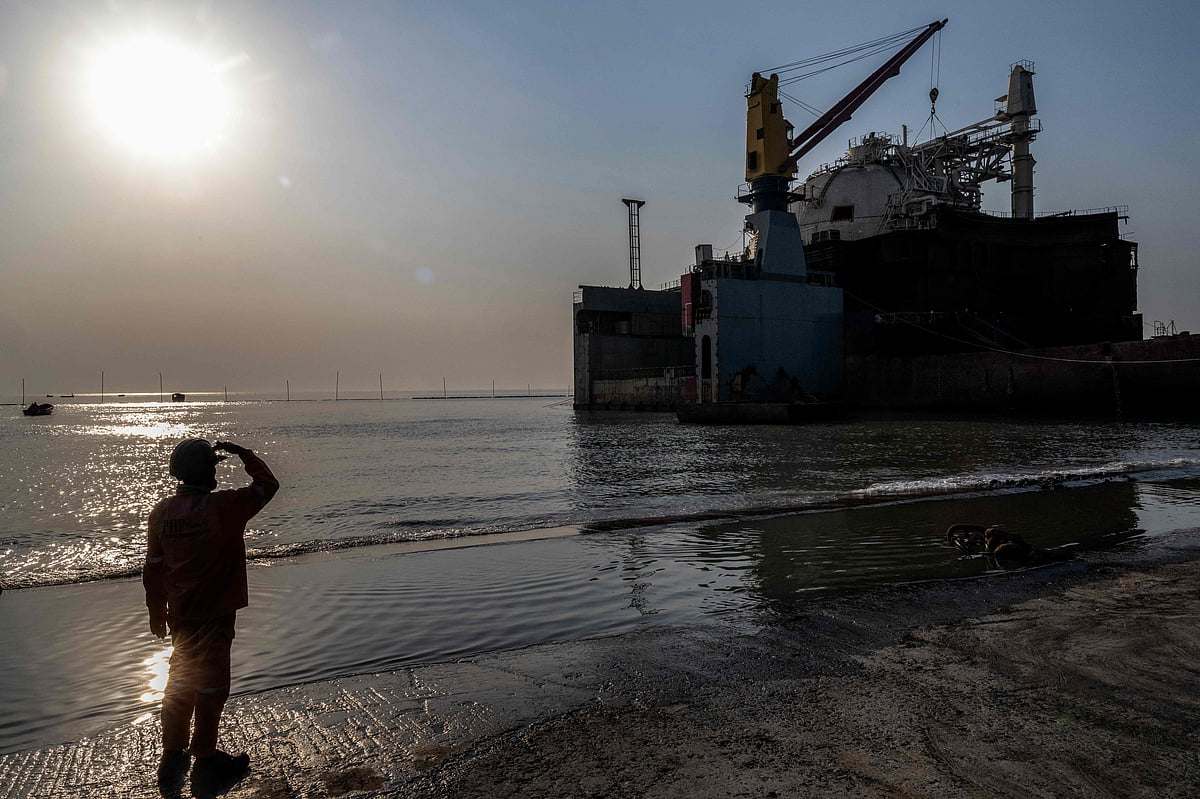
However, at the request of shipbreaking industry owners, the Bangladesh government has decided to withdraw from the Basel Convention’s section on shipbreaking.
In August, the cabinet formed a committee to review the laws, rules, policies, and related aspects of the shipbreaking industry, with Environment, Forest, and Climate Change Minister Abdul Awal Mintoo as the head.
On 29 September, this committee decided to exit the Basel Convention and follow the Hong Kong Convention in the matter of shipbreaking.
It is noteworthy that the Basel Convention establishes control over international waste movement. On the other hand, the Hong Kong Convention primarily deals with safe shipbreaking-related issues in yards.
Mohammad Mohsin, the president of the Bangladesh Ship Breakers and Ship Recyclers Association, told Prothom Alo that efforts are being made to make the shipbreaking industry safe by following the Hong Kong Convention. For this, each yard is required to invest Tk 1.5 billion to 2 billion.
Mohammad Mohsin stated, “Hong Kong Convention and Basel Convention are like two different physicians for the same disease. We want any one of them to cure this disease. In this case, we have requested the government to follow the Hong Kong Convention because the International Labour Organisation (ILO), the International Maritime Organisation (IMO), and those who manage shipping lines are all linked with the Hong Kong Convention.”
However, environmental experts say that the Hong Kong Convention does not consider ships as waste. Therefore, shipbreaking industry owners prefer the Hong Kong Convention.
Syeda Rizwana Hasan, the chief executive of the Bangladesh Environmental Lawyers Association (BELA), told Prothom Alo that the shipbreaking industry is a tactic to smuggle developed countries' waste under the guise of shipbreaking; which can be proven through the Basel Convention. That’s why shipbreaking industry owners do not want to remain under the Basel Convention.
What’s in the Basel Convention
According to Article 2 of the Basel Convention, expired ships are considered hazardous waste. For example, a ship suitable for sea travel but its owner decides not to use it for commercial transport and wants to sell it to a yard in Bangladesh for breaking. In such a situation, the ship would be considered waste under the Basel Convention.
The Basel Convention does not ban the import or scrapping of all expired ships; rather, it imposes control over transboundary movements of ships defined as waste and those carrying hazardous waste.
According to Article 6 of the Basel Convention, before exporting hazardous waste, the exporting country must inform the importing country about the waste. It would then have to obtain written consent from the importing country. An agreement between the exporting and importing countries must exist for the environmentally sound disposal of waste.
Article 8 states that if the waste cannot be disposed of according to the agreement, the exporting country must take back the waste.
Environment, Forest, and Climate Change Minister Abdul Awal Mintoo told Prothom Alo, “Everything relating to shipbreaking is overseen by the IMO. The Hong Kong Convention is under the IMO. Our green yards are also constructed in light of the Hong Kong Convention.”
Assuring that there will be no problems with waste management, the minister mentioned that each green yard has specialised places for storing waste. Some waste is sold to vendors licensed by the Department of Environment. In addition, a TSDF (Treatment, Storage, and Disposal Facility) for shipbreaking waste management is being constructed in Mirsarai.
What international experts are saying
The Brussels-based international organisation ‘NGO Shipbreaking Platform’ has been working for a long time to ensure a safe working environment for workers in the shipbreaking industry.
In response to written questions from Prothom Alo, Ingvild Jenssen, the founder and executive director of the platform, stated that Bangladesh needs to adhere to the Basel Convention. This global convention is crucial to stopping the dumping of toxic waste and protecting the environment and human health from the harm of hazardous substances.
She mentioned that if Bangladesh moves away from the Basel Convention concerning abandoned ships, the marine ecosystem and coastal environment will be at greater risk, and coastal residents will be in danger.
Jenssen advised that both the Basel and Hong Kong Conventions could be effectively implemented alongside each other; rather, if both conventions are enforced together, the protection of the environment and workers would be stronger. She pointed out that the regulations for safe and environmentally sound shipbreaking in the Hong Kong Convention are weak.
Why the Hong Kong Convention is weak
The Basel Convention was established under the initiative of the United Nations Environment Programme (UNEP), whereas the Hong Kong Convention falls under the United Nations Maritime Organization (IMO).
The International Chamber of Shipping and European Shipowners conducted an independent study last June through the Netherlands-based research organisation CE Delft.
This study, titled ‘Assessing Global Standard For Ship Recycling, ’ identified three major weaknesses of the Hong Kong Convention. These are the approval and inspection of shipbreaking yards, subsequent management of hazardous waste, and the scope of the list of hazardous materials.
The study states that the convention does not ban open beach shipbreaking methods in Bangladesh, India, and Pakistan. There is a risk that oil, heavy metals, and toxic waste may mix with soil and water due to shipbreaking on beaches.
According to the Hong Kong Convention, the responsibility for managing hazardous waste primarily falls on the importing countries. Ship owners or the source countries of waste are not held accountable for the waste. However, under the Basel Convention, the exporting country must inform the importing country before sending waste and obtain a letter of consent.