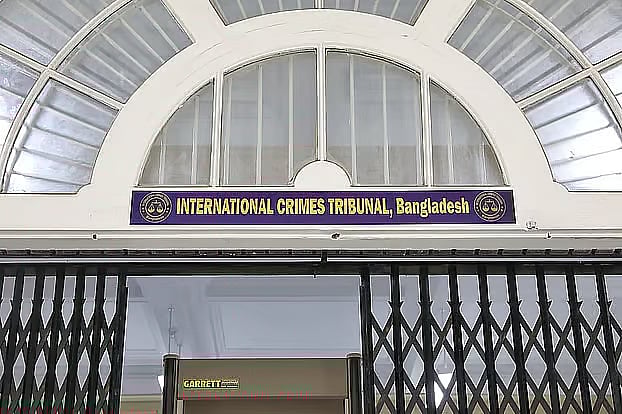
Plan to keep officers in military custody during tribunal proceedings
According to relevant sources, the army intends to keep the 15 officers who have been taken into custody following the issuance of arrest warrants in three cases filed for crimes against humanity, under military custody until the completion of their trials.
As per the military authorities current consideration, these accused officers will remain in military custody until the conclusion of the judicial proceedings.
On scheduled hearing dates, the army will produce them before the International Crimes Tribunal and upon completion of court proceedings, will take them back into custody.
When asked about this, Chief Prosecutor of the International Crimes Tribunal, Tajul Islam, told Prothom Alo that the court has issued arrest warrants and under the law, any accused person must be presented before the court without undue delay after arrest.
The court will then decide whether to send them to prison or grant them bail. However, the government may declare any establishment as a prison; in such a case, the court will determine where the accused are to be held.
According to the Ministry of Law, if the government declares a house as a sub-jail, the accused may be kept there. There are precedents for this. During the army-backed caretaker government of 2007–08, two houses in the Jatiya Sangsad Bhaban area were declared sub-jails to detain Awami League President Sheikh Hasina and BNP Chairperson Khaleda Zia after their arrests.
On Wednesday, the International Crimes Tribunal issued arrest warrants against 25 army officers in three cases, the first time in the country’s history that such a large number of army officials have faced simultaneous arrest warrants.
Among them, 15 are currently serving officers and one is on LPR (Leave Preparatory Retirement). It is the army’s responsibility to present them before the court.
The military has already taken these 15 officers into custody. One accused, Major General Kabir Ahmed, has gone into hiding.
The former Director of the Directorate General of Forces Intelligence (DGFI) last served as Commandant of the School of Infantry and Tactics (SI&T) in Sylhet. Previously, he was the Military Secretary to the ousted Prime Minister Sheikh Hasina.
In addition, nine retired officers have been named in the arrest warrants. According to military authorities, the police will take necessary legal action regarding the retired officers, who may also choose to surrender voluntarily.
Many reportedly abroad
However, multiple sources linked to the military have indicated that nearly all of the retired officers have already left the country.
Among these nine, five are former Directors General of the Directorate General of Forces Intelligence (DGFI) - Lieutenant General (Retd.) Md Akbar Hossain, Major General (Retd.) Md Saiful Abedin, Lieutenant General (Retd.) Md Saiful Alam, Lieutenant General (Retd.) Ahmed Tabrez Shams Chowdhury and Major General (Retd.) Hamidul Haque.
According to various sources, none of them are currently in Bangladesh.
Among the remaining officers, Major General (Retd.) Tarique Ahmed Siddique reportedly fled the country following the overthrow of Sheikh Hasina’s government during the mass uprising on 5 August last year. Tarique Siddique had served as the Security Affairs Adviser to the deposed Prime Minister.
Other retired officers named include Major General (Retd.) Mohammad Touhidul Islam, Lieutenant Colonel (Retd.) Mokhlesurul Haque and Lieutenant Colonel (Retd.) Khairul Islam. They previously served in the DGFI and the intelligence branch of RAB.
Formal charges in the three cases were submitted to the International Crimes Tribunal on Wednesday.
Two of the cases relate to crimes against humanity, including abductions and torture, allegedly committed during the tenure of the former Awami League government.
Arrest warrants have been issued against 28 individuals in these cases, including Sheikh Hasina and former Home Minister Asaduzzaman Khan Kamal.
The third case pertains to crimes against humanity committed during the July mass uprising in Dhaka’s Rampura and Banasree areas.
The accused in this case are former Border Guard Bangladesh (BGB) officer Lieutenant Colonel Mohammad Redwanul Islam, Major Md Rafat Bin Alam Mun, former Additional Deputy Commissioner of Police (ADC) Md Rashedul Islam and former Officer-in-Charge (OC) Md Moshiur Rahman.
In total, arrest warrants have been issued against 32 individuals across the three cases. Among them are three former Director Generals (DG) of the RAB - Benazir Ahmed, M Khurshid Hossain and Harun-or-Rashid. Benazir later became Inspector General of Police (IGP).
The remaining two retired as Additional IGP. All three are currently in hiding, with Benazir reported to be abroad.
Serving officers currently in custody
Among the 15 individuals presently held in military custody, one is on LPR, while the remaining are serving officers.
The officers include - Major General Sheikh Md Sarwar Hossain, Brigadier General Md Jahangir Alam, Brigadier General Tofayel Mostafa Sarwar, Brigadier General KM Azad, Brigadier General Md Kamrul Hasan, Brigadier General Md Mahbub Alam, Colonel Abdullah Al Momen, Lieutenant Colonel Sarwar Bin Kashem, Lieutenant Colonel Moshiur Rahman Jewel, Lieutenant Colonel Saiful Islam Suman, Brigadier General Md Mahbubur Rahman Siddiqui, Brigadier General Ahmed Tanvir Majhar Siddiqui, Lieutenant Colonel Mohammad Redwanul Islam, and Major Md Rafat Bin Alam Mun.
The International Crimes Tribunal has ordered that all accused persons be arrested and produced before the Tribunal by 22 October.
According to sources at the Police Headquarters, the arrest warrants issued by the International Crimes Tribunal have been forwarded to the respective police stations for execution.
Questions regarding employment status
An amendment to the International Crimes Tribunal Act, enacted on 6 October this year, stipulates that any person against whom formal charges have been submitted will be disqualified from being elected as a Member of Parliament.
Such a person will also be ineligible for election or appointment as a member, commissioner, chairman, mayor or administrator of any local government body.
Furthermore, the individual will be deemed ineligible for appointment to any public service or employment in the Republic and cannot continue to hold any public office. However, these restrictions will not apply if the Tribunal discharges or acquits the person concerned.
According to the prosecution, once formal charges are submitted against an individual in the Tribunal, that person ceases to be eligible to remain in service.
This raises questions about the employment status of the 15 army officers currently in custody. When this issue was raised at a press briefing held at Dhaka Cantonment on Saturday afternoon, the Army’s Adjutant General, Major General Md Hakimuzzaman, stated that while the recent amendment to the Tribunal Act mentions “disqualification,” the precise rules of implementation or interpretation have not yet been published.
He added that clarification would be sought from the appropriate authorities regarding how this provision will apply within the armed forces, particularly in the army.