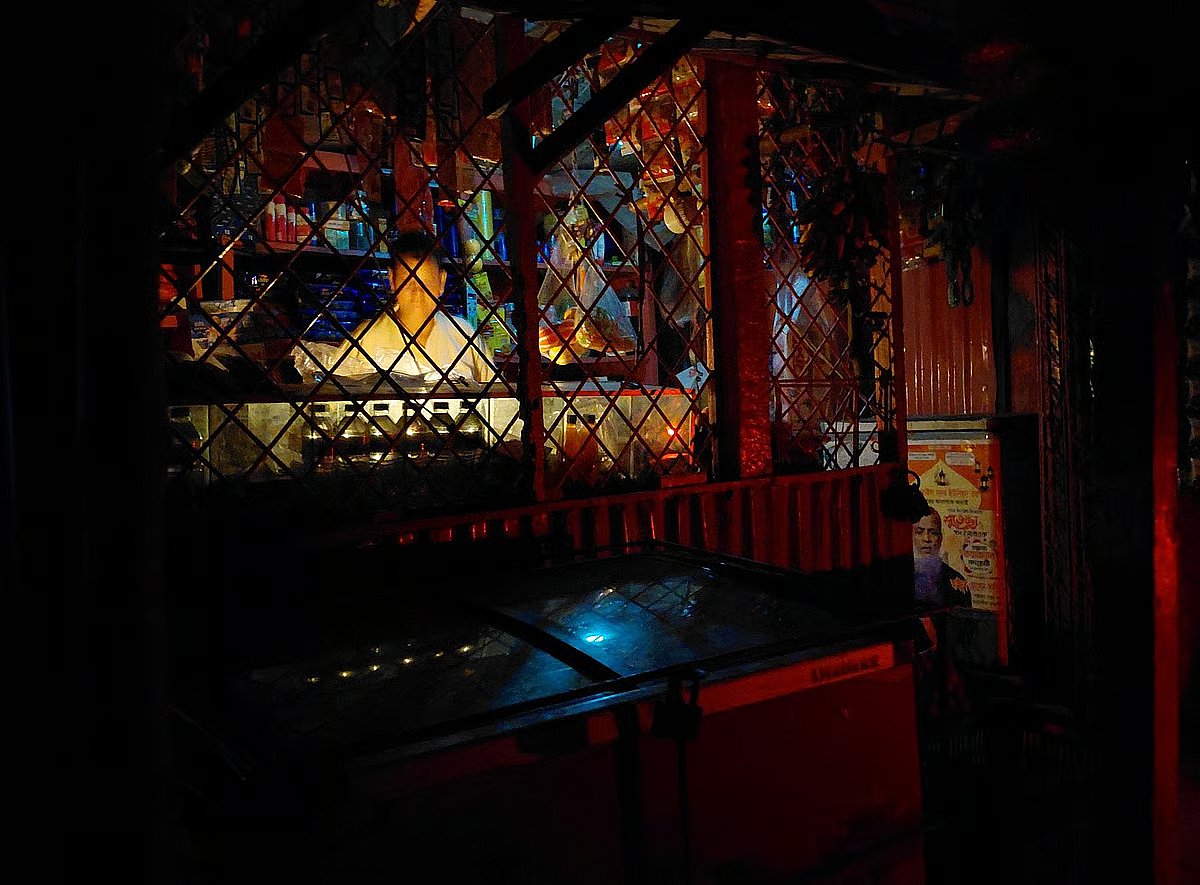
Energy crisis
Fuel shortage cuts power generation, increases load-shedding
Although electricity prices increased by an average of 19.85 per cent at the wholesale level and 16.68 per cent at the consumer level in June, the Bangladesh Power Development Board (PDB) has been unable to pay the huge dues owed to power plants.
The shortage of fuel for electricity generation has become acute. The gas crisis has not been fully resolved. Power generation from expensive fuel oil is not being increased. As a result, load-shedding has increased.
Data from the Bangladesh Power Development Board (PDB) and Power Grid Bangladesh PLC (PGCB) show that the maximum load-shedding has exceeded 3,000 megawatts a day for several days. By 8:00 pm yesterday, Monday, the maximum load-shedding had reached 3,757 megawatts. The figure was 3,671 megawatts the previous day.
People from power sector say the Awami League government increased electricity prices 12 times at the wholesale level and 14 times at the retail level over its 15-year rule. It set up power plants one after another without ensuring fuel supplies.
Although these plants remain idle, capacity charges (plant rental payments) still have to be paid. The government left behind a huge burden of unpaid dues. Power plants are still owed around Tk 500 billion by the PDB.
Government subsidies are increasing every year, but uninterrupted electricity supply has not been ensured. Since 2022, load-shedding has occurred whenever temperatures rise each year. People in districts outside Dhaka suffer from hours of load-shedding. However, when rain arrives, electricity demand falls and people get some relief.
Two responsible PDB officials said it takes two months to see the benefits of an increase in electricity prices. Therefore, the additional revenue has not yet been reflected in PDB’s accounts. However, the PDB’s outstanding dues will not increase further after the price hike. The old dues will be repaid in phases.
According to data from the Power Division, the country’s electricity generation capacity is 29,000 megawatts. At the time of the highest load-shedding yesterday, demand was 16,262 megawatts, while supply was 12,500 megawatts. More than half of the available capacity had to remain idle at that time. This has been the case for most of the day.
Gas-fired power generation is producing less than 4,000 megawatts. It may take a few more days for gas supply to increase. Increasing generation from oil-fired power plants would further raise costs, so their operation is being kept low.
Although oil-fired plants generated more than 3,000 megawatts continuously for several hours at night, they have been operating at an average of less than 1,500 megawatts for most of the time.
PDB officials said coal-fired power plants are now the main source of electricity generation. However, supplies from three major power plants have declined.
Production at the Payra power plant in Patuakhali was halved from 2 August after maintenance began on one of its units. The plant resumed operations and started increasing production again from Sunday night. However, the plant is owed more than Tk 90 billion. If it does not receive payment, coal supplies could be disrupted from next month.
Another coal-fired power plant in Patuakhali is also facing a coal shortage, resulting in lower production. The Adani power plant, built in Jharkhand, India, reduced generation from 7 August. The plant was unable to maintain production as coal supplies were disrupted by storms and rain.
PDB held an online meeting with power plants yesterday afternoon. According to sources at the meeting, the Payra power plant was supplying 800 megawatts yesterday evening.
It was instructed to increase its supply further. Although coal-fired plants cannot immediately increase generation significantly, they are gradually increasing output. The Adani plant was also instructed to increase generation.
Through public relations company 5W Communications, the Adani power plant told Prothom Alo last night that coal supplies would return to normal between the night of 11 August and the morning of 12 August.
PDB member (generation) Md Zahurul Islam told Prothom Alo that there is a shortage of gas, while generation from coal has also declined. However, operating oil-fired power plants throughout the day is expensive.
Generation is being increased after evening to keep load-shedding at a tolerable level. Generation is reduced after midnight, causing load-shedding to increase. Efforts are being made to increase generation.
Rural people suffer the most
Sources at Dhaka’s two electricity distribution companies, Dhaka Electric Supply Company Limited (DESCO) and Dhaka Power Distribution Company Limited (DPDC), said there is no shortage compared with demand in their electricity supply.
Sources at the other four distribution companies outside Dhaka, however, said the Bangladesh Rural Electrification Board (BREB), which supplies electricity to villages across the country, is receiving far less electricity than the demand.
The combined electricity demand of the PDB and BREB in Feni district is 140 megawatts. The average daily shortfall is 30 megawatts. Md Main Uddin, director of Starline Food Product Private Limited in Feni, said load-shedding accounts for an average of 35 per cent of the factory’s production time every day.
Mohammad Baizid Hossain Shah, AGM (operations and maintenance) of the Feni Palli Bidyut division, said Feni has a 15 per cent electricity shortfall.
Akkas Ali Akand, a resident of Baghber village in Purbadhala upazila of Netrakona, told Prothom Alo that electricity is not available for even five hours on average in 24 hours. Akram Hossain, general manager of Netrakona Palli Bidyut Samity, said that against a demand of 158 megawatts, only 59 megawatts was being supplied, resulting in frequent load-shedding.
In some areas of Habiganj, electricity is unavailable for nearly 12 hours. An uninterrupted power supply is essential for processing tea leaves. Debashish Roy, assistant manager of Deundi Tea Garden in Chunarughat upazila, said processed tea leaves are damaged when electricity remains unavailable for hours. As a result, the tea gardens are suffering losses.
In Keraniganj, Dhaka, people are suffering greatly due to continuous load-shedding. Rokeya Begum, a homemaker from the Jinjira Bus Road area, said, “There is hardly any electricity during the day. When the power goes out in the intense heat, the children wake up and start crying. We are not even getting a chance to sleep properly at night.”
Golam Kawsar Talukdar, general manager of Dhaka Palli Bidyut Samity-4 (head office), said electricity demand in Keraniganj is 240 megawatts, with a daily shortfall of around 80 megawatts.
Saddam Ali, a resident of Dogachhi village in Tupamari Union of Nilphamari Sadar, said, “It has been so hot for the past few days that it has become difficult to work. On top of that, there is load-shedding. Once the power goes out, there is no telling when it will come back.”
Md Naushad Ali, executive engineer of Northern Electricity Supply (NESCO) in Domar upazila, said only half the required amount of electricity is being supplied. As a result, customers are not getting electricity for even 10 hours out of 24.
Pothom Alo’s Staff Correspondents in Bogura and Habiganj, and Correspondents in Keraniganj, Nilphamari, Feni, Netrakona and Panchagarh contributed reporting.