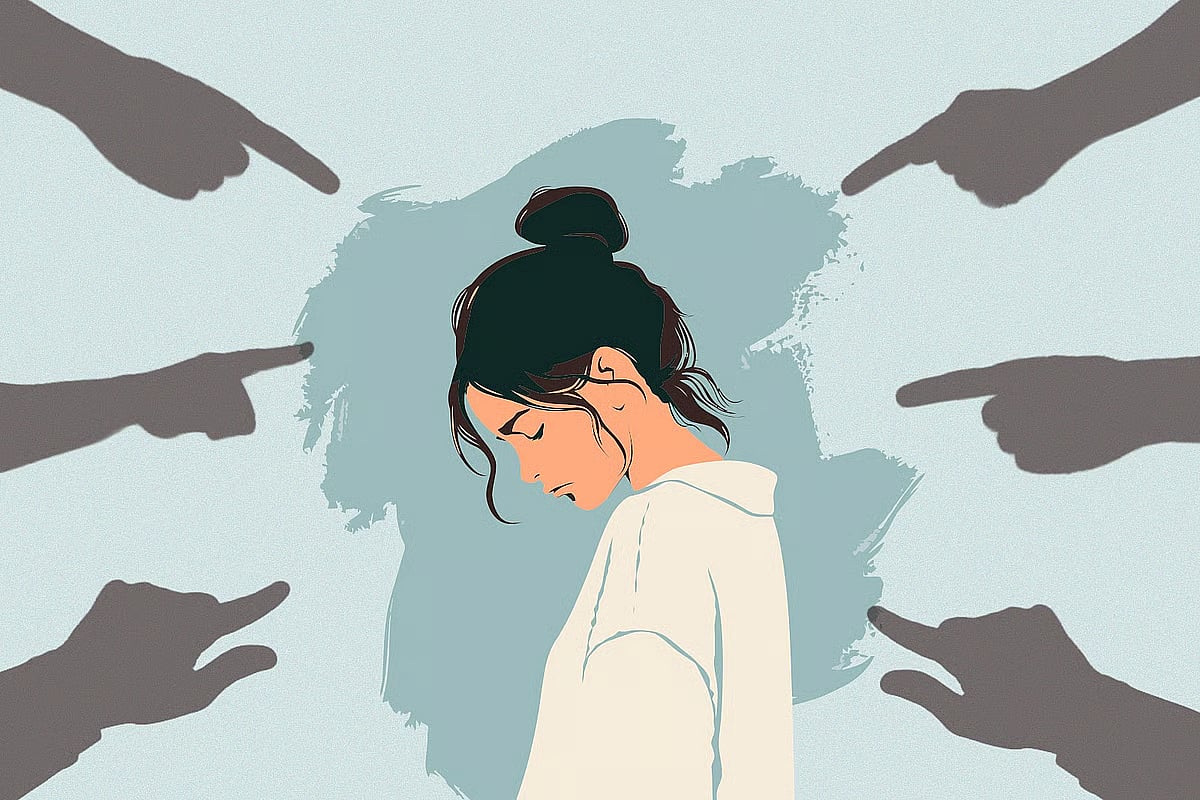
Bullying drives young woman to drop higher studies at Dhaka University
"I was so haunted by the incidents that I feel like crying. I did not feel like attending classes. People always speak out against sexual harassment, but the severity of bullying and gossip as a form of psychological harassment is rarely given the same importance.”
These were the words of a 26-year-old former student of Dhaka University. This young woman alleged that during her undergraduate studies, she had been subjected to bullying by some of her peers, yet received no redress.
Her experience was so distressing that, after completing her undergraduate degree, she chose not to continue with a Master’s at Dhaka University. Instead, she took up employment for nearly a year. Last month, she moved abroad to pursue postgraduate studies.
While in Bangladesh, she had met this correspondent in person to describe her ordeal. More recently, she shared further accounts over WhatsApp following her move overseas.
She emphasised that while society accords due attention and protest to sexual harassment, bullying and gossip-driven psychological abuse rarely receive comparable recognition.
Her experience was so distressing that, after completing her undergraduate degree, she chose not to continue with a Master’s at Dhaka University. Instead, she took up employment for nearly a year. Last month, she moved abroad to pursue postgraduate studies.
According to her, the persistent bullying and gossip at Dhaka University left her mentally unwell. She required six to seven counselling sessions with a psychologist, though her department did not treat the matter with seriousness.
She stated, “Bullying is not deemed a punishable offence there. Yet, because of the bullies, I was left mentally devastated and could not pursue my Master’s at Dhaka University.”
I cannot explain how unwell I had become. After enrolling in the Master’s course, I attended only two classes and then stopped. My parents were taken aback. I told them I had been bullied and that I would not continue studying at Dhaka University with those people.Victim woman
“I will not study with them again”
The young woman completed her SSC and HSC from a reputed institution in Dhaka, with both parents holding senior government positions. She enrolled in Dhaka University in 2019 for her undergraduate studies.
She recounted that upon entering university, she encountered students with diverse mindsets. Although she attempted to socialise with everyone, she did not form any particularly close friendships. A certain group, self-styled as ‘elite’, was formed, which composed mainly of male students from affluent families, most of whom were children of senior government officials and were good studies.
During the Covid pandemic in 2020, smaller peer groups formed, she said. With little else to do, some students engaged in bullying others on Facebook. This continued even after in-person classes resumed, accompanied by a ‘bossing’ tendency, gossip about attire (whose styling is good or whom western clothes doesn't suit), romantic relationships of classmates and other backbiting.
She observed that she was being blamed for things she had never said, and targeted with bullying. The so-called ‘elite’ group was especially active in this regard. She described three male students as the primary bullies, engaging in misogynistic remarks, body shaming and slut shaming. One of them would stare at her inappropriately, while another once touched her in a sensitive area, later passing it off as an accident with a casual apology.
According to her, the persistent bullying and gossip at Dhaka University left her mentally unwell. She required six to seven counselling sessions with a psychologist, though her department did not treat the matter with seriousness.
After some time, she entered what she termed a “situationship” with one of the comparatively ‘innocent’ members of that group. Both agreed it was not to be a long-term commitment and that they would remain respectful if it ended. Within a year, however, the young man re-established contact with his former partner, for which she ended the relationship.
Subsequently, she noticed classmates whispering whenever she entered the room, clearly referring to her. The former partner and some of his friends began to make remarks that cornered her socially. At that stage, she avoided visibility, felt reluctant to attend classes and found it increasingly difficult to study. Concern about her academic performance added to the distress.
She said, “I cannot explain how unwell I had become. After enrolling in the Master’s, I attended only two classes and then stopped. My parents were taken aback. I told them I had been bullied and that I would not continue studying at Dhaka University with those people.”
The nature of the allegations she made was difficult to prove. Therefore, I advised her to be mentally strong. She was introverted and could not easily share her distress.Teacher
Teacher’s response
When asked about the young woman’s allegations, a faculty member of the relevant department of Dhaka University, who was also the student counsellor at the time, spoke to Prothom Alo. She stated that she had summoned the accused students and spoken with them, as well as with other classmates. According to them, the young woman was distressed because of a break-up.
The teacher remarked, “The nature of the allegations she made was difficult to prove. Therefore, I advised her to be mentally strong. She was introverted and could not easily share her distress.”
In response to whether any action could be taken against harassment such as bullying, she confirmed that provisions do exist, but allegations must be proven. Initially, she asked the student to submit a written complaint. Later, she submitted one to the head of the department. However, by that time, the accused students had already completed their Master’s examinations.
The young woman said that after completing her undergraduate degree and internship, she first lodged an verbal complaint. Later, following the Master’s examinations of the accused, she submitted a written complaint. She accused five individuals in total, three of sexual harassment and two of psychological and verbal harassment. She was informed that a committee had been formed. As the Master’s results had not yet been published, she believed that, if the authorities were sincere, action could still be taken.
She further claimed that when she had made her initial verbal complaint, it was not taken seriously. As a result, the perpetrators felt further empowered, showed no remorse and attempted to deflect attention from their misconduct by highlighting the break-up. She stressed that the break-up was not the issue at all.
5pc students develop inferior complexes due to peers
In October 2022, the non-government organisation Aachol Foundation published a survey report titled “Impact of academic pressure on the mental health of university students in the post-Covid period and their tendency towards suicide.” The report stated that nearly 5 per cent of students suffer from inferiority complexes as a result of being belittled by their peers.
A separate study, published in 2021 in the Management journal of Poland under the title “Consequences of bullying on university students in Bangladesh,” confirmed the existence of bullying in public universities.
A total of 1,640 students participated in the survey, representing public universities, private universities, institutions affiliated with the National University and madrasas. Of these participants, 56 per cent were female.
Earlier, in March 2022, the same organisation released another survey report entitled “Socioeconomic context of young women and its impact on their mental health.” That survey revealed that many young women feel demeaned by comments about their body shape and appearance, with 22 per cent reporting experiences of body shaming by friends. Over 1000 young women took part in this survey.
A separate study, published in 2021 in the Management journal of Poland under the title “Consequences of bullying on university students in Bangladesh,” confirmed the existence of bullying in public universities. The study stressed the importance of students knowing their rights, being confident in filing complaints, raising awareness among peers, receiving support from families and obtaining assistance from teachers and university authorities, alongside the implementation of necessary preventive measures.
Bullying can lead victims to withdraw socially, avoid classes out of fear, feel mentally weakened, develop inferiority complexes or even experience guilt. In some cases, individuals may resort to self-harm or attempt suicide.Professor Kamal Chowdhury, Department of Clinical Psychology, Dhaka University
‘Bullying complaints should be taken seriously’
Professor Kamal Chowdhury of the Department of Clinical Psychology at Dhaka University and Director of the Nasirullah Psychotherapy Unit, told Prothom Alo that while universities maintain dedicated cells to address sexual harassment and punitive measures are available in such cases, similar mechanisms for bullying are rarely observed.
He explained that bullying can lead victims to withdraw socially, avoid classes out of fear, feel mentally weakened, develop inferiority complexes or even experience guilt. In some cases, individuals may resort to self-harm or attempt suicide. For this reason, any bullying complaint must be taken seriously and if allegations are proven, appropriate measures should follow. At the same time, victims should be provided with psychological support, such as counselling.
Professor Kamal Chowdhury further noted that free mental health support is available to students at Dhaka University’s residential halls for female students, as well as on the third floor of the Teacher-Student Centre (TSC). However, many students remain unaware of these services due to limited information. Additionally, students may access paid services at the Nasirullah Psychotherapy Unit, located at the Faculty of Arts building.