Measles outbreak
Rising child deaths amid inadequate preparedness
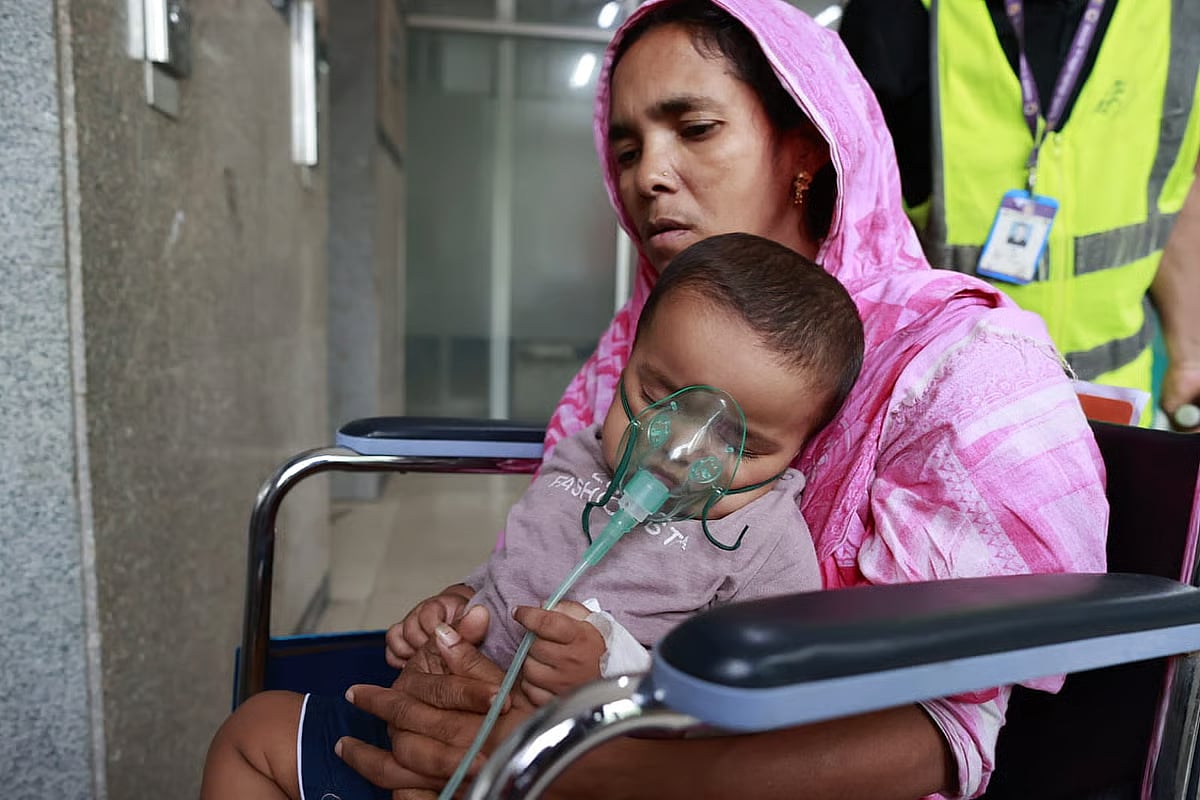
Deaths among children with measles and measles-like symptoms are increasing in Bangladesh, with the highest single-day toll reaching 17 on Monday, according to the Integrated Control Centre of the Directorate General of Health Services (DGHS).
With this, reported deaths from measles this year have crossed 300. Questions are now being raised over whether these deaths could have been prevented and whether the health authorities took adequate measures in time.
On Monday, the DGHS’ Integrated Control Centre reported that in the latest 24-hour period (from 8:00 am Sunday to 8:00 am Monday), two confirmed deaths from measles and 15 deaths from measles-like symptoms were recorded. Among the 15, two deaths occurred on the previous day.
According to the DGHS, 259 deaths have been recorded from measles-like symptoms so far this year, while 52 deaths have been confirmed as measles, bringing the total to 311 deaths.
Health officials maintain that during an outbreak, any death with measles-like symptoms should be considered a measles death, a position agreed upon by experts at a National Technical Advisory Group meeting on 12 April.
The outbreak was first detected in January in the Rohingya camps in Cox’s Bazar. Initially, the situation did not receive widespread attention, but the disease continued to spread. By mid-March, cases were reported in Rajshahi and later in several other districts.
On 24 April, the World Health Organization reported in an outbreak update that measles had spread across Bangladesh. It stated that the disease had reached 58 out of 64 districts (91 per cent), with 79 per cent of cases occurring in children under five years of age.
Some specialists argue that oxygen therapy plays a crucial role in treating measles-related pneumonia. DGHS data shows that there are 1,372 ICU beds in government hospitals nationwide, though not all are suitable for paediatric care.
The government launched a special vaccination campaign on 5 April across 30 upazilas in 18 districts. Vaccination began in Dhaka North, Dhaka South, Mymensingh, and Barishal city corporations on 12 April. From 20 April, the campaign expanded nationwide, targeting children aged six months to five years, and is scheduled to continue until 20 May.
On 3 May, an eight-month-old child, Hasan, died at Rangpur Medical College Hospital. He was from Saptibari in Lalmonirhat Sadar and had been referred to Rangpur due to the lack of advanced treatment facilities locally.
The previous day, on 2 May, an eight-year-old girl, Tangtui Mro, died in Alikadam upazila of Bandarban with measles-like symptoms. She had been under treatment at Lama Upazila Health Complex but was discharged two days before her death. Such deaths are being reported daily.
Child deaths not slowing
In response to rising child deaths, the government has stated that ICU capacity is being expanded. Reports in the media have also indicated that Health Minister Sardar Md Sakhawat Hossain arranged ventilators from pharmaceutical companies for hospitals. However, detailed mortality data related to measles is not being released publicly.
Public health experts have raised concerns about the lack of available data, including age distribution of deceased children, timing of hospital admission after symptom onset, complications at admission, presence of pneumonia, delays in seeking care, possible treatment lapses, and medicines used in treatment. They argue that such data is crucial for preventing further deaths.
During the COVID-19 pandemic, hospital oxygen systems were significantly upgraded, including the introduction of high-flow nasal cannula systems, which could still help reduce deaths if implemented widely.Professor Abid Hossain Mollah, former head, Paediatrics Department, DMCH
When contacted, DGHS Director (Hospitals) Abu Hussain Md Moinul Ahsan told Prothom Alo that these responsibilities fall under the disease control division (CDC), and suggested contacting them. However, CDC Director Professor Halimur Rashid stated that no such work is currently being carried out.
Asked why deaths cannot be prevented, several clinicians and health officials pointed to late hospital admission in severe conditions.
Professor Md Mahbubul Haque, director of the Bangladesh Shishu Hospital and Institute, said there is no antiviral treatment for measles. Complications such as pneumonia and other severe conditions make treatment difficult, especially when children arrive late.
Hospital data shows that since January, 510 children from 42 districts have received treatment at the institution, of whom 22 have died.
Professor Foara Tasnim, additional director general (Planning and Development) of DGHS, said children are being brought to hospitals in critical condition. Measles-related pneumonia damages the lungs, and even intensive care support is sometimes insufficient.
Widespread fear and misdiagnosis concerns
At present, many parents take children to hospitals for fever, cold, cough, or rashes, fearing measles. The Integrated Control Centre reports that 41,793 patients have sought hospital care for measles-like illness this year, of whom 28,842 were admitted, while only 5,467 cases were confirmed as measles.
Experts believe the actual number of infections is much higher. Limited diagnostic kits have restricted testing capacity, and some private practitioners are treating measles patients outside the official system, meaning cases are not fully recorded.
Children are being brought to hospitals in critical condition. Measles-related pneumonia damages the lungs, and even intensive care support is sometimes insufficient.Professor Foara Tasnim, Additional Director General (Planning and Development) of DGHS
Some specialists argue that oxygen therapy plays a crucial role in treating measles-related pneumonia. DGHS data shows that there are 1,372 ICU beds in government hospitals nationwide, though not all are suitable for paediatric care. Experts suggest that improving low-cost oxygen supply systems could save more lives.
Professor Abid Hossain Mollah, former head of the Paediatrics Department at Dhaka Medical College, noted that during the COVID-19 pandemic, hospital oxygen systems were significantly upgraded, including the introduction of high-flow nasal cannula systems, which could still help reduce deaths if implemented widely.
Public health and paediatric experts also emphasise that not all suspected cases require hospitalisation. However, fear is driving many families to admit children unnecessarily, potentially overwhelming facilities and limiting care for critically ill patients.
Health authorities have identified six warning signs requiring immediate hospitalisation: Difficulty or rapid breathing, or chest retractions; inability to drink fluids or breastfeed; repeated vomiting; convulsions, lethargy, drowsiness, or unresponsiveness; mouth ulcers, eye problems, or inability to open eyes; severe dehydration or malnutrition
Epidemiologist Professor Mahmudur Rahman, former Director of the Institute of Epidemiology, Disease Control and Research (IEDCR), said that rapid diagnosis, improved patient management, and proper isolation under expert guidance could reduce hospital burden and ultimately lower mortality rates.