Stock-allocation
Govt warehouses have fertiliser, problem lies in distribution
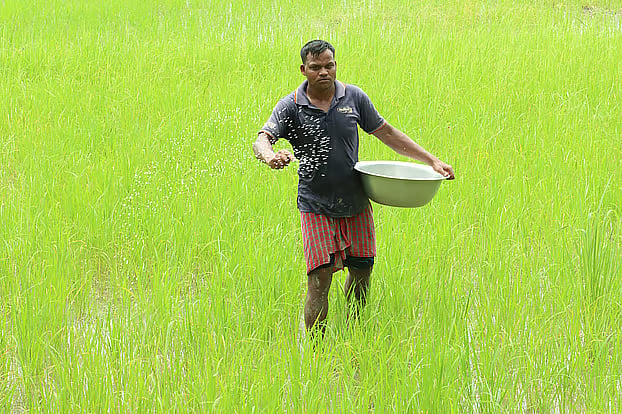
August is the time for preparing land and planting seedlings for Aman, the country’s main rice-growing season. After planting the seedlings, farmers need to apply fertiliser to their fields in several stages. Naturally, demand for fertiliser is high at this time, but farmers at the field level complain that they are not getting enough.
In some places, farmers are being forced to buy fertiliser at higher prices. However, according to government records, there is no shortage in fertiliser stocks or allocations against demand.
The Ministry of Agriculture says that although allocations are made according to dealers’ demand, they are creating an artificial crisis by not lifting the fertiliser. It is the responsibility of upazila agricultural extension officers to monitor whether dealers are properly lifting and distributing fertiliser.
Farmers allege that a crisis is emerging because government-appointed distributors are selling subsidised fertiliser on the black market outside the designated channels.
The fertiliser is later sold at higher prices in the open market. Over the past three days, four distributors in four upazilas of Rajshahi have been fined a total of Tk 85,000 for allegedly smuggling fertiliser allocated for one area to another area. On 2 August, two distributors in Jashore were fined a total of Tk 10,500 by a mobile court for allegedly selling fertiliser at higher prices.
Officials of the Ministry of Agriculture say the ministry issues district-wise fertiliser allocation orders every month. In each district, the Fertiliser Allocation and Seed Distribution Monitoring Committee, headed by the deputy commissioner, issues dealer-wise fertiliser allocation orders.
The dealers then lift the fertiliser from designated warehouses. The upazila agriculture officer is responsible for monitoring whether the fertiliser allocated for each month is lifted on time and how much fertiliser is being distributed to how many farmers.
The Ministry of Agriculture says 10,000 dealers are involved in distributing fertiliser across the country. The ministry’s internal investigation has also found negligence at the field level.
Regarding this, Additional Secretary (Fertiliser Management and Inputs) of the Ministry of Agriculture Ahmed Faisal Imam told Prothom Alo, “Field-level agriculture officials are our key operational personnel on the ground.
Although we at the ministry level ensure that imports and allocations are made in the right quantities and at the right time, in some cases negligence by agriculture officials and collusion with dealers are creating the crisis.”
Ahmed Faisal Imam said action is being taken against those found guilty in internal investigations. Three deputy directors at the district level were transferred last Saturday.
A decision has been taken to dismiss an upazila agriculture officer within a few days. Wherever negligence, indifference or collusion is found, action is being taken. Show-cause notices, calls for explanations, withdrawal from posts and, in some cases, dismissal of responsible officials are also being carried out, he said.
Allocations exist, lifting remains low
The district-wise report for August submitted to the Ministry of Agriculture by the Department of Agricultural Extension shows that despite sufficient district-wise fertiliser allocations, the amount lifted is half or less than the allocation in some areas.
An analysis of reports from several districts in Dhaka division shows that 1,876 tonnes of urea fertiliser were allocated to Gazipur for August. As of 20 August, only 800 metric tonnes had been distributed at the farmer level. In Narsingdi district, the August allocation was 2,553 tonnes. As of 20 August, 919 metric tonnes had been distributed to farmers.
In August, the allocation of urea fertiliser for eight districts in Dhaka division was 19,918 tonnes. As of August 20, 8,965 tonnes had been lifted. The same picture was seen in other divisions.
For example, the four districts of Mymensingh division were allocated 31,425 tonnes of urea fertiliser. As of August 20, 9,992 tonnes had been lifted. The four districts of Sylhet division were allocated 9,541 tonnes in August. As of 20 August, dealers had lifted 2,679 tonnes of fertiliser.
Across the country, 279,412 tonnes of urea fertiliser have been allocated for August. As of 20 August, 149,612 tonnes had been distributed.
Last Sunday, following an incident in Bhurungamari of Kurigram where fertiliser was taken away after the door of a dealer’s warehouse was broken, Additional Secretary Ahmed Faisal Imam told Prothom Alo that Kurigram had been allocated 5,875 tonnes of fertiliser for August. As of 20 August, dealers had collected only one-third of the allocation. He said collection of other fertilisers, such as DAP, MOP and TSP, was also much lower than the allocations.
The lifting of TSP fertiliser was similarly found to be lower than the allocation, according to the monthly fertiliser supply and distribution report of the Department of Agricultural Extension. Cumilla district was allocated 1,327 tonnes of TSP fertiliser in August.
As of 20 August, 498 tonnes had been distributed to farmers. The total TSP allocation for three districts in Cumilla division was 2,772 tonnes. As of 20 August, 1,171 tonnes had been distributed to farmers. Four districts in Khulna were allocated 4,337 tonnes of TSP in August. As of 20 August, 2,637 tonnes had been distributed.
State of fertiliser stock
Besides two government agencies, fertiliser is also imported by private companies. The two agencies are the Bangladesh Chemical Industries Corporation (BCIC), under the Ministry of Industries, and the Bangladesh Agricultural Development Corporation (BADC). BCIC imports urea fertiliser, while BADC imports non-urea fertilisers such as DAP, MOP and TSP.
According to BADC’s August report, the demand for TSP across the country in August is 69,000 tonnes, while the stock stands at 337,000 tonnes. The demand for DAP in August is 89,000 tonnes, while the stock is 327,000 tonnes. The demand for MOP is 78,000 tonnes, while the stock stands at 148,000 tonnes. The annual demand for urea fertiliser is 2.6 million tonnes. For the 2026–27 fiscal year, the stock stands at 482,000 tonnes.