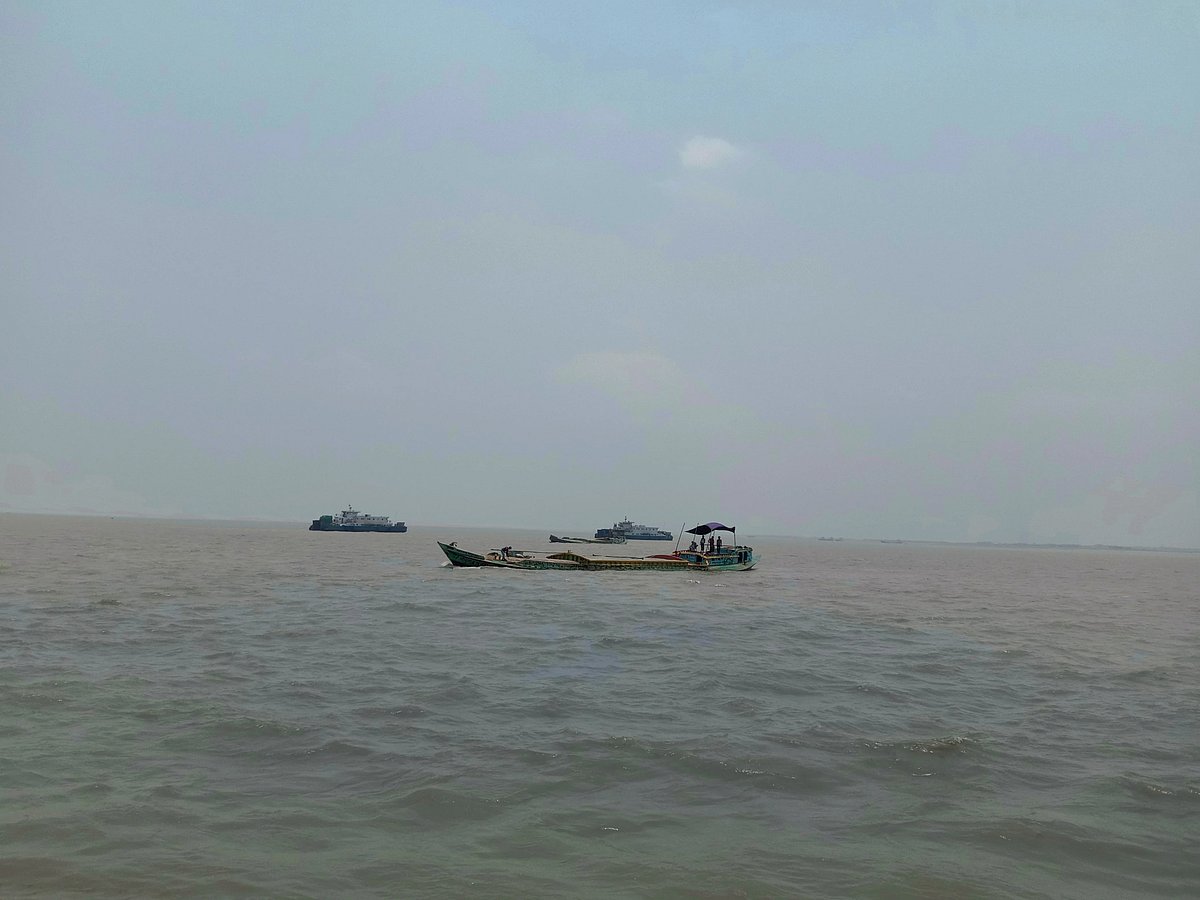
The government has undertaken the "Padma Barrage (1st Phase)" project involving an estimated cost of over Tk 344.97 billion to restore major river systems, reduce salinity intrusion and strengthen irrigation and ecological sustainability across large parts of the country.
The government approved the mega project at a meeting of the Executive Committee of the National Economic Council (ECNEC) held today at the Cabinet Division Conference Room at Bangladesh Secretariat with ECNEC Chairperson and Prime Minister Tarique Rahman in the chair.
Recommended by the Planning Commission, the project was placed before the day's ECNEC meeting for approval aimed at reviving river systems, reducing salinity intrusion in the southwest, improving irrigation facilities, and restoring ecological balance in the Sundarbans.
The project, undertaken by the Ministry of Water Resources and to be implemented by the Bangladesh Water Development Board (BWDB), has been estimated at over Tk 344.97 billion and will be fully financed through government funding (GoB grant). The implementation period has been set from July 2026 to June 2033.
Talking to reporters after the day's ECNEC meeting, Water Resources Minister Md. Shahiduddin Chowdhury Anee termed this Padma Barrage project as an important one for the nation, adding that it would benefit one thirds of the country's area and nearly around 70 million people. "Since this project has huge public importance and was framed considering the interests of people, it was approved by the ECNEC."
According to the Planning Commission, the project will cover 19 districts under Khulna, Dhaka, Rajshahi and Barishal divisions.
The project has been designed to restore the flow and navigability of major river systems, including the Hisna-Mathabhanga, Gorai-Madhumati, Chandana-Barashia, Baral and Ichamati rivers, which have experienced severe degradation over the decades.
Officials said the project also aims to reduce salinity intrusion in the southwestern districts of Satkhira, Khulna and Bagerhat, ensure freshwater supply for the Sundarbans ecosystem, improve biodiversity conservation, reduce waterlogging in areas including Bhobodah in Jashore, enhance drainage systems, recharge groundwater and reduce arsenic contamination.
The project is also expected to expand irrigation facilities in southwestern, mid-western and northwestern regions through support to the ongoing Ganges-Kobadak (G-K) Irrigation Project and the proposed North Rajshahi Irrigation Project. In addition, the initiative is expected to generate employment opportunities and facilitate planned land development and urbanization.
The Planning Commission said the project is consistent with the government's Election Manifesto-2026, particularly commitments related to implementing the Padma Barrage, preventing river erosion, conserving water resources, reducing salinity in agricultural lands, ensuring flood protection, restoring natural water flow through dredging programs and improving irrigation efficiency.
Under the project, a 2.1-kilometre main Padma Barrage along with associated infrastructure will be constructed. The infrastructure includes 78 spillways, 18 undersluices, 2 fish passes, navigation locks, guide embankments and approach embankments.
The project will also include construction of Gorai, Chandana and Hisna offtake structures, dredging of 135.60 kilometres of the Gorai-Madhumati River system, re-excavation of 246.46 kilometres of drainage channels in the Hisna river system and construction of 180 kilometres of afflux embankments.
Two hydropower plants are also planned under the project with combined generation capacity of 113 megawatts.
Once the project is implemented, it is expected to contribute 0.45 percent to the country's GDP with a direct annual expected return of Tk 80 billion. Besides, necessary irrigation water facilities would be ensured for around 2.88 million hectares of net farm land in greater Kushtia, Faridpur, Jashore, Khulna, Barishal, Pabna and Rajshahi regions side by side the barrage would help retain 2900 million cubic meter water in the Padma River.
According to the project background paper, Bangladesh's southwestern and northwestern Padma-dependent areas account for nearly 37 per cent of the country's territory and are home to around one-third of the population.
The document noted that India constructed the Farakka Barrage in West Bengal during the 1970s to divert 35,000-40,000 cusecs of water from the Padma/Ganges during the dry season to the Bhagirathi-Hooghly River system in order to improve navigability of the Kolkata Port.
As a result of upstream water withdrawal at Farakka, dry-season flow in the Padma River within Bangladesh has declined significantly, causing major river systems in the southwest and northwest to dry up. Consequently, agriculture, fisheries, forestry, navigation, domestic water availability and the broader ecosystem in these regions have been severely affected.
The Planning Commission observed that reduced freshwater flow has also increased salinity levels in rivers and canals in the southern region during the dry season, posing growing threats to livelihoods, biodiversity and the Sundarbans ecosystem.
The commission emphasized that sustainable water resource management is essential for increasing agricultural, forestry and fisheries productivity and ensuring balanced economic growth in greater Rajshahi, Pabna, Kushtia, Jashore, Khulna, Faridpur and Barishal regions, where the Padma remains the primary source of surface freshwater.