RPO amendment
Proposals include enhancing EC’s power to cancel elections, several other key changes
The election commission (EC) has finalised the draft of the Representation of the People Order (RPO) 1972 (Amendment) Ordinance 2025. This has proposed expanding the Commission’s powers to cancel elections.
If passed, the amendment would allow the EC to nullify the entire vote in any constituency if questions arise regarding its conduct.
The decisions were taken at a meeting held at the election commission headquarters in the capital’s Agargaon area today, Monday. The meeting was chaired by Chief Election Commissioner (CEC) AMM Nasir Uddin.
The meeting finalised both the Code of Conduct for Political Parties and Candidates 2025 and the RPO Amendment Ordinance 2025.
Election Commissioners Abul Fazal Md Sanaullah, Abdur Rahmanel Mashaud, Tahmida Ahmed, Md Anwarul Islam Sarkar, EC Secretary Akhtar Ahmed, and other relevant officials were present there.
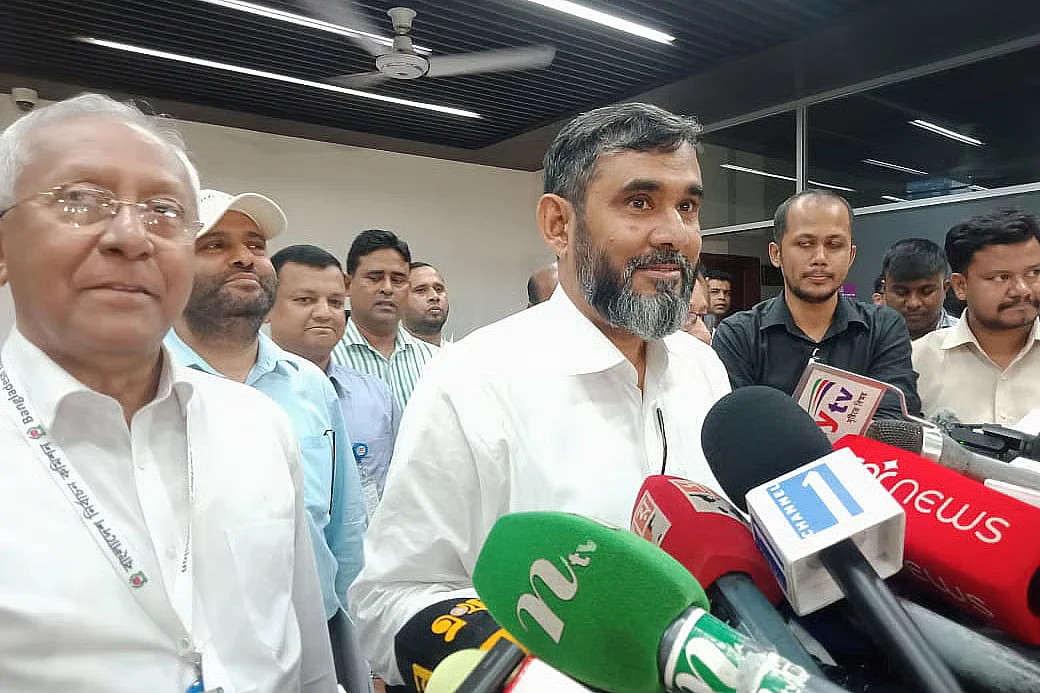
Briefing the press afterwards, election commissioner Abul Fazal Md Sanaullah said, “The RPO provisions regarding suspension and cancelling of election results — particularly the EC’s ability to cancel an entire constituency’s election — had previously been curtailed. This capacity has now been reinstated. The EC will be able, as it deems necessary, to suspend or cancel results of one, several, or all constituencies.”
Sanaullah also confirmed that the proposal includes a “No” vote provision.
He further said that this (provision of “no vote”) will apply only in cases where a constituency has a single candidate. That candidate will not be elected unopposed but must face a “No” vote option on the ballot. If “no” is defeated, there will be no second round of voting — the candidate will be declared elected.
He further said that it has been proposed to expand the definition of law enforcement agencies in the electoral context to include the Army, Navy, Air Force, and Bangladesh Coast Guard.
“As the EC has already decided not to use Electronic Voting Machines (EVMs), all related provisions have been removed from the RPO. Disciplinary measures for negligence by election officials have been more clearly defined, with a mandatory three-working-day investigation period. Subsequent actions taken must be reported to the Commission, and such incidents will be recorded in the concerned individual’s personal file,” he stated.
The draft also proposes allowing accredited observers and journalists, authorised by the Commission, to enter polling centres. Journalists will be permitted to remain present during the vote count, but under the same condition for all — they must stay from start to finish; leaving midway will not be allowed.
The proposal seeks to abolish the existing provision that decides tied results by lottery. In campaigning rules, decorative lighting would remain prohibited, but illuminated digital billboards would be permitted.
Speaking about election expenditure, election commissioner Sanaullah informed the media that proposals have been made to strictly define a candidate’s spending and audits, with the EC auditing only those accounts it deems potentially in breach. The allowable political donation limit from both individuals and institutions will be set at Tk 5 million (up from Tk 1 million for individuals and Tk 5 million for institutions), provided transactions are made via bank accounts and declared in the donor’s tax return.
Proposal has also been made to expand the EC’s authority to transfer election-related officials after the announcement of the election schedule.
In addition, the amendment introduces provisions to take action — against candidates, parties, organisations, and the media — for spreading any kind of falsehood or defamation using artificial intelligence or other means.