13th parliamentary election: One-man-run ‘PASA’ to field 10,000 observers
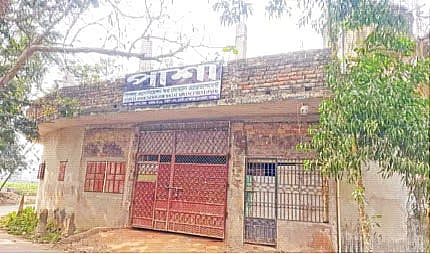
He has turned a room in his own house into the organisation’s office. It is not effectively an office; rather, it is the residence of the organisation’s executive director, Syed Humayun Kabir.
In terms of manpower, he is the only person. Yet, this organisation is deploying more than 10,000 observers in this year’s parliamentary election and referendum.
This “name-only” non-government organisation (NGO) is the People’s Association for Social Advancement (PASA). PASA’s registered office is located in Barampur village of Chunarughat upazila in Habiganj. Syed Humayun Kabir himself is the sole authority of PASA.
For monitoring the 13th National Parliamentary Election on 12 February, the Election Commission (EC) has approved PASA to appoint the highest number of observers. A total of 55,454 observers from 81 domestic organisations have received permission to observe this year’s parliamentary election and referendum. Of them, PASA alone accounts for 10,559 observers—19 per cent of the total domestic observers.
An investigation found that although PASA has no permanent staff of its own, it has been granted approval to observe the election in 127 constituencies this time. Generally, this so-called “voluntary” organisation has no projects of its own. It usually works as a partner of other NGOs. However, in this election, PASA itself is “appointing” other NGOs as partners for election observation.
No other observer organisation comes anywhere close to PASA in terms of the number of approved observers. After PASA, the second-highest number of approved observers (3,561) has been granted to Community Assistance for Rural Development (CARD). There are 15 organisations that are deploying more than 1,000 observers each.
To conduct election observation, local organisations must be registered with the EC. On 27 July last year, the current EC cancelled the registration of all previously registered observer organisations and invited fresh applications.
In the first phase, on 7 November, the EC granted registration to 66 domestic observer organisations. PASA was not among them. Later, in December, the EC registered PASA along with 15 more organisations. On 8 December, the EC published the list of 81 registered organisations.
On polling day, no one other than voters and EC-approved persons is allowed to enter polling centres. Approved observers are permitted to access all areas of polling centres except the voting booths. They are also allowed to be present during vote counting. Overall, organisations are required to observe how the election is conducted and submit a written report to the EC after the election.
What is known about PASA
According to information obtained from the Department of Social Services, PASA was registered as a voluntary organisation in 1993. On paper, the organisation’s main programmes include tree plantation, social movements against dowry, and free distribution of educational materials. Since its registration, the organisation has not applied to the Department of Social Services for approval of its executive committee.
There are various controversies surrounding PASA at the local level. On-the-ground inquiries in Habiganj reveal that PASA once rented offices in the Shayestanagar and Mohanpur areas of Habiganj town.
Following allegations related to offering jobs to women and subsequent protests by local residents, PASA had to vacate those locations. Later, it opened offices at different times in Chunarughat and Shayestaganj upazilas, but none of the offices remained permanent. Its office is now located in Barampur. There are allegations that PASA sold observer ID cards for small amounts of money in the past.
A visit to PASA’s office in Chunarughat
Last Wednesday, a visit to Barampur village – about 30 kilometres from Chunarughat upazila headquarters –revealed a signboard reading “People’s Association for Social Advancement (PASA)” affixed to a one-storey house east of Barampur Bazar. Local residents said this house belongs to PASA’s executive director, Syed Humayun Kabir, who uses one room of his residence as the organisation’s office.
At around 12:00pm, the main gate of the house was found locked, with a smaller side door also closed. Despite repeated calls, no one responded from inside.
Neighbours Shafiqul Islam and Junayed Mia said they knew the place as a residence. Although a PASA signboard is displayed, no office activities take place there. Humayun Kabir lives there with his family members.
Kadir Mia, a businessman at Barampur Bazar, told Prothom Alo, “We see a PASA signboard at Humayun’s house, but we have no idea what PASA actually does.”
The director of a microcredit NGO operating in Habiganj district headquarters described PASA as a signboard-only organisation. Speaking to Prothom Alo on condition of anonymity, he said PASA does not have government approval (from the NGO Affairs Bureau) to operate as an NGO.
Many people of Chunarughat upazila are familiar with PASA. One person told Prothom Alo that PASA had opened an office at Chunarughat Bazar several years ago. They had heard that PASA formed an election observation team during the 2001 election, and those assigned duties had obtained observer cards by paying Tk 500 or Tk 1,000.
Where PASA will be deployed
On 26 January, the EC published details of constituency-wise appointments of local election observers for the referendum and parliamentary election. It showed that a total of 47,457 observers were approved across all 300 parliamentary constituencies.
Of them, PASA received approval for 10,250 observers in 127 constituencies. However, PASA’s executive director claims his organisation will deploy 10,792 observers in 119 constituencies.
According to EC sources, constituencies where PASA has received approval include: three in Lalmonirhat, six in Rangpur, three in Kurigram, five in Gaibandha, six in Naogaon, two in Rajshahi, four in Natore, two in Sirajganj, five in Pabna, three in Kushtia, six in Jashore, three in Bagerhat, five in Khulna, four in Satkhira, four in Patuakhali, 11 in Mymensingh, five in Kishoreganj, two in Dhaka, one in Sunamganj, six in Sylhet, four in Moulvibazar, and four in Habiganj.
The list shows that PASA has 100 or more observers in 41 constituencies.
The organisation will deploy its highest number of observers—305—in Moulvibazar-3 constituency. Some other organisations also have more than 100 observers in certain constituencies.
Moulvibazar has four constituencies, and PASA has the highest number of observers in all of them. In Moulvibazar-1, the EC approved 286 observers from five organisations, of whom 273 are from PASA. In Moulvibazar-2, 277 observers from seven organisations were approved, including 241 from PASA. In Moulvibazar-4, 96 of the 152 approved observers are from PASA.
A similar picture is seen in constituencies in Sylhet, Habiganj and Brahmanbaria. PASA also dominates in northern districts. For example, in Lalmonirhat-1, a total of 257 observers from 10 organisations were approved, of whom 100 are from PASA. In Naogaon-1, 185 observers from eight organisations were approved, including 139 from PASA. Nearly the same pattern is observed in Naogaon’s other five constituencies.
PASA executive director Syed Humayun Kabir told Prothom Alo that PASA mainly works as a partner with various NGOs on microcredit, health, education and women’s issues. Currently, the organisation has no projects, which is why it is undertaking election observation work this time.
Regarding the cost of election observation, Humayun said that EC-registered organisations have applied for funding from various donor agencies, particularly the European Union. If funds are provided, expenses will be covered from those sources; otherwise, they will work on a voluntary basis.
Asked whether those going for observation have any training, Humayun Kabir said none of them have training. However, team leaders will be given training.
Regarding allegations that PASA sells observer ID cards, Humayun Kabir said that if one does good work, there will always be criticism. They work in favour of the truth, and any such criticism does not matter to him.
EC’s statement
In the first phase this time, the EC issued a public notice in September last year identifying a total of 73 organisations as eligible for registration. At that time, Prothom Alo reporters visited the offices of 43 of them. It was found that most of the organisations were small and lacked capacity. In some cases, applicants applied to become observer organisations by showing their own residences, abandoned rooms, or under-construction buildings as offices.
Prothom Alo investigations found that offices could not be located at the stated addresses of seven of the 43 organisations. Executives of six organisations listed their own residences or a single room as their address. Only six organisations had 50 or more staff members. In many cases, organisations were barely operating out of small offices consisting of one or two rooms.
A report on this issue was published in Prothom Alo on 30 September. Eventually, the EC registered 66 of the 73 organisations.
Regarding the approval of a large number of observers for the signboard-only organisation PASA, Senior Secretary of the Election Commission Secretariat Akhtar Ahmed told Prothom Alo on Thursday that organisations were registered as election observer bodies only after fulfilling the necessary conditions.
The registered organisations submitted their own observer deployment plans, and no irregularities were found, which is why approval was granted. He said, “If you think they are not appropriate, provide the information and I can take action.”
Observer controversies in the past
Earlier, the roles of two observer organisations—Abed Ali’s Election Monitoring Forum and the SAARC Human Rights Foundation—were also questioned in the controversial elections of 2018 and 2024. After the disputed 11th parliamentary election in 2018, the Election Monitoring Forum claimed that it had observed voting at 17,165 polling centres in 239 constituencies. Overall, it said, the election was held in a “very peaceful, beautiful and festive environment.”
There were not many international observers in that election. The SAARC Human Rights Foundation brought several foreign “observers,” including Canadian citizen Tanya Foster, to monitor the election. They stated that the election had been conducted in a highly fair manner.
Later, however, Tanya Foster gave a different account to Reuters. Late Election Commissioner Mahbub Talukder wrote in his book Nirbachonnama, “What happened involving a foreign observer in the election can be described as an observer scandal.”
Ahead of the 2024 election, Election Monitoring Forum again brought in several foreign nationals as so-called international observers, prompting Prothom Alo to publish a report titled “Who are actually being brought in under the name of foreign ‘observers’?”
Badiul Alam Majumdar, executive director of Citizens for Good Governance (SUJON), told Prothom Alo on Thursday that this indicates the EC did not conduct the necessary scrutiny when approving observer organisations. He alleged that some biased organisations were also allowed to observe the election.
According to him, it is unclear on what basis and through what process the EC approved observers. He added that the EC has previously shown leniency in candidate selection and appeals, and such incidents do not reflect positively on the EC’s capacity.