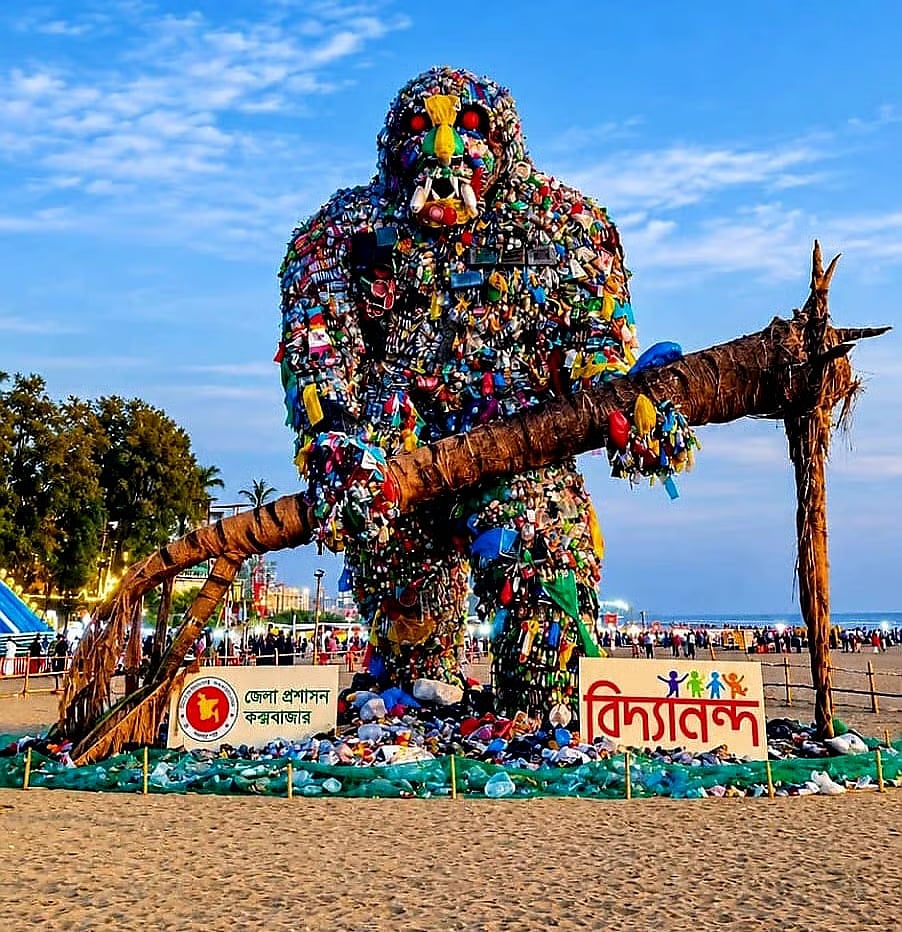
Giant plastic monster with a tree in hand emerges on Cox’s Bazar beach
A giant monster-shaped sculpture stands on the sand dunes of the Cox's Bazar sea beach. It has been made entirely from discarded plastic bottles. Tourists have gathered to see it. Some are taking photographs, while others are recording videos.
This was the scene at Sugandha Point on Cox’s Bazar beach last Wednesday afternoon. Bidyanondo Foundation has taken this unusual initiative to raise awareness about plastic pollution.
The organisation runs a ‘Plastic Exchange Store’ in Cox’s Bazar throughout the year. There, people can exchange discarded plastic for essential commodities, including rice, flour, sugar and edible oil. A portion of the plastic collected through this programme has been used to create the ‘Plastic Monster’ sculpture.
Cox’s Bazar Deputy Commissioner Md A Mannan inaugurated the sculpture exhibition on Monday, 12 October. Police Superintendent Sajedur Rahman and other officials were present at the event.
The sculpture will remain on display at the beach for the next four months. Films on tourism awareness will also be screened. Visitors will have to bring two discarded plastic bottles as an entry fee to watch the films.
The organisers said the ‘Plastic Monster’ sculpture was created to highlight how plastic used by tourists and local residents is polluting the sea and the harmful consequences of such pollution.
Through the four-month exhibition, they aim to raise awareness among several hundred thousand tourists and local residents about the harmful effects of marine pollution. The organisers said they want to encourage people to act responsibly in managing plastic waste.
Bidyanondo Foundation director Jamal Uddin said, “We often enjoy the beauty of the sea but forget our own role in polluting it. This monster, made from discarded plastic, is actually a reflection of our lack of awareness.
“We want people not just to take photographs of the sculpture and leave, but also to ask themselves where they are disposing of the plastic they use and what harm it is causing to the sea,” he added.
On the sculpture, Deputy Commissioner Md A Mannan said the sea is an important part of Bangladesh’s natural resources, biodiversity and economy. However, due to people's lack of awareness, plastic waste is threatening the marine and beach environment.
Such initiatives will bring the severity of pollution to people's attention and encourage changes in their behaviour. Everyone, including tourists, local residents, business owners and other stakeholders, must play a responsible role alongside the administration in keeping Cox’s Bazar clean, he added.