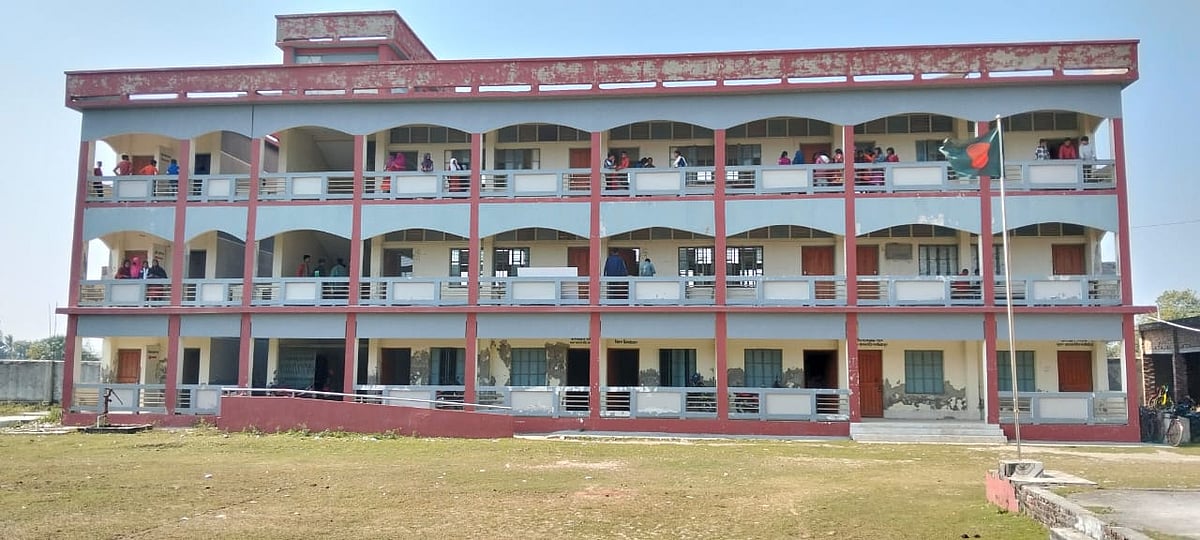
Bangladesh’s first “Adaptation Fortress” for protection from heatwaves, cyclones
For the first time in Bangladesh, a cyclone shelter is being designed not only to protect communities from storms but also to provide relief during extreme heat. The Jameel Observatory Climate Resilience Early Warning System Network (CREWSnet), a collaboration between MIT and Community Jameel, has begun construction of the pilot “Adaptation Fortress” in Baradal Aftab Uddin Collegiate School in Satkhira’s Assasuni upazila, in partnership with BRAC.
The Adaptation Fortress will transform an existing school and cyclone shelter into a safe and cool refuge during heatwaves, which are becoming increasingly frequent and severe in southwestern Bangladesh. Solar panels with battery backup will ensure continuous electricity for cooling even during power outages. Rainwater harvesting and a system to share excess energy with the community will make the shelter a local hub for resilience and wellbeing.
If the pilot is successful, the initiative could expand to 1,250 Adaptation Fortresses across the region, offering heatwave relief to half a million residents. A second pilot location has already been chosen at Satbaria High School in Jashore district.
Mohammed Abdul Latif Jameel KBE, founder and chairman of Community Jameel, said, “The Jameel Observatory-CREWSnet’s construction of this first pilot Adaptation Fortress marks a milestone for Bangladesh and the region. It lays the foundation for a proactive response to cyclones and heat stress - emergencies that the team has projected will become frequent events, threatening the lives of millions in Bangladesh. By adapting infrastructure today, we are building the resilience needed for tomorrow.”
Professor Elfatih Eltahir, lead principal investigator of the Jameel Observatory-CREWSnet, said, “Bangladesh built a vast network of cyclone shelters that have been effective in protecting vulnerable population. For the first time the Jameel Observatory-CREWSnet is introducing the concept of shelter from heatwaves as well as cyclones in southwest Bangladesh. This integrated and proactive initiative will significantly improve climate resilience in a region with some of the highest risks from climate change."
Deborah Campbell, executive director of the Jameel Observatory-CREWSnet, said, “Bangladesh is getting hotter and will experience more frequent and severe heatwaves, leaving many people very vulnerable to heat stress and lacking the resources to adapt. The Adaptation Fortress initiative will provide shelter for the most vulnerable community members in southwest Bangladesh and has the potential to serve as a model for similar proactive climate resilience infrastructure development across Bangladesh and South Asia.”
Md Liakath Ali, principal investigator of the Jameel Observatory-CREWSnet at BRAC, said, “BRAC is proud to partner with the Jameel Observatory-CREWSnet in pioneering the Adaptation Fortress initiative, an important step toward protecting vulnerable communities from the growing risks of extreme heat in coastal Bangladesh. By transforming existing cyclone shelters into multi-purpose, climate-resilient infrastructure, we are demonstrating how locally grounded solutions can address emerging climate hazards while strengthening community wellbeing. Alongside the pilot, we are committed to engaging policy makers so that future heat and climate risks are integrated into national planning processes. The lessons from this initiative will not only support communities in the southwest, but also inform long-term, scalable strategies for resilience across the country.”
Southwestern Bangladesh is home to more than 30 million people who face growing climate risks. Between 2019 and 2021, multiple cyclones caused widespread damage to homes and livelihoods. Rising temperatures now add another threat, with heatwaves disrupting schools, health services, and daily life. The Adaptation Fortress aims to protect the most vulnerable residents from both cyclones and extreme heat while serving as a blueprint for climate-resilient infrastructure.
The pilot shelter’s effectiveness will be assessed using community feedback, energy monitoring, and local weather data to inform the potential expansion of Adaptation Fortresses across the region and beyond.