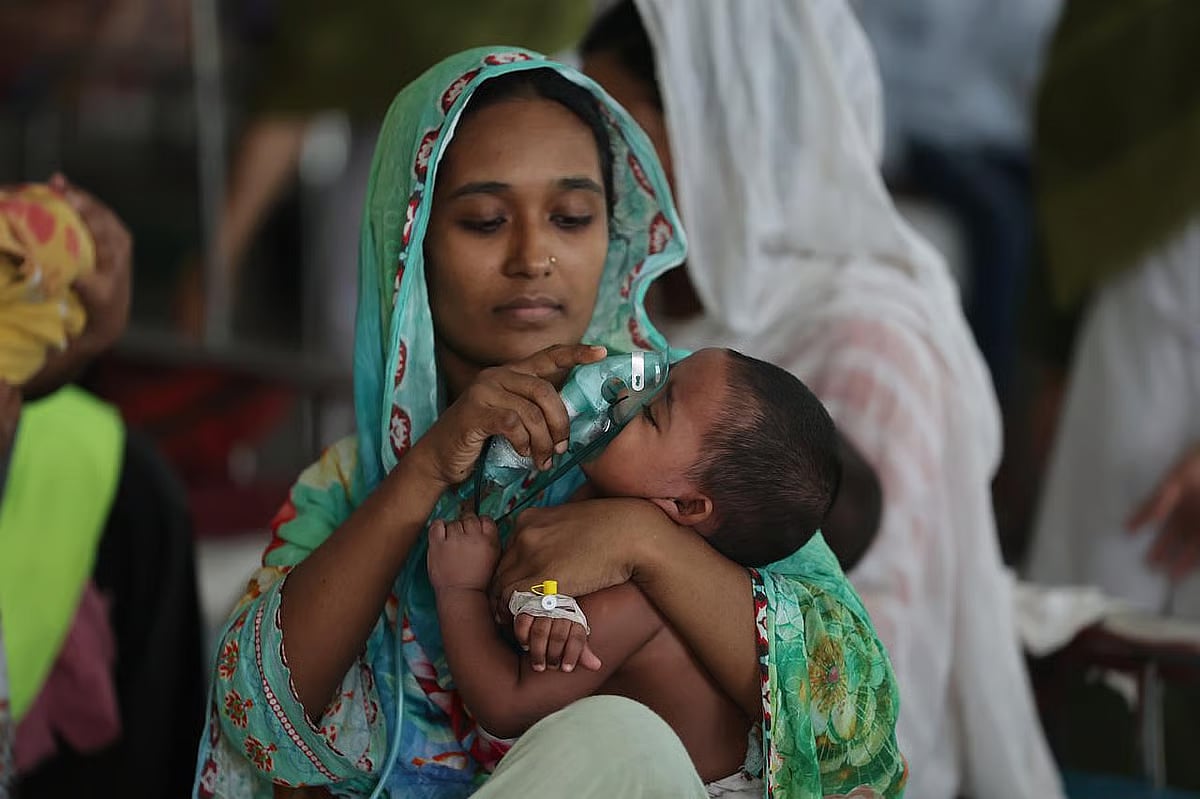
UNICEF helps vaccinate almost half of the world’s children and has been implementing this mandate for millions of Bangladeshi children on a yearly basis, helping the country prevent major outbreaks. Can you elaborate on this work process UNICEF laid out to protect children with mass immunisation in Bangladesh? How was Bangladesh was successful in preventing such outbreaks in the past?
UNICEF has placed immunisation at the core of its work since the international launch of the Expanded Program on Immunisation (EPI) in 1974, ensuring that every child, regardless of location, has access to life-saving vaccines. In Bangladesh, UNICEF has been providing extensive technical support to government since inception of EPI in Bangladesh in 1979.
UNICEF works with governments worldwide to ensure every child receives life-saving vaccines by combining global procurement strength, technical expertise, and community engagement. In Bangladesh, this partnership has led to major successes, including polio eradication, new vaccine introduction, and consistently high immunisation coverage. UNICEF support enabled Bangladesh to increase full immunisation coverage from 2 per cent in 1980 to 82 per cent in 2023.
In Bangladesh, UNICEF has supported major public health achievements, including polio eradication, elimination of maternal and neonatal tetanus, control of Hepatitis B, and the introduction of new vaccines such as HPV and TCV. UNICEF also promotes integrated, multi-sectoral approaches, leveraging education systems for school-based delivery, and linking immunisation with nutrition, WASH, and community platforms. In a nutshell, Bangladesh’s success comes from a combination of strong government leadership, data-driven strategies, community trust, and coordinated support from partner like UNICEF—allowing rapid scale-up of mass immunisation to protect every child.
Bangladesh’s Expanded Programme on Immunisation (EPI) oversees countrywide immunisation campaigns in line with the related health policy under the health ministry. What is the scope and nature of steps UNICEF took in the past to make EPI successful in vaccination drives?
In Bangladesh, UNICEF has been a key partner to the government since 1979, providing end-to-end support to make the immunisation programme one of the most successful globally. In essence, UNICEF’s support combines policy, systems, technology, and community action—ensuring vaccines reach every child, everywhere.
This includes strong advocacy and financing support, helping mobilise over USD 150 million in recent years and supporting national strategies on immunisation and equity. UNICEF also provides technical assistance for planning, microplanning, and implementation, alongside health systems strengthening to integrate vaccines into primary healthcare.
On the operational side, UNICEF ensures reliable vaccine supply and cold chain systems, including national and district-level storage and real-time temperature monitoring. We have also led digital innovation, introducing platforms like e-Tracker, GIS-based microplanning, and online registration systems, enabling millions of children and adolescents to be registered and tracked in real time.
Equally important, UNICEF drives community engagement and social and behavior change communication, working with communities, media, and local leaders to build trust and increase demand for vaccines.
How were your long-term plans aligned with government strategies to achieve past remarkable success in vaccination? In particular, how were micro-plans integrated and implemented in coordination with the government during this process?
UNICEF’s immunisation support in Bangladesh is closely aligned with national priorities and implemented in partnership with the government through joint annual work plans. Through its field presence and embedded technical support within the Expanded Programme on Immunisation, UNICEF helps strengthen coordination, day-to-day implementation, and problem-solving across the system.
This approach focuses on reinforcing national systems, supporting policy and planning processes, and ensuring that immunisation services are effectively delivered at all levels. UNICEF works alongside government and partners to improve programme quality, strengthen the health workforce, and ensure that essential services reach children, particularly in underserved areas.
Overall, UNICEF’s support is designed to help the Government sustain and strengthen its immunisation programme, with the shared goal of reaching and vaccinating all children across the country.
Bangladesh has recently experienced a major outbreak of measles. Questions are being raised about failures in timely vaccination. In a recent interview with ABC News, UNICEF’s representative in Bangladesh, Rana Flowers, said, “the previous government failed to get vaccines into the country and that they changed their procurement processes.” Did the interim regime abruptly change such critical health policy without prior consultation with UNICEF?
Globally, UNICEF plays a critical role in vaccine procurement and supply chain management, supplying around 45 per cent of vaccines to over 100 countries. In Bangladesh, this support has been provided under a formal agreement with the Government, ensuring timely, cost-effective, and equitable access to vaccines.
In 2025, the interim government decided to explore alternative procurement processes for 50 per cent of vaccines from the national revenue budget, and UNICEF and partners expressed their concerns with this process delaying the overall procurement process by up to 12. Despite these concerns, the decision to proceed with the open tender approach was maintained.
Regretfully, this decision generated delays in the procurement process. UNICEF mobilised pre-financing in 2025 to procure and deliver vaccines, helping to address acute shortages. This support enabled the country to maintain stock for some vaccines through December 2025, however some had stock out already and for others into January-February 2026.
However, the combined impact of funding delays and procurement transitions disrupted the vaccine supply chain, as procurement through open tender could not be completed and government could not disburse allocated revenue budget to UNICEF
After the formation of the new government in mid-February 2026, the new health minister, following conversations with UNICEF and partners, instructed cancellation of the open tender process in March, and the cabinet committee formally endorsed the decision in April 2026 to revert to procurement through UNICEF mechanisms to ensure timely vaccine availability going forward.
In absence of government collaboration, is there any mechanism within UNICEF to respond to any impending health crisis?
As noted earlier, UNICEF plays a critical role in global vaccine procurement and supply chain management, supplying around 45 per cent of vaccines to more than 100 countries. In Bangladesh, UNICEF has supported vaccine procurement since 1979 under a formal agreement with the Government, ensuring timely, cost-effective, and equitable access to quality-assured vaccines.
To prevent disruptions, UNICEF maintains a unique pre-financing mechanism to bridge delays in government fund disbursement, mobilising substantial resources to avoid stock-outs and ensure continuity of vaccination services. For example, UNICEF pre-financed approximately USD 18 million in 2025, and around USD 20 million between 2017-2018 and 2022 to sustain vaccine supply.
During the recent measles outbreak, UNICEF Headquarters mobilised additional technical expertise and emergency funding through its global emergency response mechanisms. UNICEF also worked closely with partners and donors like US and others to secure additional resources to support the national measles response and similar emergencies.
Reports show before the interim regime led by Yunus came to power, UNICEF in collaboration with GAVI used to supply vaccines for Bangladesh procured from Serum Institute but last year the process was abruptly halted. What are the lessons other countries can take from the interim administration’s health policy. Is it a wakeup call for the world?
UNICEF maintains long-term agreements with the Serum Institute of India and other manufacturers across Europe, Japan, and Asia that produce WHO-prequalified vaccines. Under these arrangements, UNICEF has been procuring vaccines directly from these manufacturers since the inception of the EPI in 1979, ensuring quality, reliability, and timely supply with lowest price. I have already mentioned how the procurement decisions taken by the interim government and how these changes affected the vaccine supply chain, resulting in stock-outs of vaccines.
The first case of measles has been reportedly detected back in first week of this January. Two months elapsed after January and the outbreak started taking toll? Do you think there is a delayed approach from the government to ready and provide health care alongside the start of new round of vaccination for the children since the detection in January?
The delayed reporting of measles cases reflects significant weaknesses in the disease surveillance and reporting system in Bangladesh. The current outbreak is the result of multiple factors, including vaccine stock-outs due to procurement challenges, delayed surveillance reporting, and reduced population immunity, further compounded by the inability to conduct the second round of Vitamin A supplementation due to procurement delays.
The Ministry of Health and UNICEF were formally informed of the surge in measles cases in late March 2026. Notably, UNICEF had already secured measles vaccines for a potential campaign in January 2026.
Following notification in late March, UNICEF strongly supported the immediate initiation of an MR (measles-rubella) campaign to contain the outbreak, finally launched on 5 April.
Recently a public health expert, told DW English service, that the national technical immunisation advisory group warned the interim government one and a half year ago to vaccinate children unless there would be a measles outbreak. When vaccination procurement was stalled, did UNICEF send any warning to the past interim government over a possible outbreak?
Yes, UNICEF also met with interim government leaders on multiple occasions and followed up with official letters after each meeting, alerting them to the risk of vaccine stock-outs and the potential for disease outbreaks, complications, and increased mortality.
Certain ministers have said that in five years there has been no vaccination for measles in Bangladesh. But data from WHO represents a different reality as it shows till 2024 vaccination scheme has been carried out. Also, in an interview this March with DW Bangla Service, Md Sayedur Rahman, who was appointed special assistant to the chief adviser for the Ministry of Health and Family Welfare, claimed no parents complained about vaccine outage during their regime. Even in last September, reports show health officials turned away parents from hospitals without administering vaccines to their children, citing jab shortage. How do you see this?
UNICEF has no comments about political statements and refers to official data of immunisation coverage, and appreciates government efforts to address the vaccination gaps and respond to the outbreak. Our focus is on supporting the government on responding the measles outbreak and ensuring every child is safe, as we have been doing in Bangladesh since 1979.
Thank You.
Thanks.