Local govt elections
NCP considering going it alone, but on what basis?
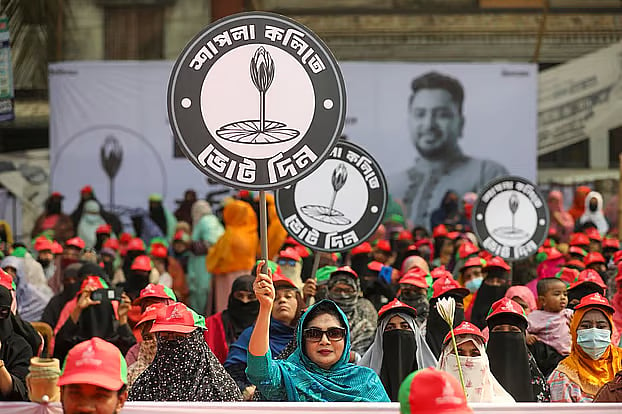
Even before preparations for local government elections have formally began, National Citizen Party (NCP) has announced mayoral candidates in several city corporations, sparking speculations in the political arena.
Questions have arisen over whether NCP would remain in alliance with Jamaat-e-Islami. Meanwhile, Jamaat has also started moving forward with plans to contest the local government elections independently.
So what will NCP do? Party leaders said they are taking up two types of preparations. For now, they are preparing to contest the elections independently. If a decision is made to form an alliance, that would be before the elections.
The government has not yet made a final decision on when the local government elections will be held. However, at a press conference on 5 May, Information and Broadcasting Adviser to Prime Minister Tarique Rahman, Zahed Ur Rahman, said the elections are expected to begin toward the end of this year.
NCP, formed out of the July uprising, took part in the 13th parliamentary election held last February as part of the 11-party alliance led by Bangladesh Jamaat-e-Islami. The party fielded candidates in 30 constituencies and won 6 seats. In addition, NCP candidates finished second in 17 constituencies, making them the closest rivals to the winning candidates from Bangladesh Nationalist Party (BNP).
The emergence of the Gen-Z-based NCP generated considerable optimism, but that enthusiasm did not translate into strong results at the ballot box. That also became a topic of speculation in international media. Even so, the party has begun preparing to contest the local government elections independently.
On 29 March, NCP announced party candidates for mayoral posts in five city corporations, including Dhaka South and Dhaka North City Corporations. Party leaders said candidates for the remaining city corporations would also be announced soon. Then, on 10 May, the party announced candidates for chairman and mayoral positions in 100 upazilas and municipalities. Another batch of candidates for 100 more upazilas and municipalities is scheduled to be announced on 20 May.
Responsible leaders of the party say the main reason behind announcing local government election candidates so early is to advance their preparations. Another reason is to introduce the candidates to the public ahead of time and organise the party structure in their respective areas around those candidates. Just as Bangladesh Jamaat-e-Islami gained an advantage in the parliamentary election by announcing candidates early, NCP also wants to benefit from the same strategy.
A senior NCP leader told this correspondent that tensions between Jamaat and NCP over candidacy in this city have created the possibility that an alliance may not materialise in the upcoming local government elections.
Party leaders say they are moving forward with preparations so that if an alliance does not materialise in the end, the NCP will still be ready to contest the local government elections independently.
NCP policymakers believe that, alongside the support and political momentum created by the July uprising, the vote bank of Bangladesh Jamaat-e-Islami also played a role in helping the party secure six parliamentary seats. However, they also claim that other allies in the 11-party alliance, including Jamaat, benefited from the NCP’s support during the election.
According to party sources, many NCP leaders are in favour of contesting local government elections through alliances. Their assessment is that the NCP has not yet developed the expected organisational strength to contest elections independently.
However, another faction within the party supports going alone. Their view is that contesting independently would allow the NCP to identify its strengths and weaknesses and move forward accordingly.
NCP has announced party spokesperson Asif Mahmud Shojib Bhuiyan as its mayoral candidate for Dhaka South City Corporation. In Dhaka North, the NCP’s mayoral candidate will be the party’s senior joint convener and convener of the Dhaka North unit, Ariful Islam Adib.
In addition, Cumilla City Corporation will see Tariqul Islam, the convener of Jatiya Jubo Shakti, as the mayoral candidate. In Rajshahi City Corporation, Md. Mobasher Ali, the convener of the city NCP unit, has been announced as the mayoral candidate, while in Sylhet City Corporation, Abdul Rahman Afzal, the convener of the city NCP unit, has been named the party’s mayoral candidate.
It has been learned from party sources that the Bangladesh Jamaat-e-Islami has objected to Asif Mahmud Shojib Bhuiyan in Dhaka South. The party has finalised DUCSU Vice President Md. Abu Shadik as its candidate there. The prospect of these two student leaders from the July uprising competing in the electoral field has sparked widespread discussion on social media.
A senior NCP leader told this correspondent that tensions between Jamaat and NCP over candidacy in this city have created the possibility that an alliance may not materialise in the upcoming local government elections.
Regarding local elections, NCP senior joint convener Ariful Islam Adib told Prothom Alo: “The National Citizen Party did not get sufficient time to prepare for the 13th parliamentary election. The party’s organisational base was also not strong enough everywhere at the time. Learning from that, we have now begun extensive preparations for the local elections.”
However, indicating that an alliance is still possible, Adib added: “Whether we will contest as part of an alliance or independently will be decided before the election. But we cannot sit idle waiting in hope of an alliance or uncertainty over whether it will happen. We are moving forward with our preparations independently.”
Party expansion focuses on Awami League too
Alongside announcing candidates for local government elections, NCP has also taken initiatives to expand its organisational base. This effort is also linked to the local government elections.
The party is seeking to bring in leaders and activists from various levels of BNP, and even those from Awami League, whose activities are currently banned, provided they are not involved in criminal offences. NCP is also considering nominating individuals with organisational capability from among them as candidates in local government elections.
Along with many respected individuals with clean reputations, people from other parties have already joined the party, and discussions are ongoing with many more. Overall, we are advancing both organisational restructuring and preparations for the local government electionsAriful Islam Adib, NCP leader
On 10 May, while announcing candidates for 100 upazilas and municipalities across the country, the chairman of NCP’s Local Government Election Management Committee, Sarjis Alam, said, “Hardworking and acceptable individuals from any other political party who have never been involved in oppression against people, and who have no direct involvement with fascists or their criminal activities, regardless of which political party they belong to, may apply to become candidates of NCP.”
This initiative for party expansion was taken after the 13th parliamentary election. The process began on 19 April, when 44 leaders and activists from the AB Party, UP Bangladesh, and the Anti-Discrimination Student Movement joined the NCP.
Later, on 24 April, several individuals including expelled BNP leader Ishaq Sarkar and Fersamin Huq Iqbal, granddaughter of Sher-e-Bangla AK Fazlul Huq, joined NCP.
On 5 May, Mohammad Nadeemur Rahman, son of former Jamaat-e-Islami ameer Matiur Rahman Nizami, along with Abdullah Mohammad Hossain, a descendant of Haji Shariatullah, and Professor MAH Rafiq, formally joined NCP.
Most recently, on 8 May, 36 more individuals, including leaders and activists from the Ganadhikar Parishad and other organisations, as well as people from various professions, joined the party.
Through party expansion, NCP leaders believe a positive message is being sent about their organisational strength at the grassroots.
According to a top party leader, NCP is now the third-largest party in parliament. Many important figures are joining the party, and discussions are ongoing with several more influential individuals. Among them, there are some whose joining would create significant public attention. Some may join even before the elections. Overall, NCP believes it will be in a favourable position in the local government elections, which will help it build organisational strength across the country.
NCP leader Ariful Islam Adib told Prothom Alo: “Along with many respected individuals with clean reputations, people from other parties have already joined the party, and discussions are ongoing with many more. Overall, we are advancing both organisational restructuring and preparations for the local government elections.”