Peaceful transfer of power is Bangladesh’s greatest challenge: Akhter Hossen
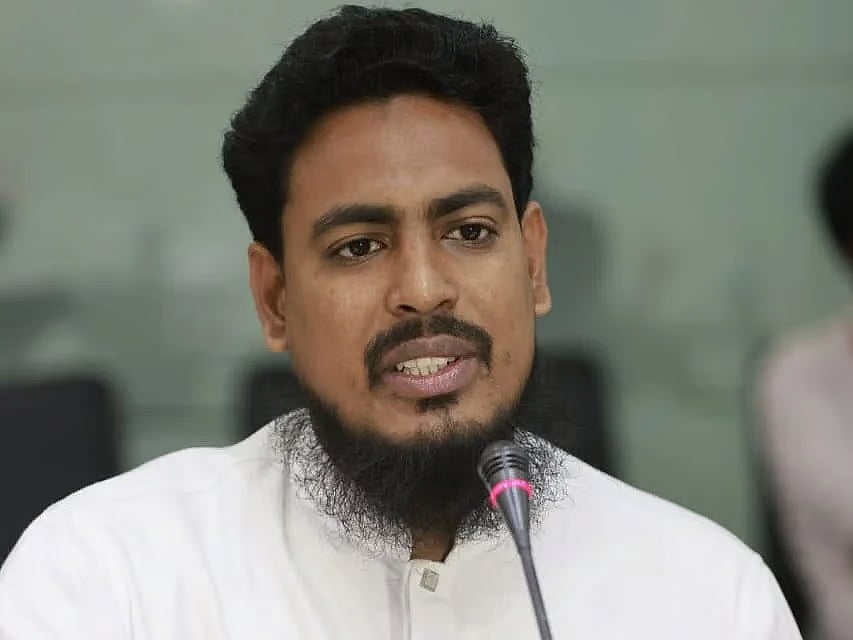
Those who have come to power in Bangladesh have always sought to consolidate their hold on it, remarked Akhter Hossen, member secretary of the National Citizen Party (NCP).
He also said that achieving a peaceful transfer of power remains the country’s greatest political challenge.
To address this, the NCP has presented a framework for peaceful power transition as part of its proposals for fundamental reforms to the National Consensus Commission, Akhter added.
The NCP leader made these comments at a roundtable titled “Inclusive and Fair National Election: Citizens’ Expectations from Political Parties,” organised by ActionAid Bangladesh and Prothom Alo at the newspaper’s office in Karwan Bazar, Dhaka on Monday afternoon.
Earlier in the programme, ActionAid Bangladesh’s Women’s Rights Lead, Morium Nesa, presented recommendations derived from roundtables held in nine districts. The session was moderated by ActionAid Bangladesh’s country director, Farah Kabir.
Akhter Hossen said, “The very notion that power can be transferred peacefully is something we have rarely seen among political parties in the past. What we have seen instead is that those who came to power primarily focused on how to entrench themselves for a longer period. We want to put an end to that pattern.”
Referring to the return of the caretaker government system, the NCP leader noted, “We have made several distinct proposals—particularly on how the formation of a caretaker government can include participation from all political parties, and how it can be made free from the influence of the incumbent ruling party.”
Commenting on the state of politics in Bangladesh, he said, “In reality, there was no genuine political environment in the country. What we have seen instead is a kind of thuggery and muscle politics that has been established as the dominant form of politics in the public mind.”
“The peaceful transfer of power is the most urgent issue in Bangladesh,” he emphasised. “When we talk about youth participation and women’s participation in elections, these are intrinsically linked to the process of peaceful power transition.”
Speaking on women’s political engagement, Akhter Hossen said, “We debated this issue for a long time within the Consensus Commission. Eventually, all political parties agreed that women should be directly elected to parliament. However, we could not implement that beautiful proposal because of disagreements over the mechanism—whether it should be through a cluster or rotational system.”
Highlighting the NCP’s commitment to women’s empowerment, he said, “The National Citizen Party includes significant participation from women as well as young people. We have tried to ensure that women are meaningfully represented in the party’s policymaking structure.”
In addition to Akhter Hossen, the discussion featured BNP leader Salahuddin Ahmed; Syed Abdullah Mohammad Taher, Jamaat-e-Islami’s naib-e-ameer; Abdullah Kafi Ratan, general secretary of the Communist Party of Bangladesh (CPB); AB Party chairman Mojibur Rahman Monju; Taslima Akhter, president of Garment Workers’ Solidarity; former adviser to the 2007–08 caretaker government Rasheda K. Choudhury; professor Kazi Maruful Islam of the University of Dhaka’s Department of Development Studies; Prashanta Tripura, country director of The Hunger Project; Mahrukh Mohiuddin, organiser of the Women’s Political Rights Forum; and Nazifa Jannat, East West University student and former coordinator of the Anti-Discrimination Student Movement.