Analysis
BNP, Jamaat, NCP raise allegations of bias, advisers embarrassed
Differences persist among the BNP, Jamaat-e-Islami, and the National Citizen Party (NCP) on various political issues, including the July National Charter. The latest controversy stems from allegations by these three parties that some members of the Advisory Council are biased toward particular political groups. The claims have caused discomfort among several advisers.
None of the parties have publicly named the advisers in question, but discussions within the council and the broader political sphere suggest that seven to eight names are being circulated.
On Friday, Adviser for Road Transport, Railways, and Power Muhammad Fouzul Kabir Khan addressed the issue on Facebook. He wrote, “Questions have been raised about the neutrality of advisers during the chief adviser’s meetings with three political parties. My name is reportedly on one party’s list. I can only say that I am not accustomed to thinking or deciding with bias. I have always acted without favour or prejudice in the government’s decision-making process.”
Fouzul Kabir suggested issuing an ordinance to prohibit the chief adviser, advisers, special assistants, and contract-based officials of the interim government from taking up any profit-oriented position under the next elected government. He believes this could resolve concerns about impartiality.
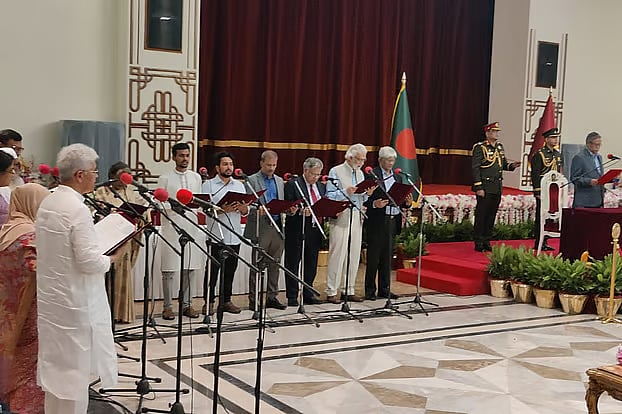
Following the fall of the Awami League government in the July uprising last year, the interim government led by Professor Muhammad Yunus was formed on 8 August. The current Advisory Council, including the chief adviser, consists of 23 members, some nominated by different political parties. Initially, two student representatives were also appointed as advisers.
At first, political parties did not question the council’s neutrality, except for minor reshuffling of portfolios. However, by May, the BNP began voicing concerns about the inclusion of the two student representatives.
The issue gained momentum this month. In a television interview, NCP Convener Nahid Islam alleged that “many advisers have made liaison with various political parties and are now looking for a safe exit.”
On 14 October, at a human chain event in Dhaka, Jamaat’s Nayeb-e-Ameer Syed Abdullah Muhammad Taher accused several advisers of engaging in conspiracies and claimed to possess recordings of their conversations. He alleged that four to five advisers were controlling appointments in favour of a particular party, thereby jeopardising prospects for a fair election.
In its meeting with the chief adviser on Tuesday, the BNP demanded the removal of “partisan” advisers. The party had already expressed dissatisfaction with the two student representatives and has now objected about another adviser.
The following day, Jamaat-e-Islami also complained to the chief adviser that some advisers were working in favour of BNP, though it did not name anyone. The same day, NCP leaders in their separate meeting said that if any adviser needed to be removed, not just student representatives but also those representing “different political or social groups” should be considered.
These cross-allegations have created unease within the Advisory Council. Speaking to Prothom Alo on Saturday, one adviser described the accusations as “distressing,” saying they lacked any factual basis. The parties are using these statements as a strategy to secure advantages for themselves, but it sends a wrong message to the public, the adviser said.
Why the parties are doing this
According to sources within the government and political circles, rivalry between the BNP and Jamaat over bureaucratic influence has existed since the interim administration’s formation. Both parties have been competing to place loyal officials in key positions in the civil service and police.
The latest disagreement arose over the transfer and appointment of the senior secretary of the Ministry of Public Administration and the head of its Appointment, Promotion, and Deputation (APD) wing. Late last month, Senior Secretary Md Mokhlesur Rahman was removed from the ministry. The BNP reportedly recommended one of its preferred candidates for the post, who was far junior in rank. The request was not accepted, and a month later, Ehsanul Haque, senior secretary of the Road Transport Ministry, was appointed instead—a decision the BNP did not oppose.
Sources say both BNP and Jamaat have submitted lists of names for appointments and transfers in public administration and police, seeking to ensure postings of their choice. Some advisers believe that these complaints of favouritism arise mainly when the decisions do not favour particular parties.
Meanwhile, NCP, which initially enjoyed significant influence within the interim government, has seen its clout wane. The Election Commission’s decision not to grant the water lily symbol and the chief adviser’s reported suggestion that two student advisers resign by mid-September weakened its position. Party insiders believe the NCP’s recent allegations of bias are part of a strategy to retain leverage and protect its student representatives.
Government’s position
The advisers targeted by BNP, Jamaat and NCP all hold important portfolios. Senior government sources say the chief adviser and the upper tier of the interim government view these allegations as part of routine political posturing.
Chief Adviser Professor Muhammad Yunus has reportedly instructed his colleagues to continue their duties and focus on election preparations.
At a Thursday briefing at the Foreign Service Academy, Law Adviser Asif Nazrul remarked, “We discuss these statements among ourselves and wonder what they actually mean. Even when they seem satisfied, they make such demands from time to time. We are not disturbed by them. Frankly, we’re just trying to finish our job and leave as soon as possible.”