BNP exerting unjust pressure on govt: Jamaat leader Taher
Bangladesh Jamaat-e-Islami’s nayeb-e-ameer Syed Abdullah Mohammad Taher has accused the Bangladesh Nationalist Party (BNP) of exerting unjust pressure on the interim government despite having earlier agreed to the reform process outlined in the July Charter.
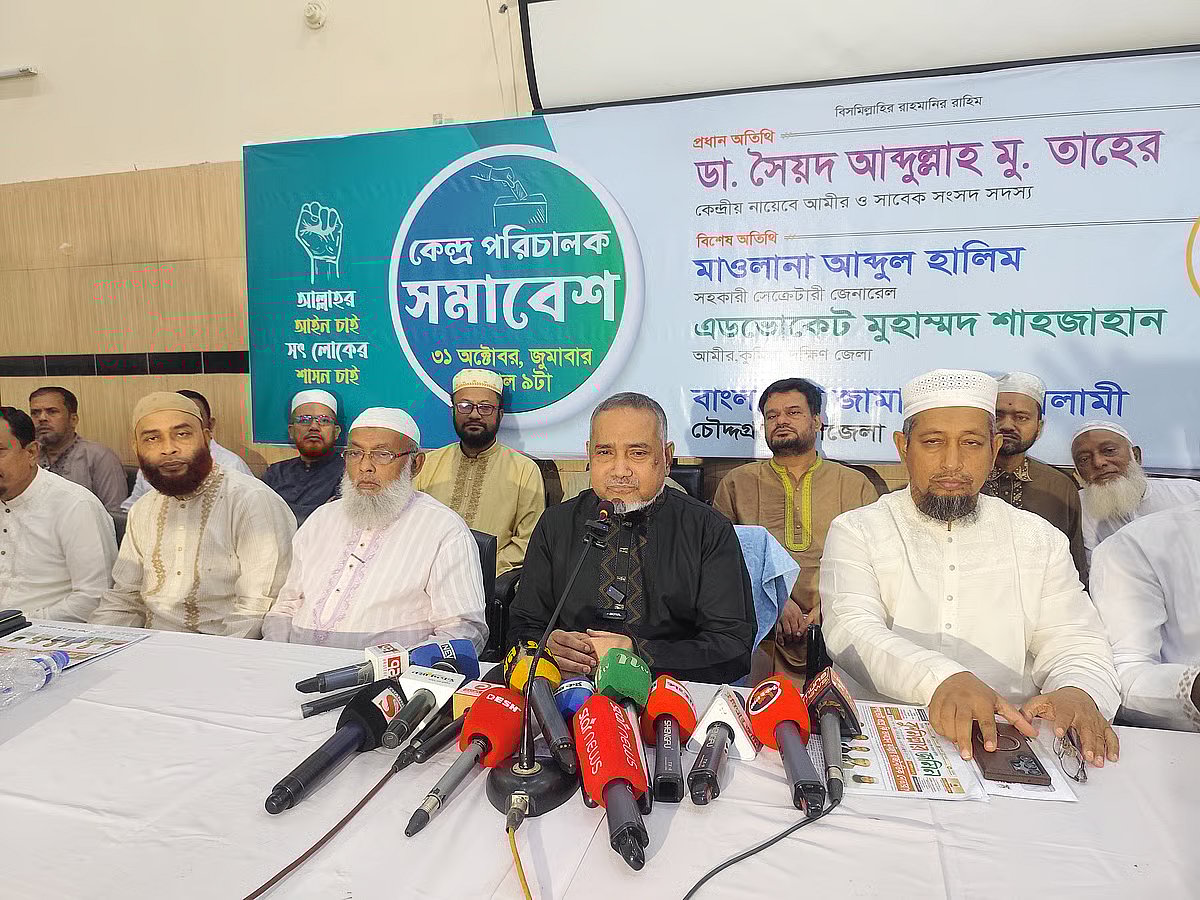
Speaking to journalists on Friday morning at an event at Cumilla Central Medical College auditorium in Paduar Bazar, Cumilla Sadar Dakshin, Taher said, “Through the Consensus Commission, we all reached an agreement and signed the July Charter. After reviewing everything, we collectively decided that the Charter would be adopted through a constitutional order, followed by a referendum. The parliament formed through the election after the referendum would incorporate it into the constitution within 270 days. Everything was settled — we agreed, and the BNP agreed. But suddenly, the BNP has made a U-turn. After being part of the Consensus Commission and signing the Charter, they are now saying they do not accept it. At present, the BNP is unjustly putting pressure on this government.”
Taher made the remarks as the chief guest attending a polling centre directors’ conference organised by Chaudhagram Upazila Jamaat.
He went on to say, “If the BNP had objections to the reforms, they could have said so before the process began. Then the July Charter could have proceeded — or not — without them. After so many political parties spent time and effort reaching a unified position, the BNP is now opposing the reform. I consider this a sign of irresponsibility. The BNP is deliberately attempting to create a political crisis. By raising doubts about the election scheduled for February, they are employing a new ploy to mislead the people.”
Reiterating Jamaat’s position, Syed Abdullah Mohammad Taher added, “Jamaat-e-Islami has said from the beginning that reforms must be endorsed by the people through a referendum, as sovereignty rests with them. Now the BNP says they accept the referendum but want the national election and the referendum to be held simultaneously. But the referendum concerns the reform process, while the national election concerns government formation. They are trying to mix two entirely different issues. They have been deciding to create problems everywhere.”
He further remarked, “If the election doesn’t take place, the BNP stands to gain nothing. So why are they behaving this way? I fail to understand. If the election doesn’t take place, it would only give those conspiring from India another opportunity. Judging from their actions, it seems the BNP is trying to bring back the pre-reformed Bangladesh we saw under the Awami League. Let me be clear — the people of this country will never allow Bangladesh to return to that era of Awami jahiliyat.”
Taher also cautioned the government. “If this government bows to pressure and retreats from its decisions, it will prove that it is no longer neutral. A government that loses neutrality and shows allegiance to any party cannot be expected to oversee a fair election. The public’s trust in this government is already in question. If it starts representing any party’s interests, there will be no reason left to place confidence in it.”
The conference was chaired by Mahfuzur Rahman, ameer of Chaudhagram Upazila unit Jamaat, and attended by Abdus Sattar, team member of Jamaat’s Cumilla region; Mohammad Shahjahan, ameer of Cumilla South District Jamaat; Mahbubur Rahman, secretary of Cumilla town Jamaat; Mojibur Rahman Bhuiyan, central vice-president of the Bangladesh Labour Welfare Federation; and Sahab Uddin, former ameer of Chaudhagram Upazila Jamaat, among others.