All have moral, political responsibility to implement reforms: Ali Riaz
Professor Ali Riaz, special assistant to the chief adviser, and former vice-chairman of the National Consensus Commission, stressed political considerations over legal ones in implementing the July Charter.
Professor Ali Riaz said, “In politics, the first and foremost consideration has to be political, not merely legal. We are reminding everyone that there has been a public mandate and people also have expressed support for political parties. Therefore a coordination has to be made within this. The responsibility for coordination lies with politicians.”
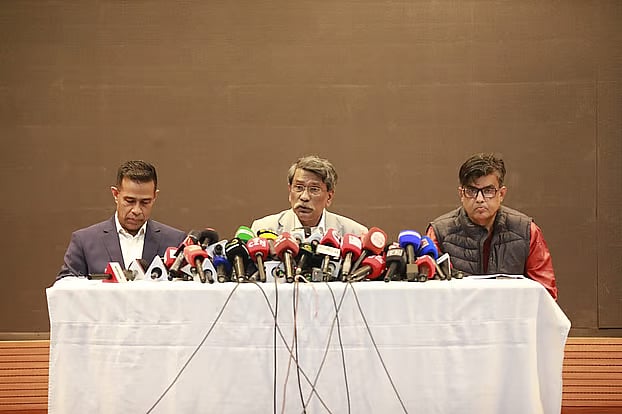
Ali Riaz made the remarks while responding to questions from journalists at a press conference at the Foreign Service Academy in the capital Saturday morning. The press conference was organised to brief the media on the results of the recently held referendum.
Ali Riaz said in response to a question whether the BNP, the party set to form the government, has any legal obligation to implement the reforms that the referendum was held as an expression of the will of the sovereign people. All political parties, including the BNP, therefore have a moral and political responsibility in this regard. He said, “I hope political matters will be considered in that spirit rather than being confined only to written legal provisions.”
Ali Riaz also said the public mandate has emerged on the basis of the proposals placed in the referendum. The BNP has consistently played a leading role in reflecting the aspirations of the people. The party is therefore expected to take those expectations into account in governing the country and carrying out constitutional reforms.
Professor Ali Riaz said political parties presented their own manifestos and their top leaders also urged voters to cast a ‘yes’ vote. The victory of ‘yes’ in the referendum is therefore not only the government’s agenda; it is the agenda of the state and all political parties.
Ali Riaz said people endorsed party manifestos in an indirect manner, but through the referendum they directly approved the proposal for major constitutional reform. This should be viewed as a public mandate. It should be seen as a clear expression of the people’s will for reform.
Ali Riaz said priorities in implementing reforms will depend on how the process moves forward. The formation of an upper house must be completed within six months as there is a specific directive to that effect. The ruling party and the relevant political parties will determine the order of priority.
He said at the beginning of the press conference that political parties bear the responsibility of implementing the clear public mandate expressed through the referendum. All political parties are committed to state reform. He called on the ruling party, the parties represented in parliament and the constitutional reform council, as well as those outside parliament, to ensure implementation of this mandate through dialogue and unity.
Ali Riaz said in response to a question whether he would assume any new role that he wants to return to his profession as soon as possible.
He expressed gratitude at the start of the press conference to people from different sections of society for their support in campaigning and raising public awareness about the referendum. Special assistant to the chief adviser Monir Haider and press secretary Shafiqul Alam were also present at the time.