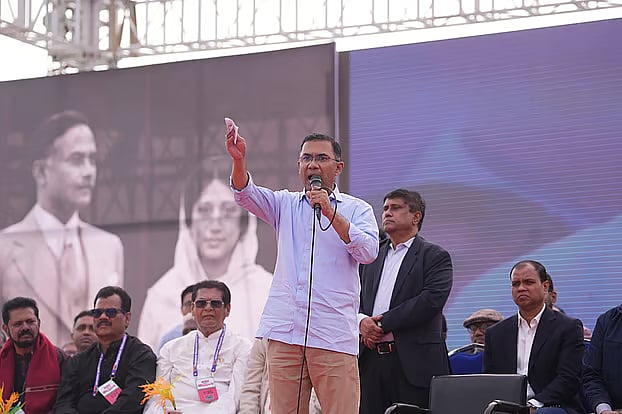
48th founding anniversary
BNP in power, yet organisation under strain
After nearly two decades out of power, the Bangladesh Nationalist Party (BNP) is now back in government. The party’s chairman, Tarique Rahman, serves as Prime Minister.
Many top-tier leaders have joined the cabinet, while a substantial portion of important central and grassroots leaders now hold seats in parliament.
Several others have been appointed to positions across various state institutions. Consequently, they are largely absorbed in the duties of governance—a shift that has naturally impacted party affairs.
It is against this backdrop that the BNP celebrates its 48th founding anniversary today, 1 September. Six months after returning to power, the party faces a pivotal question: how effectively can it keep its organisation active and connected with the public while bearing the responsibilities of government?
During its two decades in opposition, political movements and street protests formed the core of the BNP’s activities. Today, that focus has shifted to governing the country.
Discussions with leaders at various levels reveal that organisational momentum has diminished from the top level down to the grassroots. Aside from observing commemorative events, major political initiatives have become visibly scarce.
Activities around the centers of power
With the return to power, the nature of local-level politics within the BNP has also evolved. After enduring two decades of legal prosecution, arrests, and political pressure, many leaders and activists are now focused on securing party positions, government benefits, or party endorsement in upcoming local elections.
A new wave of activity has emerged around Members of Parliament and government ministers in the districts and upazilas. For many local figures, the primary objective has become traveling to Dhaka to meet senior leaders, asserting their local influence, and securing endorsements for local elections. This dynamic has been further complicated by long-standing internal rivalries and grievances over past neglect.
During its two decades in opposition, political movements and street protests formed the core of the BNP’s activities. Today, that focus has shifted to governing the country.
Alongside activists who were active during the opposition years, there are complaints that inactive or opportunistic individuals are now attempting to cozy up to party leadership in various areas.
The inclusion of individuals, who were absent during major political movements, into government and administrative positions has stirred resentment among the grassroots.
Furthermore, allegations have surfaced that a section of party activists has become embroiled in acts of mob violence, extortion, land grabbing, and other forms of misconduct.
Addressing these issues during a parliamentary party meeting on 27 August, Minister for Home Affairs Salahuddin Ahmed issued a firm warning.
He stated that unless individuals reform their conduct, no leniency would be shown in the interest of maintaining law and order.
Party leaders express concern that if these tendencies are left unchecked, frustration will deepen among dedicated, long-standing activists, ultimately damaging the image of both the party and the government.
Following the formation of the government under Tarique Rahman on 17 February, the BNP assumed two parallel responsibilities: administering the state and keeping the party organisation active.
Although the central leadership claims to be taking organisational measures, questions remain over how effectively these directives are being implemented on the ground.
Crisis and political pressures
Within its first six months in office, the government has faced a severe fuel crisis alongside acute shortages of gas and electricity across various regions. The law and order situation has also remained a point of concern.
Opposition groups, including Jamaat-e-Islami and the National Citizen Party (NCP), have grown increasingly vocal over these issues.
Failure to resolve these challenges swiftly could amplify political pressure on the BNP.
However, BNP’s Acting Secretary General, Ruhul Kabir Rizvi, maintains that the government alone is not to blame for these crises.
Speaking to Prothom Alo, he noted that these issues stem largely from global factors, emphasising that natural disasters and unexpected emergencies occur without warning.
Rizvi attributed the gas and electricity shortages to the global energy crisis triggered by the US–Iran conflict, adding that the government is working day and night to resolve the situation.
Busy in government, stagnant in organisation
Following the formation of the government under Tarique Rahman on 17 February, the BNP assumed two parallel responsibilities: administering the state and keeping the party organisation active.
However, because many senior decision-makers entered the cabinet and a large portion of central and grassroots-level leaders became MPs, the time devoted to organisational work has declined.
The party will need to address challenges such as the influence of local MPs in committee formation, the fair evaluation of active movement veterans, and the delicate balance between senior and rising leaders.
Senior party leaders warn that if this state of affairs persists, it could disrupt the balance between government duties and party responsibilities, intensifying organisational inertia.
To address this slowdown, Ruhul Kabir Rizvi was appointed Acting Secretary General shortly after Mirza Fakhrul Islam Alamgir stepped down from the role upon assuming the presidency.
Additionally, four new members were inducted into the Standing Committee. Party leaders believe that expanding the top decision-making body creates better opportunities to coordinate between government policy and organisational work.
Local elections: The first major test
The upcoming local government elections are likely to serve as the first major test of the BNP’s organisational strength. Across all levels—from Union Parishads to Upazilas, Municipalities, and City Corporations—the number of aspirants seeking party nomination is rising rapidly. With multiple leaders vying for the same posts, internal competition has intensified in many areas.
Several dedicated leaders who have yet to be recognised or appointed to official roles told this correspondent that the unity forged among activists during their years in opposition is now being eroded by competition over positions and election endorsements.
They expressed concern that supporting candidates favoured by influential leaders could prompt disgruntled members to contest as rebels. Conversely, ignoring local popularity and grassroots acceptance could negatively impact electoral outcomes.
Over the past 48 years, the BNP’s proudest legacy and achievements have been safeguarding national independence, strengthening sovereignty, and establishing multi-party democracy.Acting Secretary General Ruhul Kabir Rizvi
The central leadership maintains that candidate selection will prioritise local popularity, organisational contributions, a clean image, and party loyalty. Nevertheless, harmonising the views of local MPs with those of grassroots leaders remains a considerable challenge.
To manage these grassroots tensions, party Chairman and Prime Minister Tarique Rahman has been conducting a series of organisational meetings with leaders from different regions.
He has issued directives to strengthen the party, preserve unity, prevent divisions during local elections, and ensure that MPs do not become alienated from local party structures.
Push for restructuring
To break the organisational stalemate, initiatives are underway from the central level down to district and upazila units to restructure party committees.
Plans include dissolving expired committees, replacing inactive figures with active members, and bringing fresh leadership into affiliate and associate organisations.
Political analysts note that with a significant portion of senior leaders absorbed in government and parliamentary duties, there is a clear need to elevate second- and third-tier leaders.
However, according to them, restructuring carries its own risk of internal friction. The party will need to address challenges such as the influence of local MPs in committee formation, the fair evaluation of active movement veterans, and the delicate balance between senior and rising leaders.
Analysts argue that the structures and strategies utilised while in opposition are inadequate for meeting the demands placed on a ruling party. Hence, reactivating dormant committees, executing multi-level reorganisations, and ushering in new leadership have become urgent priorities.
After two decades out of power, this marks the first time the BNP is celebrating its founding anniversary while in government. Reaching this milestone required everyone—from top leaders to grassroots workers—to endure immense sacrifices, persecution, legal harassment, and hardship.National Professor Mahbub Ullah
Speaking to Prothom Alo, Acting Secretary General Ruhul Kabir Rizvi stressed that over the past 48 years, the BNP’s proudest legacy and achievements have been safeguarding national independence, strengthening sovereignty, and establishing multi-party democracy.
He highlighted that founder martyred President Ziaur Rahman laid the groundwork for national self-reliance and progress, a legacy subsequently carried forward through immense sacrifice and struggle by Begum Khaleda Zia.
Today, their son, Tarique Rahman, leads both the party and the government in rebuilding the nation, he stated.
Expanded responsibilities
It was on 1 September 1978, at the open grounds of Ramna Batamul in Dhaka, that President Ziaur Rahman officially announced the formation of the Bangladesh Nationalist Party (BNP).
Recalling the history, National Professor Mahbub Ullah told Prothom Alo that after two decades out of power, this marks the first time the BNP is celebrating its founding anniversary while in government.
Reaching this milestone required everyone—from top leaders to grassroots workers—to endure immense sacrifices, persecution, legal harassment, and hardship, he pointed out.
He further said despite these trials, they remained united, fighting in the hope of better days. That time has arrived, but with it come far greater responsibilities.
Professor Mahbub Ullah further said that over the past six months, the BNP has strived to fulfill its duties and begin implementing its electoral commitments. However, the government faces major hurdles, particularly the power and energy crises, alongside administrative and law enforcement challenges, as the police force is not yet fully functional.
Additionally, the administration is not receiving the desired level of cooperation from the bureaucracy, making state governance exceptionally difficult, he observed.
Under these circumstances, the BNP must reach out to the public, explain the root causes of these crises, and convey that much of the present hardship was inherited, he argued.
If the situation is clearly communicated, he noted, the public will surely understand.