CUCSU election panel review-2
Controversial past, yet hopeful: Chhatra Shibir eyes comeback
In the last Chittagong University Central Students’ Union (CUCSU) election, candidates of Islami Chhatra Shibir lost to the All-Party Students’ Alliance. Yet, even in defeat, Chhatra Shibir’s “influence” on campus remained visible.
When they were later ousted in 2014, the Bangladesh Chhatra League (now banned) took control of the campus. Now, after 35 years, the upcoming CUCSU election marks, for Chhatra Shibir, a symbolic fight to reclaim lost ground.
For nearly a decade, Chhatra Shibir was unable to engage in open political activity on campus. Following recent political changes, however, they have returned to public life. The student wing of the Jamaat-e-Islami has been holding meetings, organising rallies, and re-entering student politics. Their candidates are now among the most active in this year’s CUCSU race.
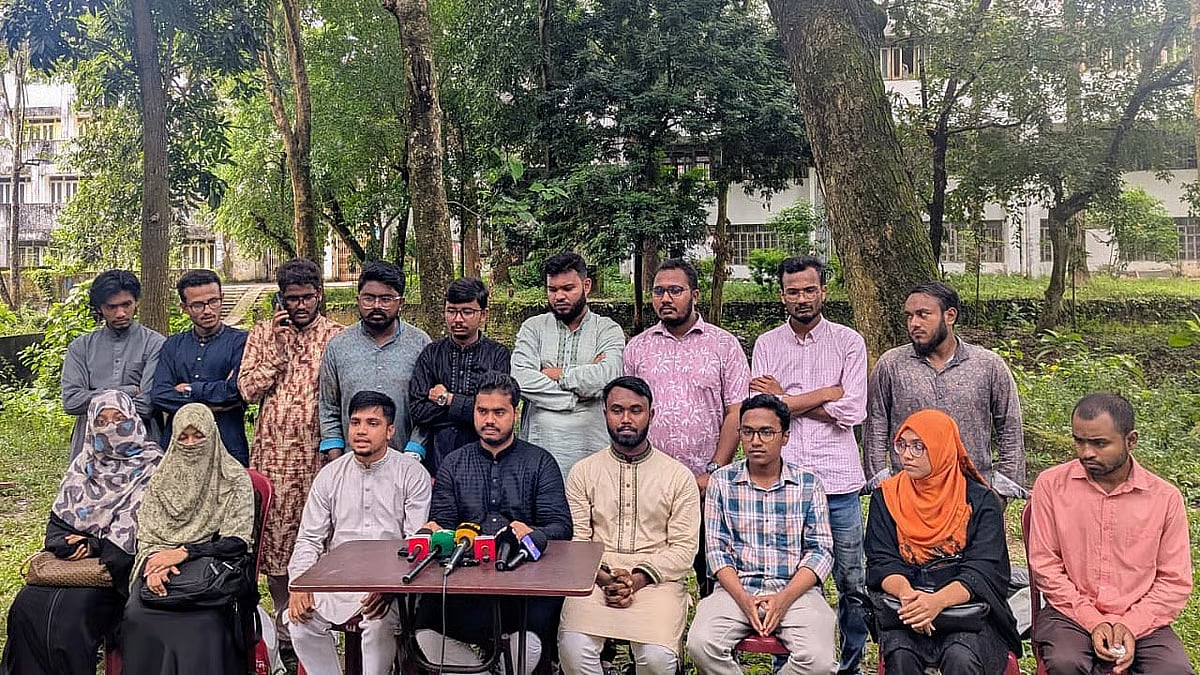
Citing months of preparation, strong candidate profiles, and recent organisational activity, Chhatra Shibir leaders and activists say they are optimistic about winning the entire panel this time. They believe students will reward their long-term groundwork and renewed presence on campus.
However, some students allege that Chhatra Shibir activists have developed unusually close ties with the university administration. It is also asserting influence in several residential halls, an issue they fear could undermine the integrity of the election.
When contacted, Chhatra Shibir’s university unit president, Mohammad Ali, told Prothom Alo, “Before 5 August (2024), students didn’t really have the chance to see what Chhatra Shibir was doing. That is why we’ve worked hard to ensure they see our positive initiatives. We believe they’ll judge us fairly.”
Despite being out of the public eye, Chhatra Shibir’s preparations for the CUCSU election were far from dormant.
Long-term preparation
The university unit of Islami Chhatra Shibir began reorganising last year. On 24 September, a two-member committee was announced publicly, followed by the introduction of Sayeed bin Habib as publicity secretary on 21 October. Habib is now contesting for the post of general secretary (GS) in the CUCSU election.
A full-fledged central committee was unveiled on 20 November. It included four individuals previously active in the Anti-Discrimination Student Movement, three of whom are now candidates in the CUCSU election. The fourth, Mohammad Ali, serves as the CU unit president.
According to Chhatra Shibir leaders, preparations for the election began over a year ago. During this time, the group has strengthened its presence through events like two freshers receptions, free iftar programmes, sports and cultural programmes, and academic seminars, activities that helped them reconnect with students.
Campaign strategy
There are around 28,000 registered voters in the CUCSU election. Of whom 18,000 are non-residential students.
Reaching these off-campus voters has been one of the biggest challenges, say candidates from the Chhatra Shibir-backed panel Sompritir Shikkharthi Jote.
To overcome this, Chhatra Shibir candidates have taken their campaign to social media, releasing promotional videos and manifestos online.
However, they acknowledge that digital outreach alone is not enough. They have been actively campaigning across faculty buildings, roadside tea stalls, key intersections, the Sholoshahar Railway Station, and the shuttle train—spaces that form the daily routes of non-residential students.
“We’re doing everything we can to reach the non-residential students,” said Md Ishaq Bhuiyan, publicity secretary of the organisation and candidate for secretary of communication and accommodation. “That’s why our campaign teams are out in the shuttle train and faculty buildings every day.”
9 key issues in the campaign
The CUCSU and hall union elections are scheduled for Wednesday, the first such vote in 35 years, creating a festive atmosphere on campus.
Alongside Chhatra Shibir, 12 other panels are contesting in the election, though most observers expect the main contest to be between Jatiyatabadi Chhatra Dal and Islami Chhatra Shibir.
Chhatra Shibir’s campaign is centred on nine priority issues: housing and accommodation; transport and commuting challenges; building a safe and green campus; reducing session backlogs; modernisation of campus facilities; women-friendly campus; education and research development; ensuring healthy and hygienic food; and, student welfare initiatives.
Defeat in the past, but lessons learned
In the 1981 CUCSU election, Chhatra Shibir leaders Jasim Uddin Sarkar and Abdul Gaffar were elected vice-president (VP) and general secretary (GS) respectively.
Buoyed by that success, Shibir was optimistic ahead of the sixth election in 1990. But 12 rival student organisations united under the banner of All-Party Students’ Unity—which went on to win by a landslide.
This year, no such alliance has emerged. With 13 separate panels in the race, Chhatra Shibir activists believe the fragmented opposition improves their chances.
According to Md Ibrahim Hossain, Chhatra Shibir-backed candidate for VP, “Student fronts like Chhatra Dal or the left-leaning groups all represent the July uprising’s forces. They’re all contesting from the same side. I believe students will vote not by panel, but by the merit and vision of individual candidates.”