Law and order
Home ministry meeting: Govt considers keeping RAB out of election duties
The interim government is considering excluding the Rapid Action Battalion (RAB) from duties related to the upcoming national parliamentary elections.
As part of this approach, no RAB representative was invited to a meeting held on Wednesday at the Ministry of Home Affairs regarding the planning and coordination of law enforcement for ensuring a fair election.
At the meeting, Lt. Gen. (retd.) Jahangir Alam Chowdhury, Adviser to the Ministry of Home Affairs, proposed that army personnel be temporarily withdrawn from the field to allow them to rest.
He suggested that the troops could be recalled before the election schedule is announced and then redeployed afterward. However, he added that a final decision on this will depend on how the law and order situation develops in the coming month.
The meeting took place in the conference room of the Ministry of Home Affairs at the Secretariat. According to sources, key officials present included the Principal Secretary to the Chief Adviser, the Public Administration Secretary, and at least 11 other secretaries involved in election administration.
Representatives from the Armed Forces Division, Border Guard Bangladesh (BGB), Police, Coast Guard, and Ansar & VDP (Village Defence Party) were also invited — but not RAB.
The adviser also announced that body-worn cameras would be deployed in each of the 47,000 polling centres. Each device would be managed by a senior police officer at the respective centre.
A source noted that due to RAB’s controversial role in the past three elections, there are serious deliberations about not involving the force this time, though no final decision has yet been made.
The proposal to temporarily withdraw army personnel was confirmed by two independent sources. It follows the events of last year when, amidst protests and clashes related to the quota reform movement, the former Awami League government deployed the army and imposed a curfew on 19 July.
However, protests intensified, and the army reportedly refused to act against civilians. Eventually, on 5 August, the government was ousted during the July uprising, and the interim government was formed on 8 August, 2024.
Since then, the army has remained deployed across the country. Commissioned officers of the rank of Captain and above — including those seconded to the Coast Guard and BGB — have been granted the authority of executive magistrates.
According to a reliable source, the army personnel have grown fatigued from continuous field duties and will also be tasked with election responsibilities. Hence, the home affairs adviser proposed allowing them a break before the election period begins.
Election commission Senior Secretary Akhtar Ahmed was also present at the meeting. Sources said he proposed assigning one armed security guard to each presiding officer, noting their crucial role in the election. However, some officials felt this would not be feasible due to the large number of officers required.
There was also discussion about setting up separate booths for voters aged 18 to 33 on election day. Additionally, it was decided that all officials involved in election duties would receive training — though the Home Affairs Adviser suggested not offering any honorarium for such training. He argued that in the past three elections, financial incentives had led to excessive eagerness among officers.
A secretary present pointed out that political parties often submit the names of polling agents either the night before or on the morning of the election. He recommended ending this practice by requiring polling agent names to be submitted well in advance.
He also stressed that polling agents should not leave the booth on election day under the pretext of refreshments, and that all arrangements for them must be made within the booth itself.
The Home Affairs Adviser proposed assigning key administrative and police positions — such as Deputy Commissioners (DCs), Upazila Nirbahi Officers (UNOs), Superintendents of Police (SPs), and Officers-in-Charge (OCs) — through a lottery. While the Secretary of Public Administration did not comment on the proposal directly, he did mention receiving heavy lobbying for DC postings. The Home Affairs Adviser confirmed that he too had received similar requests and reiterated that a lottery could effectively eliminate such pressure.
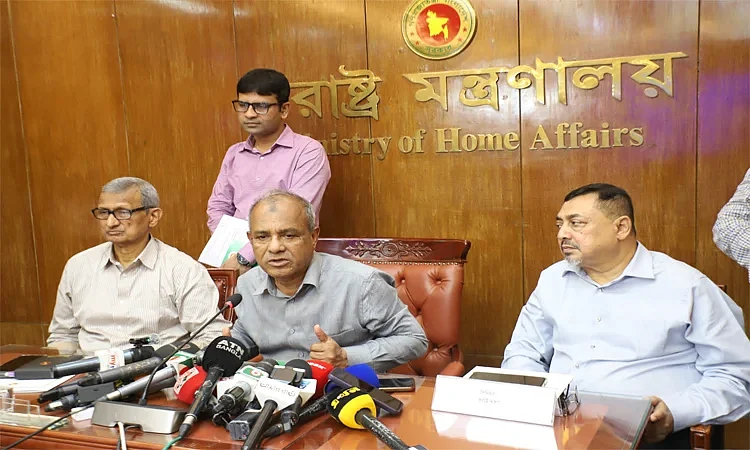
At a formal press briefing after the meeting, Jahangir Alam Chowdhury stated that SPs and OCs would be assigned by lottery before the election schedule is announced. Any transfers needed after the schedule is released would be handled by the Election Commission.
He added that DCs, SPs, UNOs, and OCs play critical roles in elections and that many candidates often attempt to influence postings in their constituencies. This time, however, all postings will be done transparently via public lotteries, starting with OCs by region due to their large numbers.
The adviser also announced that body-worn cameras would be deployed in each of the 47,000 polling centres. Each device would be managed by a senior police officer at the respective centre.
There was further discussion on procurement logistics. Officials expressed concern that purchasing body cameras, CCTV systems, and other election materials under the existing government procurement rules could cause delays. Follow-up discussions will be held to address this issue.
When asked how the government would prevent police bias during the election, the Home Affairs Adviser said, “We will do everything we can to ensure a fair election, and we will seek cooperation from the media as well. We hope this time the election will be fair.”