World Heart Day
CMCH’s cardiac surgery dept unable to provide desired services despite capacity
Six surgeons work in the cardiac surgery department at Chattogram Medical College Hospital (CMCH), and the department has the capacity to perform surgeries six days a week. However, only six to seven surgeries are now performed a month at most. As a result, the department, which was launched 12 years ago, benefits the patients less.
It has been learnt after speaking to patients, hospital authorities and doctors at the department that the department has never been able to provide services at its full capacity. At the beginning, at least three open-heart surgeries were performed a week, but the number has gradually declined. Yet this is the lone government hospital for cardiac surgery for people from Chattogram and seven surrounding districts—Cox’s Bazar, Feni, Noakhali, Lakshmipur, Rangamati, Bandarban and Khagrachhari.
Tuesday, 29 September, marks World Heart Day. This year’s theme is “Every Heartbeat Matters.” This means that every heartbeat needs to be cared for.
According to the Bangladesh Bureau of Statistics’ (BBS) 2025 Health and Morbidity Status Survey, more than 31 people per 1,000 on average across the country have heart problems. The rate is 34 to 36 per 1,000 in the Chattogram and Barishal divisions. This means the prevalence of the disease is higher in Chattogram and Barishal than the national average. The prevalence is comparatively lower in Dhaka and Rangpur, at an average of 24 to 26 per 1,000.
Physicians have identified two reasons behind the limited services at CMCH—insufficient manpower and a shortage of equipment. From the beginning, the department had sought a workforce of 90 people, including 35 doctors and 25 nurses, to provide full services. But this requirement has never been met. The department currently operates with 40 staff, less than half the required manpower. At least 60 people are needed to provide minimum services.
Among the Physicians’ sanctioned posts, there are supposed to be 12 surgeons, four anaesthetists, two medical officers, four assistant registrars and one registrar. Currently, six surgeons, two anaesthetists, one registrar and three assistant registrars are working. In addition, no one has ever been appointed to the post of perfusionist, which is important for open-heart surgery as they keep the heart and lungs functioning during surgery. Initially, the work was managed by bringing a perfusionist from Dhaka. Now, a senior nurse at the hospital has been trained to perform the job.
Mohammad Fazle Maruf, a former assistant professor of the department who worked there at the beginning and is now at the National Institute of Cardiovascular Diseases, said the department was launched at a cost of Tk 90 million with a building and equipment. Everything required for a cardiac surgery unit was provided. However, as adequate manpower and later allocations for equipment were not provided, the department’s full capacity cannot be utilised despite the doctors’ utmost efforts.
According to department sources, the 40-bed cardiac surgery department was launched in January 2013. At the time, units for cardiac surgery, paediatric cardiac surgery, cardiac anaesthesia and vascular surgery were supposed to be launched. Although they were initially planned together, vascular surgery was later made a separate department. The cardiac surgery department now provides four services—outpatient, ICU, surgery and general beds.
Surgeries began at the department in April 2014. From then until 22 September this year, 912 surgeries have been performed at the department. About 90 per cent of them were open-heart surgeries. The cost of an open-heart surgery here ranges from Tk 90,000 to Tk 120,000. The cost is Tk 300,000 to Tk 500,000 at three private hospitals in the city. This is the first cardiac surgery department at a government medical college hospital outside Dhaka.
Important equipment out of order
Although the department has two operating theatres (OTs) for open-heart surgery, only one is currently in use. The equipment in the other is out of order. In addition, only one of the four ventilators, which are important for keeping patients on life support after surgery, is effectively operational. Of the two heart-lung machines and two anaesthesia machines, one of each is operational, while the others are out of order. Physicians said these machines have been out of order for four to five years.
Physicians and nurses at the hospital said cardiac surgery remained suspended for one month in 2024 due to shortages of equipment and manpower. Earlier, during the Covid-19 pandemic, surgeries were suspended for two months in 2020 due to a manpower shortage. Currently, an average of 10 to 15 patients receive treatment at the department’s outpatient unit every day. An average of 10 patients are admitted for surgery each month. These patients are being provided treatment with limited manpower.
A letter from the hospital director in June showed that he had sought a list of requirements from the departments to prepare the Annual Procurement Plan (APP) for the 2026-27 fiscal year and send the requirements to the Directorate General of Health Services (DGHS) for the local procurement of medical equipment. In response, the cardiac surgery department submitted a requirement for 35 types of equipment. The estimated total cost of the equipment is Tk 140 million to Tk 190 million.
Among the equipment listed in the requirement are two heart-lung machines with accessories, one transport ventilator, eight invasive cardiac monitors for the OT, one invasive cardiac monitor for the ICU, one cardiac OT table, six mechanical ventilators with accessories, 12 external pacemaker generators, 10 ICU beds and 10 step-down beds.
Professor Kazi Abul Azad, head of the cardiac surgery department, told Prothom Alo, “We submit the list of requirements every year. In addition to equipment, manpower and ancillary items are also needed here. Before performing surgery, we have to inform all concerned in advance about electricity, the central air line and other matters so that there is no power outage or interruption in the air supply to the heart-lung machine during surgery. After that, we try to conduct at least two OTs a week.”
Waiting for surgery
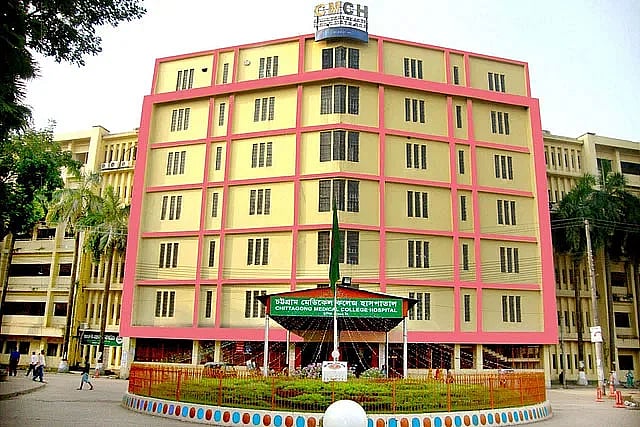
Going some distance past the hospital’s One-Stop Emergency Centre, there is the cardiac surgery building. The ground floor of the building houses the outpatient department, the second floor has the cardiology ward, and the third floor has the cardiac surgery ward’s intensive care unit (ICU), post-operative care unit and operating theatre. The fourth floor has general beds. Of the 40 beds there, only 22 are currently operational. Of the department’s eight ICU beds, only three are functional.
Jamal Uddin has been admitted to the cardiac surgery department for 21 days. A man in his 60s, Jamal Uddin retired from teaching several years ago. He had various heart problems for some time. Physicians have now advised him to undergo open-heart surgery. However, he is waiting because he has not received a surgery date. Many other patients are facing the same situation.
When contacted at the hospital yesterday, Monday, Jamal Uddin said physicians had been regularly checking on him since he was admitted. However, as the department has a high number of patients, it is taking time to get a surgery date.
Regarding the long wait for surgery, physicians said patients need ventilators to keep them on life support after surgery. Although there were six ventilators when the hospital began operations, there are now four. Two are out of order, while one of the remaining two has a UPS problem. Physicians do not want to use it for cardiac surgery patients because of the risk involved. It becomes effectively non-functional when the power goes out.
Assistant Professor of the cardiac surgery department Ahsan Uddin Mahmud said, “A lot of patients come here. We also have the capacity to treat them accordingly. The main problems are manpower and equipment. Many pieces of equipment are out of order. If manpower and adequate equipment can be ensured, it would be possible to perform open-heart surgery every day.”
Shortage of equipment in cardiology department too
Not only the cardiac surgery department, but the cardiology department of the hospital is also suffering from a shortage of equipment. Patients from at least seven districts, including Chattogram, come here for treatment at low cost. As a result, the patient pressure at the hospital is increasing every day. Although the department has enough manpower to provide services, it is facing a shortage of equipment.
The hospital has records of a cath lab being operational since 2003. Heart and blood vessel problems are diagnosed at the cath lab, and various treatments, including stent and pacemaker implantation, are provided as necessary. Of the hospital’s three cath labs, one has been out of order since October 2021. The remaining two also experienced mechanical problems in one of the cath labs. That cath lab does not have a generator connection. It also becomes effectively non-functional when the power goes out.
According to hospital data, 1,353 coronary angiograms (CAGs) and peripheral angiograms (PAGs) were performed in the first seven months of this year. During the same period, blood vessels were opened through catheters and 661 stents or rings were implanted. In addition, 46 temporary pacemakers (TPMs) were implanted. A total of 8,115 angiograms have been performed from 2023 to July this year. On average, 200 patients are admitted every day.
The cardiology department has to perform more than 100 ECGs every day. However, there are only three ECG machines. One of the four echocardiography machines is out of order. On average, 400 to 500 patients undergo echocardiography and ETT tests every month. In addition, there is one exercise tolerance test (ETT) machine and one Holter monitor for monitoring heart rhythms over extended periods. Physicians said these numbers are insufficient compared with the number of patients.
Mohammad Nur Uddin Tarek, head of the cardiology department at CMCH, said the number of heart patients is increasing in Chattogram. This hospital has to handle the entire pressure. There is a shortage of equipment compared with the number of patients. If the problems with equipment and manpower can be resolved, it will be possible to provide services to patients more quickly. At present, we are trying to provide the best possible services with the manpower and equipment available. Patients are receiving services at low cost, he added.
People do not want to hear that equipment is out of order
Brigadier General Mohammad Taslim Uddin, director of CMCH, said steps would be taken to quickly resolve the shortage of equipment in the cardiac surgery and cardiology departments. He said the departments had been asked to submit lists of the required equipment. The requirements would be sent to the Ministry of Health accordingly. Efforts are being made to ensure that patients receive healthcare services at low cost. The hospital’s two new buildings will have seven cath labs.
Abu Sufian, a member of parliament from Chattogram-9 and currently vice-chairman of the management committee of CMCH, told Prothom Alo that the hospital has equipment-related problems not only in the two wards but in various areas. The issues have been discussed with the Ministry of Health and several other ministries. Efforts are underway to arrange the necessary equipment. They want to ensure all facilities required to provide services at the hospital.
Public health experts said a large number of patients depend on CMCH. Compared with this demand, the equipment, infrastructure and treatment facilities required for cardiac care remain inadequate.
The Public Health Rights Protection Committee, a private organisation working on public health issues in Chattogram, is involved in the field. Its member secretary Sushanta Barua told Prothom Alo, “People do not want to hear statements such as ‘There was equipment, it broke down and it has been sent for repair.” People want to see whether the cardiology and cardiac surgery departments of CMCH are keeping pace with the healthcare facilities the government says it will provide. The authorities must become proactive and take effective measures.