Measles outbreak: 9 in 10 families forced to borrow to cover treatment costs
Each family spent around Tk16,000 on average to cover treatment and related expenses
6 out of 10 families exhausted their savings while paying for treatment
Following the assessment, 2,400 families were selected to receive emergency cash assistance
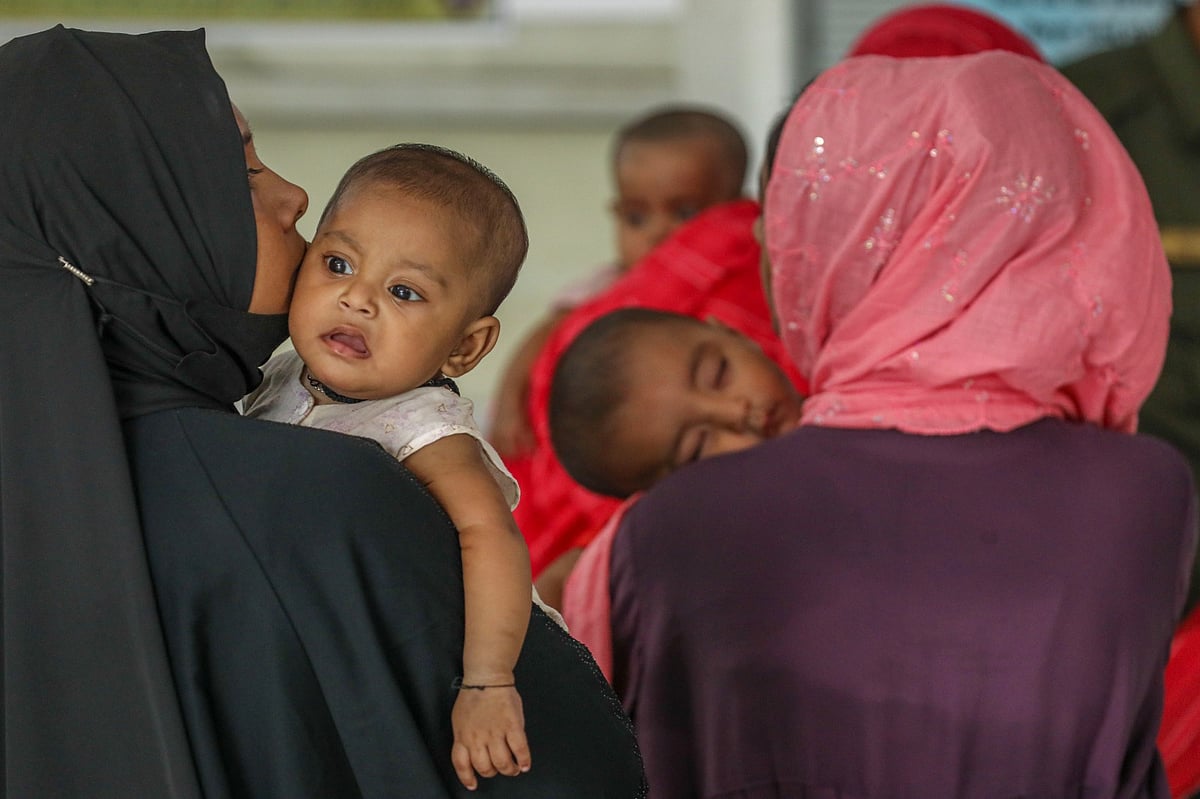
Hazera Khatun travelled from Rangpur to Dhaka with her 11-month-old daughter, who is being treated for measles at Shaheed Suhrawardy Medical College Hospital. Although treatment at the government hospital is free, the family’s expenses have already exceeded Tk70,000.
Nearly Tk20,000 was spent on transporting the child to Dhaka by ambulance, while daily food costs, diagnostic tests and other incidental expenses have pushed the total much higher. In the end, the family had to borrow money from relatives.
Hazera said her husband works in Saudi Arabia but has not received his salary this month, worsening the family’s financial difficulties.
Her experience reflects that of thousands of other families.
A joint assessment by the Bangladesh Red Crescent Society (BDRCS) and the International Federation of Red Cross and Red Crescent Societies (IFRC) found that nearly nine out of every ten families affected by measles have been forced to take out loans to meet treatment-related expenses. Six in ten have exhausted their savings.
The assessment, published last Wednesday, was conducted to understand the social and economic impact of the measles outbreak on affected families and to identify those most vulnerable for emergency cash assistance.
It analysed data from 2,746 families with measles patients receiving treatment at 12 government medical colleges and district hospitals across the country.
Treatment is free, but costs continue to mount
The assessment found that each family spent an average of around Tk16,000 on treatment-related expenses. Although patients do not have to pay for treatment at government hospitals, travel, medicines, diagnostic tests, food and the cost of prolonged hospital stays have placed a heavy financial burden on families.
Among families that provided occupational information, 78 per cent worked in the informal sector, with monthly incomes ranging from Tk6,000 to Tk20,000.
Many parents said they had been unable to attend work while caring for their sick children in hospital. As a result, some lost their income, while others lost their jobs altogether.
Every family surveyed said it required financial assistance. Among them, 35 per cent identified medicines as their most urgent need, while 33 per cent sought support for water, sanitation and hygiene (WASH), and 22 per cent cited food assistance as their highest priority.
Based on vulnerability criteria, 2,400 families have been selected to receive emergency cash support.
Low-income families hit hardest
Among families that provided occupational information, 78 per cent worked in the informal sector, with monthly incomes ranging from Tk6,000 to Tk20,000.
Syed Abdul Hamid, Professor at the Institute of Health Economics at Dhaka University, told Prothom Alo that most children affected by measles come from low-income households.
The impact of this public health emergency does not end at the hospital door. Families caring for sick children or relatives face significant financial constraints. The findings demonstrate that both humanitarian assistance and robust social protection systems are essential during public health emergencies.Alberto Bocanegra, Head of the IFRC Delegation in Bangladesh
“The research also shows that these families earn between Tk6,000 and Tk20,000 a month. For households with such incomes, treatment-related expenses represent an enormous financial burden. If the government at least covered part of the cost of diagnostic tests at public hospitals, these families would receive some relief,” he said.
Professor Hamid also called for the establishment of a National Health Fund to help low-income people meet medical expenses.
In his view, such a government fund would enable poor and low-income families to receive rapid financial support during public health emergencies, reducing the need to borrow money or deplete their savings to pay for treatment.
‘This is not only a health crisis’
Kabir M Ashraf Alam, Secretary General of the Bangladesh Red Crescent Society, said the assessment showed that many families were facing not only a health emergency but also severe financial hardship.
“As part of our emergency response, we are providing cash assistance to the most vulnerable families while continuing community awareness programmes,” he said.
Alberto Bocanegra, Head of the IFRC Delegation in Bangladesh, echoed the same concern.
“The impact of this public health emergency does not end at the hospital door. Families caring for sick children or relatives face significant financial constraints. The findings demonstrate that both humanitarian assistance and robust social protection systems are essential during public health emergencies,” he said.
The financial hardship experienced by low-income families due to measles is an example of what health economists describe as “medical impoverishment”Public health expert Mushtuq Husain
Health experts warn that although measles treatment is provided free of charge in government hospitals, low-income families will continue to face deepening financial hardship unless effective social protection mechanisms are introduced to offset the additional costs they incur. The experiences of families such as Hazera Khatun’s underscore that reality.
Public health expert Mushtuq Husain told Prothom Alo that the financial hardship experienced by low-income families due to measles is an example of what health economists describe as “medical impoverishment”.
“It is an extremely painful experience for any family. The incumbent government pledged in its election manifesto to ensure free primary healthcare. Yet, during this measles crisis, we have seen no reflection of that commitment. It is precisely during times like these that such support is needed most,” he said.