BIPSS Roundtable
Avalanche of AI demands urgent and deep understanding
Bangladesh, and the rest of the world, are already in the AI age with no possibility of turning back. AI today represents merely a nascent infancy and the true scope of its power, including the advent of superintelligence is yet to be fully realised.
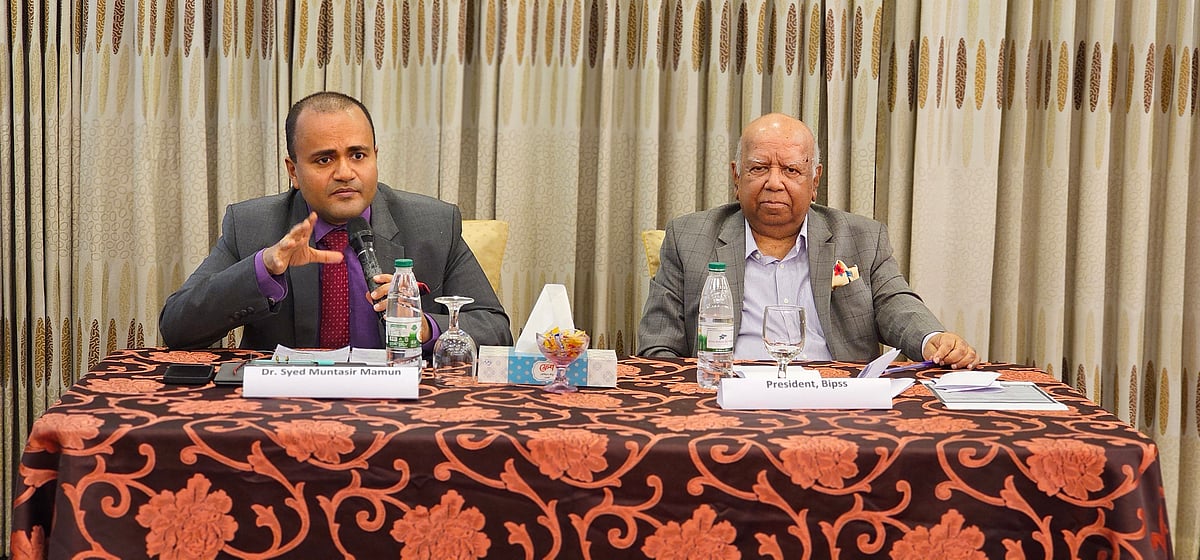
This observation was made by the president of Bangladesh Institute of Peace and Security Studies (BIPSS) Maj Gen ANM Muniruzzaman (retd) at a high-level roundtable entitled “The Avalanche of Artificial Intelligence: Reshaping Markets, States, and Human Identity”.
The event, organised by BIPSS on 22 December at a hotel in the capital, featured Dr. Syed Muntasir Mamun, Director General, International Trade, Investment and Technology and Chief Innovation Officer, Ministry of Foreign Affairs, as the keynote speaker. The session brought together diplomats, academics, technology experts, and thought leaders to dissect the profound implications of AI on global and national structures.
In his opening remarks, Maj Gen ANM Muniruzzaman emphasised the necessity of the dialogue. He said, “We need to get to understand this issue very carefully. When you have superintelligence, AI will do pretty good inventory. And we need far, far better machine-human interface to operate in any sphere of life of tomorrow.”
He highlighted the immense complexities and challenges ahead, stressing that this new world demands urgent and deep understanding. He also urged that Bangladesh should develop specialised national capacity for AI governance.
Dr. Syed Muntasir Mamun, in the keynote, said that AI is fundamentally about power, control, and human identity. He moved beyond technical definitions to propose that AI is “everything and anything that we are, and we are not,” representing an all-pervasive form of imagination and content. He stressed that existing governance structures are ill-equipped for this future, calling for adaptive, agile, and fluid new forms of governance that accompany citizens at each step.
The roundtable panel discussion was followed by a vibrant Q&A session with distinguished participants. The audience comprising senior diplomats, academics, cybersecurity experts, entrepreneurs, and civil society representatives raised critical concerns ranging from algorithmic bias and data sovereignty to the erosion of social trust, digital inclusion, and the ethical dilemmas surrounding autonomous systems.
The discussion underscored several key themes, including the urgent need for domestic capacity building and proactive policy interventions to prevent the deepening of inequality, the transformation of cybersecurity from a largely defensive practice into a domain of continuous, real-time warfare, and the dual nature of AI as both a creator and destroyer of jobs, highlighting the necessity of just and inclusive transitions.
Participants also emphasised the importance of asserting a strong Global South voice in global AI governance forums to influence and shape the emerging epistemology and normative frameworks of artificial intelligence.
The seminar concluded with a consensus that while AI presents existential questions about control, identity, and sovereignty, it also holds transformative potential. The path forward requires not trepidation but informed, proactive, and inclusive engagement from all sectors of society.