Environment
Rising tourist numbers put Saint Martin’s Island at risk
To protect Saint Martin’s Island’s natural environment, the daily limit on visitors had been set at an average of 2,000. This year, the government has raised it to 3,500. The period during which tourists can stay overnight has also been extended from two months to four and a half months.
But questions have been raised over whether an updated scientific study has been conducted to determine how much additional pressure the island’s water resources, waste management systems and natural environment can withstand.
Saint Martin’s is an ecologically critical area. More tourists mean greater demand for drinking water, more sewage and rubbish, and heavier foot traffic on the beaches. Environmentalists have questioned whether these pressures were properly considered when the new limit was set.
They say the island still lacks adequate facilities to cope with the previous limit of 2,000 visitors a day. Allowing another 1,500 tourists could put its natural environment at further risk.
Under the government’s decision, tourists will be allowed to visit Saint Martin’s from 1 November to 15 March. Each visitor will have to pay an environmental conservation fee of Tk 100. Confusion over overnight stays prompted the Ministry of Environment, Forest and Climate Change to issue a new notification on Tuesday, clarifying the matter. It states that tourists can stay overnight from 1 November. Previously, overnight stays were allowed only in December and January.
Alongside restrictions on tourism, the interim government had also taken steps to create alternative livelihood opportunities for island residents. A project was launched to provide training for locals and financial assistance for two months to a selected number of families directly dependent on tourism.
Saint Martin’s was declared an Ecologically Critical Area in 1999. Lighting up the beach at night, making excessive noise and holding barbecues are prohibited. Various restrictions are also in place to protect the coastal vegetation and biodiversity. Questions have now arisen over whether enforcement of these restrictions will be strengthened alongside the increase in tourist numbers.
After 5 August 2024, the former interim government restricted tourist visits to Saint Martin’s. From November to January, a maximum of 2,000 tourists a day could visit the island through an online registration system.
For the rest of the year, the island remained almost free of tourists. Over the past two tourist seasons, 237,000 people visited the island—less than half the number recorded three years earlier. This also brought environmental benefits.
Alongside restrictions on tourism, the interim government had also taken steps to create alternative livelihood opportunities for island residents. A project was launched to provide training for locals and financial assistance for two months to a selected number of families directly dependent on tourism. A draft master plan for Saint Martin’s was also finalised, emphasising an approach to tourism that would be community-centred and environmentally friendly.
A senior source at the Ministry of Environment told Prothom Alo that shipowners and hotel and resort operators had sought permission for at least 6,000 tourists to visit the island each day. Following discussions, the proposed number was reduced to 3,500.
Attempts were made to contact Environment Minister Abdul Awal Mintoo for comment on the increase in tourist numbers, but he was unavailable due to a busy schedule.
Environmentalists say the island had begun to benefit from measures introduced by the interim government. With fewer tourists visiting, less rubbish was being dumped on the beaches.
Questions were also sent to Toffazzal Hossain, the ministry’s public relations officer, but no response was received. Ministry Secretary Fahmida Khanam is currently abroad. She was contacted via WhatsApp and sent written questions, but did not respond.
Concerns that the environmental gains could be lost
Decades of unplanned tourism and uncontrolled construction have damaged Saint Martin’s natural environment. During the Awami League government’s tenure in particular, hotels, resorts and cottages sprang up across the island. Many of these structures lacked environmental clearance and fire safety approval. There was also no limit on the number of tourists. As visitor numbers grew, so did plastic and other waste, polluting the beaches and surrounding sea.
Environmentalists say the island had begun to benefit from measures introduced by the interim government. With fewer tourists visiting, less rubbish was being dumped on the beaches.
Allowing 1,100 to 1,200 tourists a day would be reasonable, given the island’s environmental carrying capacity. Yet the daily limit has been raised to 3,500 without any significant improvement in drinking water supplies, waste management or essential infrastructure.Mohammad Kamal Hossain, Supernumerary Professor, Institute of Forestry and Environmental Sciences, Chittagong University
Research also indicated that seawater quality had improved while tourism was suspended. The natural environment had begun to recover, at least to some extent, from years of pollution and unrestricted human activity.
Now, with the daily tourist limit increased by 75 per cent at a stroke, there are concerns about whether those gains can be sustained. More tourists will mean greater water consumption at hotels and resorts, along with more sewage, plastic bottles and food packaging.
Without adequate facilities to treat and dispose of waste, pollution could spread to the beaches and sea. Human activity will also increase around coral reefs and marine habitats.
Mohammad Kamal Hossain, supernumerary professor at the Institute of Forestry and Environmental Sciences at the University of Chittagong, told Prothom Alo that allowing 1,100 to 1,200 tourists a day would be reasonable, given the island’s environmental carrying capacity.
Yet the daily limit has been raised to 3,500 without any significant improvement in drinking water supplies, waste management or essential infrastructure. A scientific assessment of how much pressure the island could withstand should have been conducted before increasing visitor numbers, he said.
Highlighting the sensitivity of coral reefs and marine biodiversity, he said mass tourism might be suitable for Cox’s Bazar, but the same approach was in no way acceptable for Saint Martin’s. The island’s natural environment should not be put at risk for tourists’ entertainment. Increasing visitor numbers to satisfy people involved in the tourism business would only harm the environment, he added.
Less tourist pressure helps the environment recover
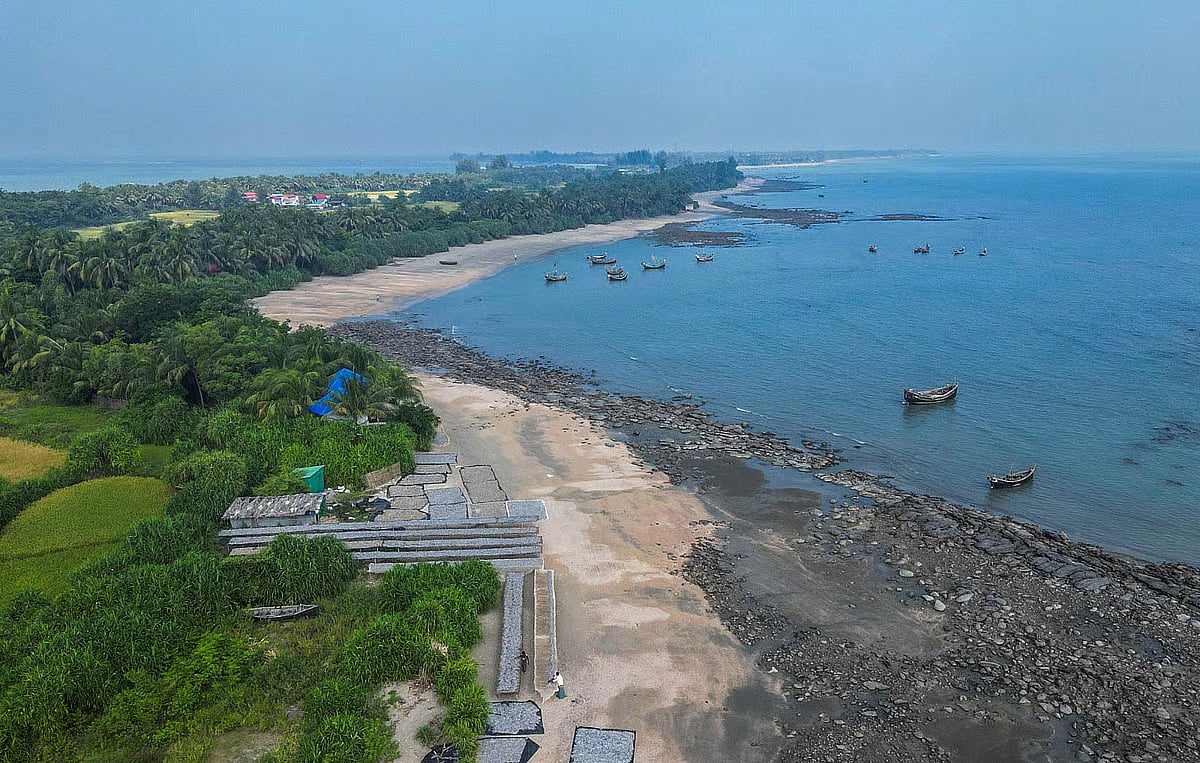
Saint Martin’s is Bangladesh’s only coral-rich island and an important habitat for the country’s marine biodiversity. According to the Department of Environment, the island was once home to around 1,076 species.
It provided a safe habitat for coral, sea turtles, algae, shells and various species of migratory birds. Over the past two decades, plastic pollution and unplanned construction have led to the loss of many species.
Recent research suggests that reducing tourist pressure can improve the island’s environment. A study published in the Journal of Environmental Management and Tourism in May 2026 found that dissolved oxygen levels in seawater increased significantly while tourism was suspended from February to October 2025. Researchers view this as a sign of improvement in the marine environment.
Syeda Rizwana Hasan, chief executive of the Bangladesh Environmental Lawyers Association (BELA), told Prothom Alo that the decision to increase tourist numbers had no scientific basis. In the past, relevant agencies, including the Department of Environment and the Bangladesh Oceanographic Research Institute, were involved in setting limits on visitor numbers and overnight stays.
This time, the number of tourists was increased at the request of resort owners and local political figures, she said.
In her view, environmental considerations could justify reducing tourist numbers, but not increasing them. She also said it was necessary to clarify how the Tk 100 collected from each tourist would be spent.
Syeda Rizwana Hasan, who served as environment adviser in the former interim government, said the administration had already struggled to enforce the previous limit of 2,000 tourists a day. Her question is: how will the authorities effectively monitor 3,500 visitors a day?