Sex workers seek govt help for survival amid virus shutdown
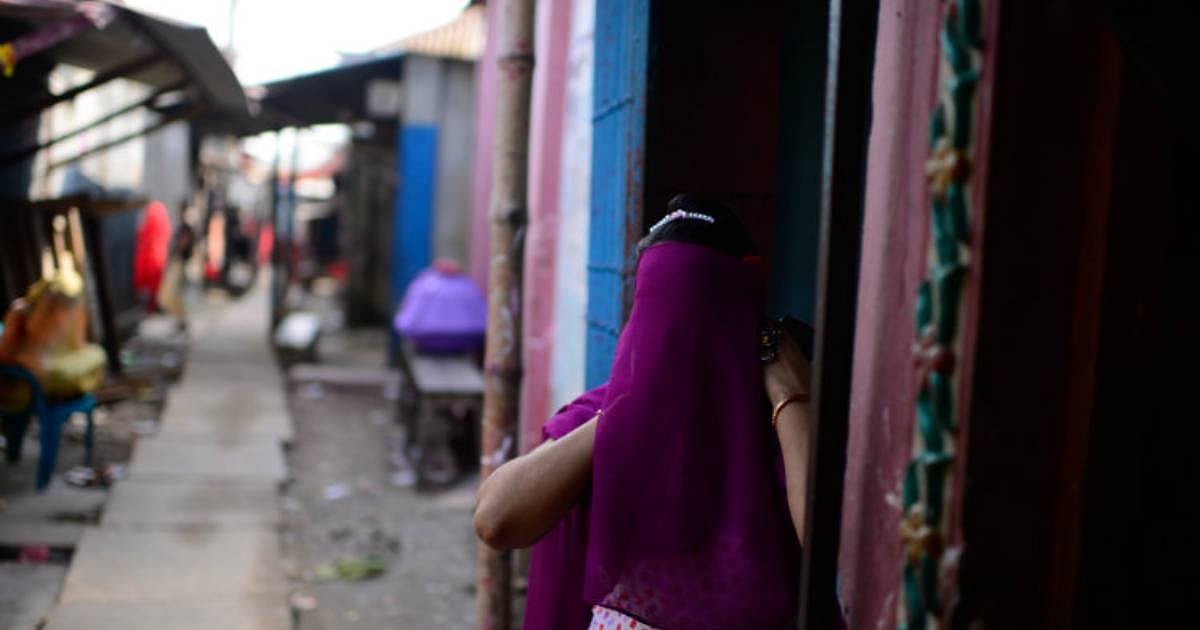
Even in the oldest profession in the world, they have seen nothing like it. Sex workers over the world have historically battled stigmatisation, outright bans or criminalisation, false accusations of spreading disease, and a general lack of respect from other sections of society.
Yet even for them, the almost overnight collapse in economic activities caused by the coronavirus pandemic, specifically the authorities’ resort to social distancing and lockdowns as a countermeasure, has presented an unprecedented livelihood crisis.
Organisations under the banner of ‘Sex Workers Network’, an apex body consisting of 29 rights organisations working for sex workers, called for distribution of relief among the sex workers, with special consideration given to their circumstances to ensure that the materials reach them
Sex workers, whether in brothels or on the streets, have seen their business model totally collapse since the government announced general holiday, which turned into an almost countrywide shutdown, towards the end of March that has now been extended until 25 April.
Now organisations advocating for their rights are demanding inclusion of the country’s sex workers in the government's schemes to boost its social safety net and prop up the economy as best as it can.
Firmly reminding policymakers that sex workers have no less right than any other citizen of Bangladesh to be included in the government’s welfare programmes, the organisations under the banner of ‘Sex Workers Network’, an apex body consisting of 29 rights organisations working for sex workers, called for distribution of relief among the sex workers, with special consideration given to their circumstances to ensure that the materials reach them.
To that end, they have urged the government to involve them (rights organisations) as intermediaries to distribute relief and grants among the sex workers, as the stigma attached to their profession makes it impossible for them to stand in queues with others.
The number of sex workers in the country is estimated at nearly 100,000. Of them, only 5,000 are spread across 11 brothels authorised by the government, while the rest are considered to be ‘floating’.
Though some brothels are getting some relief materials locally, it is very urgent to distribute relief among floating sex workers as they cannot avail help that may be available out of shameJahanara
The authorised brothels are located in Tangail, Mymensingh, Jamalpur, Patuakhali, Bagerhat and Mongla (one each), three in Faridpur and two in Jashore.
Chumki Begum, a sex worker of Manda area in the capital, spoke of undergoing ‘inhuman sufferings’ for lack of income. “We can’t even ask for help from anyone due to the stigma. Very few of us got help through Durjoy Nari Sangstha (a rights group) but it was not enough for living with decency,” she said.
“We can live through this critical period if the government and private organisations choose to include us in their relief or charity programmes, with distribution through the organisations that are working for us,” Chumki added.
They have been forced to endure such inhuman conditions that they cannot even buy medicines, said Jahanara Khatun, a member of Nari Pakkha, another organisation advocating for women’s rights.
“As far as I know, international organisation USAID has given some grants for sex workers staying inside brothels through Sex Workers Network,” she said.
“Though some brothels are getting some relief materials locally, it is very urgent to distribute relief among floating sex workers as they cannot avail help that may be available out of shame,” Jahanara added.
She estimated the number of floating sex workers to be nearly 100,000 across the country.
Jahanara, who is also an assistant manager of "Women Friendly Hospital Initiative," a government-funded project, also said private organisations should come forward to distribute relief and grant money alongside the government and these should be distributed through rights bodies.
Children living in the brothels with their mothers, especially infants, are thought to be particularly vulnerable for lack of appropriate baby foods that their mothers cannot buy anymore having lost their income amid the countrywide shutdown, she said.
Aliya Akhter Lily, secretary of Sex Workers Network, said her organisation has received around Tk 100,000 as grants from USAID for distribution among 10 brothels, which is very inadequate considering the need.
Although some local organisations have distributed relief materials among the brothels in their community, the brothel of Mymensingh has received nothing.
Alongside the government, many private organisations have come forward to help the jobless and low-income groups in the present scenario. “As human beings, they (Sex Workers) have the right to get relief,” said Aliya, who hopes that individuals, organisations and donor agencies will come forward to help the marginalised community of sex workers.
She demanded immediate and urgent support to the sex workers through the rights bodies that are working for their welfare and have won their confidence.
Rahima Begum, president of Durjoy Nari Sangstha, said her organisation has been working for rights of floating sex workers of Dhaka, Chattogram, Khulna and Rangpur. The organisation presently works with around 9,500 sex workers.
She said although floating sex workers are used to living hand-to-mouth on the streets and slums, they are now extremely vulnerable as income has frozen in the midst of the shutdown.
As most of the floating sex workers are avoiding the potential pitfall of queuing up for relief out of shame, Rahima too is in favour of distributing the support through rights bodies.