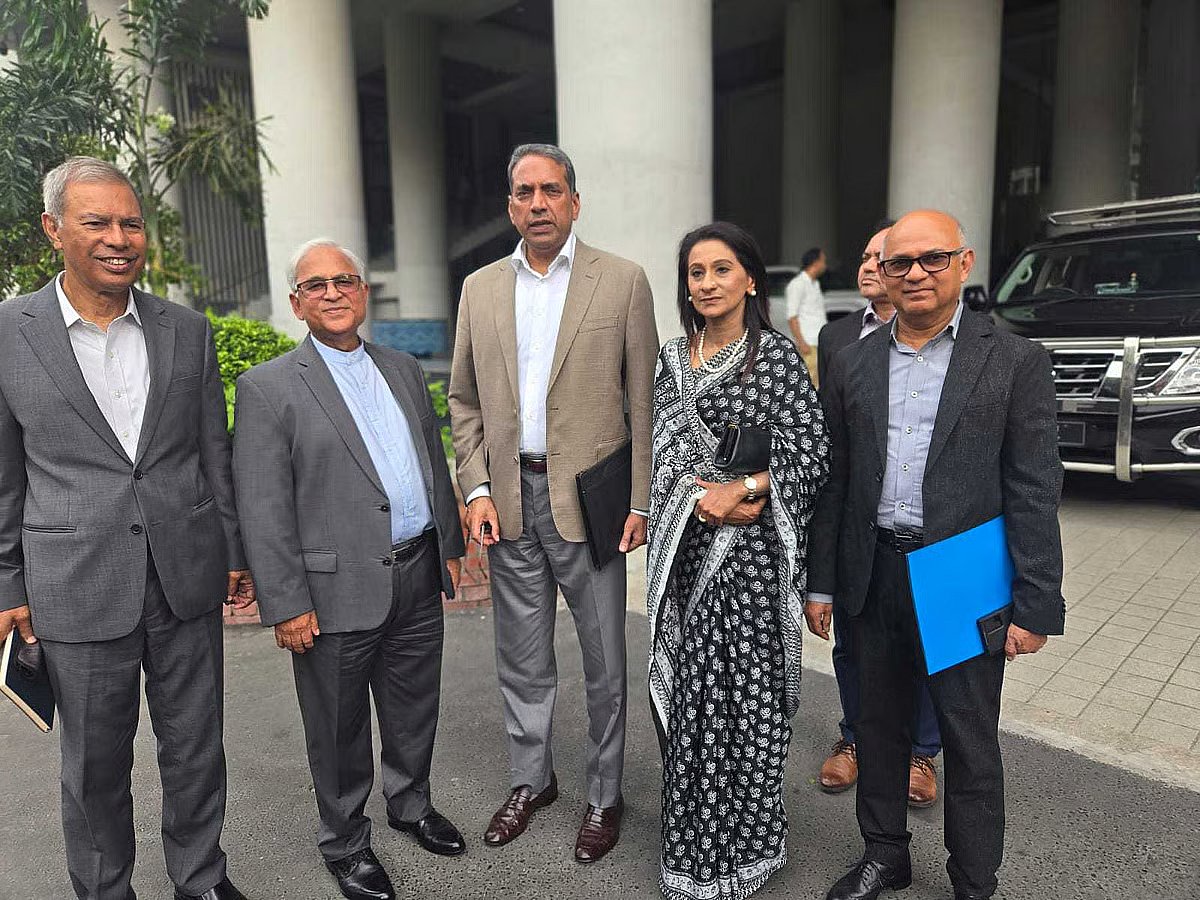
Meeting with PM
Govt to extend full support to pharmaceutical industry
The government will provide all necessary support to facilitate the growth of Bangladesh’s pharmaceutical industry, boost exports, ensure the production of high-quality medicines and guarantee affordable access to medicines for consumers.
Prime Minister Tarique Rahman has also assured industry leaders that all existing obstacles facing the sector will be addressed.
Leaders of the Bangladesh Association of Pharmaceutical Industries (BAPI) disclosed this following a meeting with the prime minister at the Secretariat on Monday.
Speaking to journalists after the meeting, BAPI President and Managing Director of Incepta Pharmaceuticals Abdul Muktadir outlined the discussions.
Also present at the meeting were Health and Family Welfare Minister Sardar Md Sakhawat Hossain; State Minister MA Muhit; the Prime Minister’s Adviser on Finance and Planning, Rashed Al Mahmud Titumir; among others.
Representing the pharmaceutical industry were Tapan Chowdhury, Managing Director of Square Pharmaceuticals; M Mosaddek Hossain, Senior Vice-President of the association and Chairman of Unimed Unihealth Pharmaceuticals; Muhammad Halimuzzaman, Secretary General of the association and Chief Executive Officer of Healthcare Pharmaceuticals; and Simeen Rahman, Managing Director of SKF Pharmaceuticals and Group CEO of Transcom Group.
Speaking to newspersons, Abdul Muktadir said there had been a frank and comprehensive discussion with the prime minister regarding the pharmaceutical sector.
“The pharmaceutical industry has immense potential. The government will provide policy support to the sector and take all necessary measures to facilitate its growth,” he said.
Noting that Bangladeshi pharmaceutical products are currently exported to nearly 140 countries, he added, “Although export volumes remain relatively modest, they are expected to increase substantially in the future. In addition to medicines, exports of vaccines, active pharmaceutical ingredients (APIs) and related products will also grow significantly. We are hopeful of a landmark initiative in the near future that will both strengthen Bangladesh’s pharmaceutical exports and ensure that people have access to high-quality medicines produced in the country.”
Abdul Muktadir said the prime minister had provided necessary guidance for the sector and that discussions had also focused on pharmaceutical companies that have fallen into financial distress.
“We discussed ways to help struggling pharmaceutical companies return to a healthy operational footing. The Adviser on Finance and Planning also assured us of government support in addressing existing barriers to pharmaceutical exports,” he said.
He further noted that the industry had raised several challenges before the government.
“Most of the issues we highlighted are already known to the government. The authorities have assured us that they will provide the necessary policy support to remove existing obstacles,” he added.
When asked about the nature of the policy support being considered, Abdul Muktadir explained that many of the measures relate to technical and technological advancement.
“These include achieving the World Health Organization’s Maturity Level 3 (ML-3) status, implementing the latest policy framework for biologics, and aligning the pharmaceutical sector with global scientific developments. The government and the Directorate General of Drug Administration will take international scientific advancements into account and provide appropriate guidance to the domestic pharmaceutical industry,” he said.
Asked about the prime minister’s specific remarks during the meeting, Abdul Muktadir said, “He listened attentively to all the issues raised and provided clear directives.”
Responding to a question regarding the number of pharmaceutical factories that have ceased operations or are currently struggling, the BAPI president said, “It is a complex matter and I do not wish to discuss the details at this stage. However, the government has indicated that steps will be taken to help companies facing difficulties return to a stable position.”
Abdul Muktadir also confirmed that discussions had been held regarding Bangladesh’s graduation from the Least Developed Country (LDC) category and the implications of the Trade-Related Aspects of Intellectual Property Rights (TRIPS) agreement.
“We had detailed discussions on how Bangladesh will address the challenges arising after LDC graduation,” he said.
TRIPS is the World Trade Organization agreement that establishes minimum global standards for the protection and enforcement of intellectual property rights.
Referring to the registration of medicines, Abdul Muktadir said that approvals for new pharmaceutical products had remained stalled for some time.
“The prime minister has directed the authorities to expedite the registration process for medicines so that consumers are no longer forced to purchase certain drugs at excessively high prices. The objective is to ensure that these medicines can be manufactured domestically and made available to people at affordable prices. We presented all of our concerns, and the prime minister listened carefully and instructed the relevant authorities to resolve them promptly. We are very pleased with the outcome of the meeting,” he said.