Middle East situation
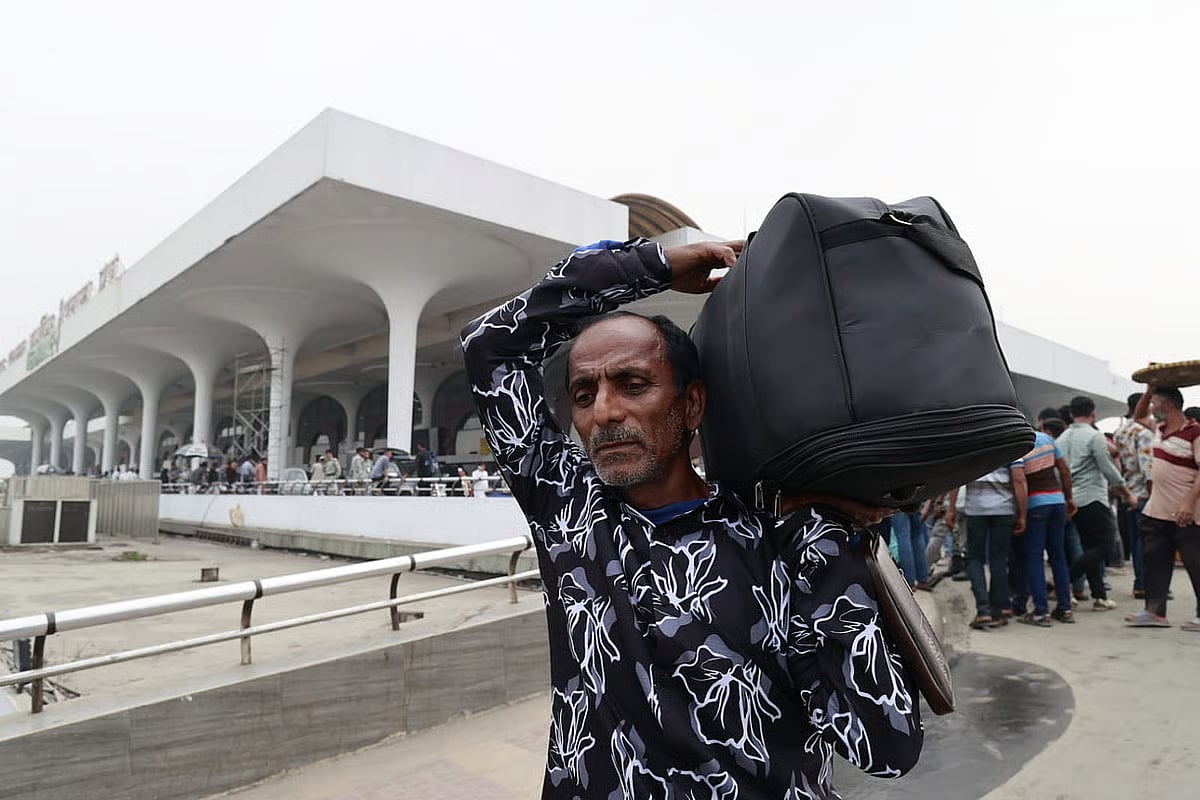
Govt to facilitate swift travel for expatriates once flights resume
In response to continued attacks by the United States and Israel, Iran has launched retaliatory strikes in several Middle Eastern countries. Amid this escalation, concerns are mounting over a deepening crisis in the region.
Over the past two days, two Bangladeshis have been killed and seven injured in retaliatory attacks across different Middle Eastern states. According to a statement from the Ministry of Foreign Affairs, the casualties resulted from missile and drone strikes.
An inter-ministerial meeting was held on Monday, at the foreign ministry to review the overall situation, including the safety of Bangladeshi nationals in the Middle East. The meeting, involving three ministries, discussed a range of possible measures in response to the evolving crisis.
In light of the situation, minister of foreign affairs in Kuwait Sheikh Jarrah Jaber Al-Ahmad Al-Sabah, minister of foreign affairs in Bahrain Abdullatif bin Rashid Al-Zayani, deputy prime minister and minister of foreign affairs in the United Arab Emirates, Sheikh Abdullah Bin Zayed Al Nahyan, and minister of state for foreign affairs in Qatar Soltan bin Saad Al-Muraikhi, separately telephoned Bangladesh foreign minister Khalilur Rahman yesterday.
They discussed the ongoing crisis and the safety of Bangladeshi expatriates.
The foreign ministers of Kuwait, Bahrain and the UAE expressed deep sorrow and concern over the deaths of two Bangladeshis and the injuries to seven others. They described the unprovoked attacks on their territories as unacceptable and reaffirmed their commitment to ensuring the protection of civilians.
At the inter-ministerial meeting chaired by foreign minister Khalilur Rahman, the government outlined its short, medium and long-term preparedness plans in light of the continuing situation in the Middle East.
The government also assured that once flights resume, arrangements will be made as quickly as possible for those wishing to travel to the Middle Eastern countries.
Bangladesh wants the Middle East crisis resolved through dialogue and diplomacy at the earliest possible time.Khalilur Rahman, foreign minister
Among those present at the meeting were minister of expatriates’ welfare and overseas employment Ariful Haque Choudhury, state minister for civil aviation and tourism M Rashiduzzaman Millat, state minister for foreign affairs Shama Obaed Islam, state minister for expatriates’ welfare and overseas employment Nurul Haque, and adviser to the prime minister Humayun Kabir.
The foreign minister stated that Bangladesh’s priority during this period of conflict is the safety of its nationals residing in the region. If Bangladeshis are affected, whether at home or abroad, including in Qatar, the government will stand by them.
He described the people as the country’s foremost national interest and expressed hope that there would be no further Bangladeshi casualties in the conflict.
When asked about Bangladesh’s position regarding US-Israeli attacks on Iran, the foreign minister said the government’s primary stance is to safeguard the interests of Bangladeshis in the Middle East. Bangladesh does not believe war or conflict offers a solution. It wants the Middle East crisis resolved through dialogue and diplomacy at the earliest possible time and urges the resumption of stalled negotiations.
Bangladesh’s position on the Middle East issue is clear. We seek a resolution to the present crisis and have called for a diplomatic approach. Bangladeshis residing in the Middle East, as well as those awaiting travel from home, remain our highest priority.Humayun Kabir, adviser to the prime minister
Regarding those facing visa-related complications before departure, expatriates’ welfare and overseas employment minister Ariful Haque Choudhury said a dedicated cell has been formed to address visa issues.
Necessary steps will be taken in coordination with the relevant embassies to assist those whose visas may expire, he added.
On the matter of repatriating the bodies of the deceased, state minister for foreign affairs Shama Obaed Islam said the families have been contacted. Once the situation stabilises, the government will arrange to bring the bodies home.
Adviser to the prime minister Humayun Kabir said, “Bangladesh’s position on the Middle East issue is clear. We seek a resolution to the present crisis and have called for a diplomatic approach. Bangladeshis residing in the Middle East, as well as those awaiting travel from home, remain our highest priority.”
In a statement, the foreign ministry confirmed that two Bangladeshis were killed and seven were injured in missile and drone attacks across different parts of the Middle East.
In the UAE, Saleh Ahmed of Barlekha in Sylhet tragically lost his life after being trapped under debris when a civilian installation was struck by an air raid. The Bangladesh embassy there is in contact with local authorities and will take necessary steps to repatriate the body once commercial flights resume.
One Bangladeshi was killed and three others were injured in Bahrain. The Bangladesh Mission in Bahrain capital Manama is liaising with local authorities regarding the incident.
In Kuwait, four Bangladeshis were injured in a drone attack near a civilian airport. The injured are Aminul Islam of Nabinagar upazila in Brahmanbaria, Rabiul Islam of Santhia upazila in Pabna, Masudur Rahman of Begumganj upazila in Noakhali, and Dulal Mia of Chandina upazila in Cumilla.
Meanwhile, the Bangladesh Shipping Corporation vessel Banglar Joyjatra is currently stranded at Jebel Ali port in the UAE. The Bangladesh embassy is maintaining close contact with the ship’s captain. All crew members are reported to be safe.