Politics
How will the opposition proceed in parliament and on the streets?
Alongside demands for implementing reforms, the opposition has adopted a strategy of taking an aggressive stance in parliament on issues that directly affect people, including gas and electricity shortages and the law-and-order situation.
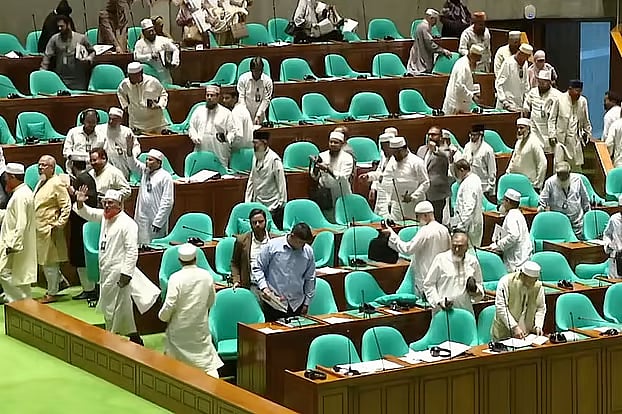
This became evident on the opening day of the third session of the 13th National Parliament. At the same time, the Jamaat-e-Islami-led 11-party alliance plans to remain active on the streets and gradually move towards a larger movement.
Sources in the opposition said they had requested a special session of parliament to discuss the ongoing crises. As that did not happen, they now want to raise issues such as electricity, gas and fertiliser shortages, rising prices of essentials and the deteriorating law-and-order situation through various means, including the question-and-answer sessions, during the current session.
As part of this strategy, they raised several questions about law and order at the first sitting of the session last Thursday. At one point, a commotion over Home Minister Salahuddin Ahmed’s response to one such question disrupted the normal proceedings of parliament for nearly 10 minutes.
Government-aligned sources view the opposition’s reaction as pre-planned. They believe the opposition had singled out Salahuddin Ahmed as a target and that Thursday’s reaction was part of that strategy.
However, two Jamaat-e-Islami leaders who are also opposition MPs said they had not planned to oppose Salahuddin Ahmed. They said they reacted spontaneously after becoming angered by his remarks.
The two opposition MPs, speaking on condition of anonymity, said that in the coming days, the opposition would not let any government figure get away with making statements that went against the public interest. They said the opposition would continue to speak out and protest in parliament on issues including corruption.
Opposition sources, meanwhile, said they want to turn weaknesses exposed during the government’s first six months and various problems affecting people’s lives into political issues and movement demands, gradually building towards a larger movement.
To this end, they have combined demands for implementing the referendum verdict and trying those responsible for the July massacre with issues such as electricity, gas and fertiliser shortages, rising prices and the deteriorating law-and-order situation.
The Jamaat-e-Islami-led 11-party alliance plans to begin a new phase of political programmes with a long march towards Chattogram on 5 September. Alliance leaders believe that if the government’s weaknesses become more evident over time, public discontent over these issues could grow.
They plan to use that opportunity to build public opinion, mobilise grassroots leaders and activists, and gradually prepare for a broader movement. At the same time, they want to play a more vocal role in the national parliament.
Hamidur Rahman Azad, coordinator of the 11-party alliance and assistant secretary general of Bangladesh Jamaat-e-Islami, told Prothom Alo last Thursday that the political message of the long march was to remain vocal for the implementation of reforms and justice.
At the same time, they were giving importance to issues concerning the public interest. He said many political parties and professional organisations had expressed interest in joining their programme.
Long march on six demands, with focus on reforms and justice
Bangladesh Jamaat-e-Islami is the largest party in the 11-party alliance. Its leaders said six major demands would be raised during the long march. These are: implementation of the referendum verdict; trial of those responsible for the July massacre; an end to shortages of electricity, fuel, gas and fertiliser; curbing the rise in prices of essential goods; improving the deteriorating law-and-order situation; and ending narrow partisanisation.
In other words, the long march will combine demands for political and constitutional reforms with issues affecting people’s daily lives. Alliance leaders believe that bringing the two sets of issues together will help increase public participation in the programme.
Jamaat sources said the 11-party alliance was placing the greatest emphasis on implementing the referendum verdict on state reforms and ensuring justice for the mass killings committed during the July mass uprising.
These demands will also take centre stage during the long march. At the same time, the opposition alliance will remain vocal on its other demands.
At an event on 25 August, Jamaat-e-Islami Amir Shafiqur Rahman alleged that after winning a major electoral victory, the government had forgotten about the referendum verdict.
He claimed that nearly 70 per cent of the country’s people had voted “yes” in the referendum in the hope of meaningful change. He said the 11-party alliance was now campaigning for implementation of that verdict. Although they wanted the matter resolved inside parliament, the government had forced them to take to the streets, he said.
Jamaat Secretary General Mia Golam Parwar has also taken a hard line on the issue. At a briefing on 23 August, he said the 11-party alliance would not make “the slightest concession” on implementing the referendum verdict. “It would be good if the matter is resolved in parliament. Otherwise, we will remain on the streets,” he said.
According to opposition leaders, implementing the referendum verdict would create a balance of power in the running of the state.
They also consider it important to ensure that no future government can take all decisions unilaterally. They therefore want to make this demand one of the foundations of a broader political movement.
Long marches in four divisions, followed by grand rally in Dhaka
The 11-party alliance’s series of programmes will begin with a long march towards Chattogram on 5 September. It will then hold long marches towards Rangpur on 19 September, Khulna on 31 October and Sylhet on 21 November.
Jamaat sources said four divisions had initially been included in the programme, but the number could increase. The 11-party alliance will hold a grand rally in Dhaka at the end of the long-march programmes. The top leaders of all 11 parties, including Jamaat Amir Shafiqur Rahman, LDP chief Oli Ahmed, NCP convener Nahid Islam and Bangladesh Khelafat Majlis leader Mamunul Haque, will attend the long marches.
According to sources familiar with the programme, the long march towards Chattogram will begin at 7:00 am on 5 September with a rally at Shapla Chattar in the capital.
There will then be rallies at Kanchpur in Narayanganj, Paduar Bazar in Cumilla, Mahipal in Feni and Mirsarai in Chattogram. The programme will conclude with a rally at Laldighi Maidan in Chattogram in the evening.
Plan for a larger movement in stages
Leaders of the opposition alliance believe the government has failed to meet public expectations during its first six months in office. Shortages of electricity, gas and fertiliser, disruptions to industrial production, pressure from rising prices and the deteriorating law-and-order situation are creating discontent among the people.
They want to portray these problems in people’s daily lives as evidence of the government’s political failures. For this reason, the 11-party alliance, which has remained active on the streets through various programmes since the election, is now moving towards larger programmes such as long marches.
Alliance coordinator Hamidur Rahman Azad said they had announced programmes around several demands, including implementation of the referendum verdict and issues affecting people’s lives. That is why they consider the long march important.
According to him, the government has failed to meet public expectations of ensuring people’s security and rights. They therefore hope to receive broad public support for the long march.