In 2022, the government’s Bangladesh Bureau of Statistics (BBS) compiled a list of the country’s rich and poor. The project cost Tk 6.37 billion. Known as the National Household Database (NHD), the list was intended to make it easier to select beneficiaries for social safety-net programmes. But four years on, the list has not been used. Nor has the data been updated.
Against this backdrop, the Department of Social Services under the Ministry of Social Welfare is preparing to compile another list of the rich and poor. The estimated cost is Tk 6.76 billion.
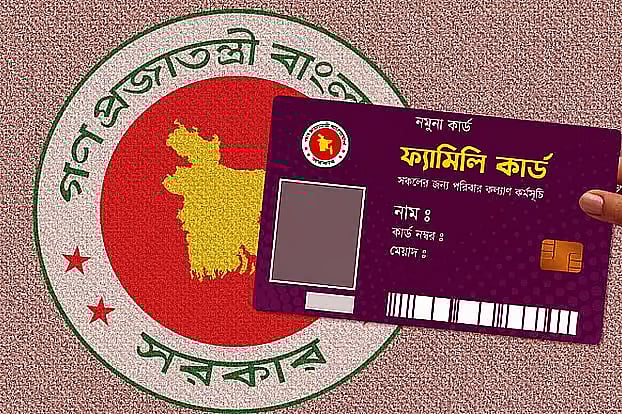
Funded by a World Bank loan, the stated purpose is to identify beneficiaries for the Family Card programme, a pledge in the BNP government’s election manifesto. The aim is to ensure that female heads of poor households receive Family Card benefits and that members of affluent households are excluded from the list.
Questions have arisen over why another list is needed when the objectives are almost identical. There are also questions about why the Department of Social Services will collect the data when the BBS is the legally mandated agency for conducting surveys and censuses in the country. The proposed expenditure has also drawn criticism.
Several BBS officials told Prothom Alo that the current needs could be met by updating the NHD data and integrating it with information from the 2022 Population and Housing Census. Conducting multiple surveys for the same purpose would amount to nothing more than a waste of public money, they said.
However, Director General of the Department of Social Services Shah Mohammad Mahbub said it would not be appropriate to equate the department’s exercise with a BBS survey. He said data for the Family Card programme would be collected from female heads of households, making it a specialised exercise.
Asked whether the department had experience collecting such data, Shah Mohammad Mahbub said it had conducted a pilot survey for the Family Card programme. The department was therefore confident it could carry out nationwide data collection, he said.
The project will also include the production of Family Cards. The total cost is estimated at Tk 19.06 billion.
Experts describe the failure to establish a comprehensive database of the rich and poor even after so many years since independence as “regrettable”. They say that during the Covid-19 pandemic, many affluent families received government incentives because there was no reliable database.
The current government, too, has begun distributing Family Cards without properly identifying the intended beneficiaries. As a result, government funds are being misallocated.
According to the Finance Ministry, implementing the Family Card pledge in the BNP election manifesto will cost around Tk 1.34 trillion over five years. Each female-headed household will receive Tk 2,500 a month through the card.
Department of Social Services seeks BBS approval
Under the law, ministries, divisions and their subordinate offices, departments and agencies are required to use statistics provided by the BBS. Although the government has decided that the Department of Social Services will collect data for the Family Card programme, the Ministry of Social Welfare wrote to the BBS on 22 July seeking permission to conduct data collection across the country.
BBS officials say its previous experience with the National Household Database survey was not a positive one. There have also been questions about BBS figures on GDP growth and inflation, along with allegations of shortcomings in its professionalism and transparency.
As a result, it has not been possible to prevent other government agencies from conducting surveys or censuses when they wish to do so. The Department of Social Services was therefore given conditional permission to collect data for the Family Card programme. It was instructed not to describe the exercise as a census or survey.
Statistics and Informatics Division Secretary Firoz Sarkar said the BBS would provide technical assistance to the Department of Social Services in collecting the data.
How much will be spent and where
Sources at the Department of Social Services said the project was initially named the “Family Card Census 2026”. Following objections from the BBS, it was renamed the “Family Card Household Database”.
The exercise is being carried out under the Strengthening Social Protection for Improvement, Resilience, Inclusion and Targeting (SSPIRIT) project, which has a total budget of Tk 28.13 billion. Of this, Tk 19.06 billion will be spent on producing Family Cards and collecting data.
According to project documents, smart cards will be issued to the female heads of 41 million households. The cost of producing these cards has been estimated at Tk 5.5 billion.
Another Tk 6.76 billion will be spent on field-level data collection and processing, honoraria for government employees, and training data collectors and supervisors.
On 12 August, the Cabinet Committee on Government Purchase approved a proposal to procure Android tablets worth Tk 3.2 billion for field-level data collection, verification and digital management.
In addition, Tk 200 million will be spent on advertising to promote the distribution of Family Cards. Travel expenses have been estimated at Tk 125 million, while Tk 500 million has been earmarked for events to distribute the cards.
Concerns over whether accurate data will be collected
Controversy has already emerged over plans to recruit 67,000 data collectors and around 7,000 supervisors for field-level data collection. Allegations have surfaced that activists and supporters of the banned Awami League have entered the recruitment process in some places, while supporters of the opposition Jamaat-e-Islami have allegedly become involved in others. Recruitment examinations for the two positions have reportedly been postponed on various pretexts.
As a result, recruitment, which was supposed to be completed by 31 July, has not yet been finalised. The Department of Social Services, however, said the process could take a few more days.
It is also unclear where the collected data will be stored or how the final list will be prepared. In addition, rules require a third party to conduct a Post-Enumeration Check (PEC) survey to determine whether there were errors in the data collection. It has not yet been decided which organisation will conduct this exercise. Nor has it been determined how the performance of data collectors and supervisors will be monitored. These uncertainties have raised concerns about whether the exercise will produce accurate data.
According to sources familiar with the process, the Department of Social Services will use the BBS’s Proxy Means Test (PMT) methodology to collect the data. The method is score-based: the higher a household’s score out of 100, the wealthier it is considered to be, while a lower score indicates greater poverty.
Several Department of Social Services officials told Prothom Alo, on condition of anonymity, that the Family Card is one of the current government’s key election manifesto priorities. For that reason, they said, it would have been better if the BBS had been tasked with collecting the data.
This spending would not be necessary if a database existed
The National Household Database project, aimed at creating a list of the rich and poor, was approved in 2013 with an estimated cost of Tk 3.28 billion. After four rounds of cost revisions, the budget was raised to Tk 7.27 billion. The project was eventually closed in 2022 without completing the work. By then, Tk 6.37 billion had already been spent.
The Implementation Monitoring and Evaluation Division (IMED) of the Planning Ministry published a report on the project in 2023. It said the project had failed to achieve its intended objectives. The data collected under the project could not be used, nor had it been updated. The IMED report said the data could potentially be used if it were updated.
Mustafizur Rahman, a distinguished fellow at the private research organisation Centre for Policy Dialogue (CPD), told Prothom Alo that although an initiative had been taken to create a database of all citizens, it had still not been completed. If such a database existed, he said, there would be no need to spend money on data collection in this way.
Noting that the Department of Social Services has no experience in collecting data from the field on this scale, Mustafizur Rahman said it should undertake the exercise with the BBS’s assistance. The data collection must be carried out carefully to avoid errors, he said, adding that measures must be taken to ensure that affluent people do not once again find their way onto the list.