Analysis
Gopalganj deaths: No post-mortems for those killed is unacceptable
Exactly one year ago, bodies were arriving one after another at the Dhaka Medical College Hospital in July last year. Correspondents from Prothom Alo took turns covering the events there.
They observed that in many cases, the bodies of those martyred in the July Uprising did undergo post-mortems, while some other times they did not. The precise number of autopsies carried out remains unknown.
Autopsies are crucial to determine the cause of any unnatural death. Everybody knows that investigations and trials of murder cases are obstructed in the absence of a post-mortem.
One of the core driving forces of the July Uprising was justice. On 3 August 2024, then coordinator of the Anti-Discrimination Student Movement, Md Nahid Islam, while declaring the one-point demand of government’s ouster at the Central Shaheed Minar in Dhaka had talked about ‘establishing justice in the society’.
Justice cannot be limited to any particular individual or group. No one can be excluded. Justice is for all, even criminals are entitled to it.
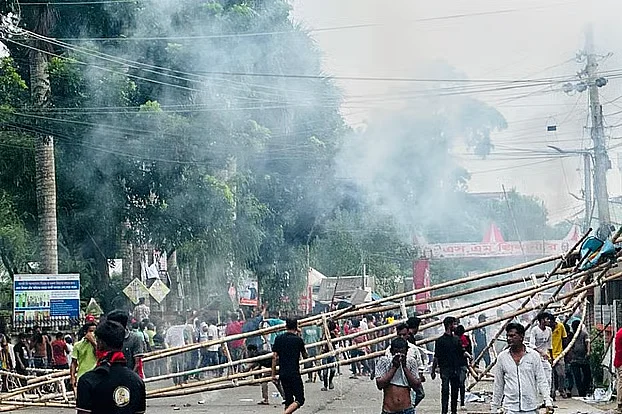
We noticed that there has been no post-mortem for the first four people killed in clashes and gunfire following attacks carried out by leader, activists and supporters of banned Awami League centering the National Citizen Party (NCP)’s ‘July March’ programme in Gopalganj (many of their leaders also referred to this as ‘March to Gopalganj’ on Facebook).
Police did not even file inquest reports for those bodies. The issue has sparked widespread criticism. One other victim, who died while undergoing treatment at the Dhaka Medical College Hospital the following day, did however undergo post-mortem.
A post-mortem (autopsy) mentions the cause of death. It is conducted by forensic experts, who analyse the body to understand exactly how the person died. Various tests are conducted here. Later, the cause of death is recorded in the report.
What is a post-mortem?
When someone dies under unnatural circumstances, police files an inquest report. This inquest report contains description of the deceased’s physical condition. It gives details description regarding in what condition the body was found, what clothing was on the body or if there was any sign of injury and so on.
A post-mortem (autopsy) mentions the cause of death. It is conducted by forensic experts, who analyse the body to understand exactly how the person died. Various tests are conducted here. Later, the cause of death is recorded in the report. Usually, autopsies are performed by physicians at the government hospitals.
According to the Code of Criminal Procedure (CrPC) and Police Regulations, Bengal (PRB), in case a person suffers an unnatural death or is murdered, there must be an inquest report and post-mortem of that body. These are pieces of elements under the evidence act.
Former District and Sessions Judge Saifuzzaman told Prothom Alo that if a murder case is investigated without a post-mortem report, there is a risk that the final verdict may favour the accused.
According to the CrPC and PBR, there is no scope for handing over a body without preparing an inquest report and conducting a post-mortem in cases of unnatural death.
Why was there no post-mortem?
According to the CrPC and PBR, there is no scope for handing over a body without preparing an inquest report and conducting a post-mortem in cases of unnatural death. However, no inquest or post-mortem was conducted in the case of the four people (Emon Talukder, Sohel Molla, Ramzan Kazi, and Dipto Saha) killed in Gopalganj on 16 July.
Journalist David Bergman made a Facebook post on this issue this Friday. He raised two questions. In the first, he asked why no independent investigation committee has been formed in connection to the Gopalganj incident. In the second, he questioned the matter of there being no post-mortems.
Press secretary to the chief adviser, Shafiqul Alam responded to Bergman’s questions. In his own Facebook post, he mentioned that the government has in fact formed a committee to investigate the incident.
Meanwhile, there could not be any post-mortems as the families forcibly took away the bodies. However, Gopalganj police may seek court’s permission to exhume the bodies of three victims for post-mortem examination today (Sunday), he wrote.
While Bergman had talked about an independent investigation committee, the government formed an official inquiry committee. Meanwhile, media reports indicate that the families of the deceased actually wanted the post-mortems to be conducted. Bergman made another post highlighting this contradiction.
Among those killed in Gopalganj was Dipto Saha, a follower of Hinduism. His body was cremated by the family. A post-mortem is no longer possible in his case (the press secretary also mentioned the issue).
On the other hand home affairs adviser Lt Gen (Retd) Md Jahangir Alam Chowdhury told journalists on Saturday that if necessary, the bodies would be exhumed for post-mortem examinations.
Among those killed in Gopalganj was Dipto Saha, a follower of Hinduism. His body was cremated by the family. A post-mortem is no longer possible in his case (the press secretary also mentioned the issue). As a result, there are concerns that there may not be justice for Dipto Saha. Even if he was among the attackers, his family still deserves justice.
More than 3,000 people have been accused in the four cases filed in connection to the attacks and violence in Goplaganj. Yet none of the family members of those five deceased wish to file cases themselves. Even the police have not lodged any case as plaintiffs.
Deceased Ramzan Kazi’s uncle, Kalim Munshi said yesterday, “What’s the point of filing a case?” Such statements were often heard from people during the Awami League government’s rule. But in a civilised state, the expectation should be that everyone will seek justice, even if the verdict does not go in their favour.
The committee that has now been formed is entirely under the government’s control. Not only is it government-led, but it is consisted of people from the very ministries that are to be investigated. That is the core issue.Sara Hossain, honorary executive director of the BLAST)
What’s stopping independent investigation?
The government formed a three-member probe committee on 17 July to investigate the incident in Gopalganj. The committee is headed by Nasimul Ghani, a senior secretary of the ministry of home affairs.
The other two members are additional secretaries, one from the ministry of public administration and the other from the ministry of law and justice. This is an official committee. It is difficult to expect an independent investigation from a government-appointed body.
When asked, senior lawyer Sara Hossain, the honorary executive director of the Bangladesh Legal Aid and Services Trust (BLAST) said, “The committee that has now been formed is entirely under the government’s control. Not only is it government-led, but it is consisted of people from the very ministries that are to be investigated. That is the core issue.”
Deceased Ramzan Kazi’s uncle, Kalim Munshi said yesterday, “What’s the point of filing a case?” Such statements were often heard from people during the Awami League government’s rule.
On 16 July, we witnessed the attack on the NCP march, the clashes, the gunfire, and the deaths of five people. Various debates have been going around over how premeditated the attack was, how much preparation went into it, whether there was provocation, whether the use of force was appropriate, whether the violence could have been avoided, and whether the law enforcement agencies bear any responsibility.
However, it is the duty of the state to uncover the truth through a proper and impartial investigation. An independent investigation committee is needed for that. No one in the government has yet answered the question, what is the obstacle to forming such an independent committee?
Information and broadcasting adviser Mahfuj Alam made a Facebook post yesterday. In one part of the post, he wrote, “Assist in the arrest and trial of the terrorists. But as citizens, always stand for human rights.” He also added, “In this new Bangladesh following the people’s uprising, we made a promise of human dignity, non-discrimination, and justice. It is our responsibility to fulfill that promise.” We hope Mahfuj Alam’s words do not remain just empty rhetoric.