State-controlled human rights commission would be suicidal for govt: Iftekharuzzaman
Transparency International Bangladesh (TIB) Executive Director Iftekharuzzaman has warned that imposing an ineffective, government-controlled National Human Rights Commission on the public would ultimately be self-defeating for the government itself.
He said those who fail to establish an effective institution end up acting against their own interests.
“They create a Frankenstein for themselves. Power is never permanent. An institution that is politicised today will eventually produce the negative consequences of its own ineffectiveness, and those responsible for creating it will themselves become its victims,” he said.
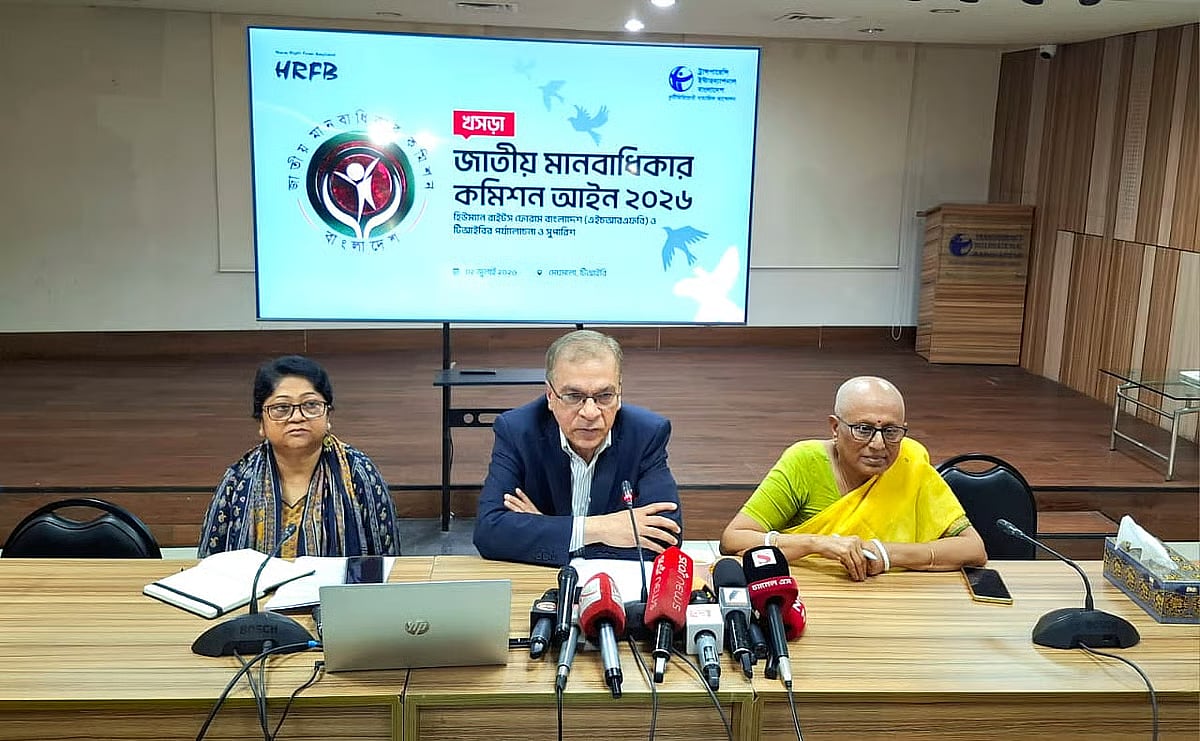
Iftekharuzzaman made the remarks on Thursday at a consultation titled “Draft National Human Rights Commission Act 2026: Review and Recommendations by the Human Rights Forum Bangladesh (HRFB) and TIB”, held at the TIB office in Dhanmondi, Dhaka.
Presenting TIB’s review of the draft legislation, he outlined 19 recommendations, saying that failure to incorporate them would demonstrate the government’s lack of genuine commitment to establishing an independent and effective National Human Rights Commission.
He added that if the government honoured the commitments made by Bangladesh Nationalist Party (BNP) in its 31-point state reform agenda, election manifesto and July Charter, it would be possible to establish an independent National Human Rights Commission free from government control.
Responding to a question during the discussion, the TIB executive director said that those in power or holding major positions in the government in Bangladesh frequently undermine state institutions for short-term political gain.
“Many countries have governments that are even more authoritarian and repressive, yet very few have such a record of politicising and rendering national institutions ineffective. This practice must change,” he said.
Iftekharuzzaman also warned that “anti-reform forces” remained active within the government. While such resistance could be political, he said, the bureaucracy was often an even more influential obstacle, adding that this was reflected in the draft Human Rights Commission law.