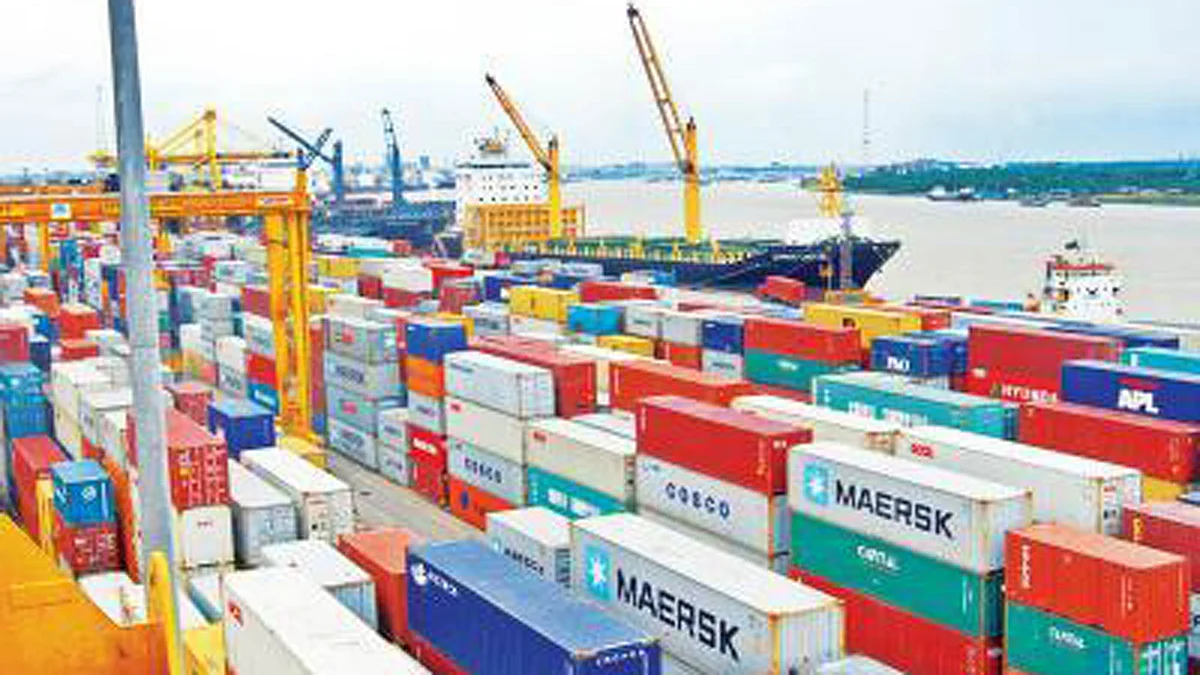
Operations at Chattogram Port were again thrown into near paralysis from 8:00 am today, Sunday, as workers resumed their strike over a four-point set of demands. The programme, called by the Chattogram Bondor Rokkha Songram Committee (Chattogram Port Protection Movement Committee), has disrupted activities at the port’s jetties and outer anchorage.
There are 12 vessels at the port’s main jetties and more than fifty cargo ships at the outer anchorage. Cargo unloading from these ships has stopped. Since morning, strict security by law enforcement agencies has been visible across the port area.
Earlier, workers observed three days of eight-hour work stoppages from 31 January, demanding that the New Mooring Terminal not be leased out.
This was followed by an indefinite work stoppage starting last Tuesday, which paralysed container transportation activities at the port. However, after a meeting on Thursday between protesters and the shipping adviser, the indefinite stoppage was suspended for two days.
Subsequently, the port authorities sent a letter to the ministry seeking travel restrictions and asset investigations against protesters. Alleging that the port chairman (Rear Admiral SM Moniruzzaman) had incited the movement, protesters then announced an indefinite strike beginning Sunday.
The four demands behind the strike are, an announcement that the New Mooring Terminal (NCT) will not be leased to DP World, removal of the port chairman, whom they blame as the main cause of the crisis, withdrawal of disciplinary measures taken against protesting employees, assurance that no legal action will be taken against protesters.
Ibrahim Khokon, coordinator of the Chattogram Bondor Rokkha Songram Committee, told Prothom Alo that two senior leaders of the committee were picked up between Saturday night and Sunday morning by individuals identifying themselves as DB personnel.
He alleged the port chairman was attempting to suppress the movement through force and warned that harsher protests would follow if force were used. He added that the movement could not be suppressed without dialogue.