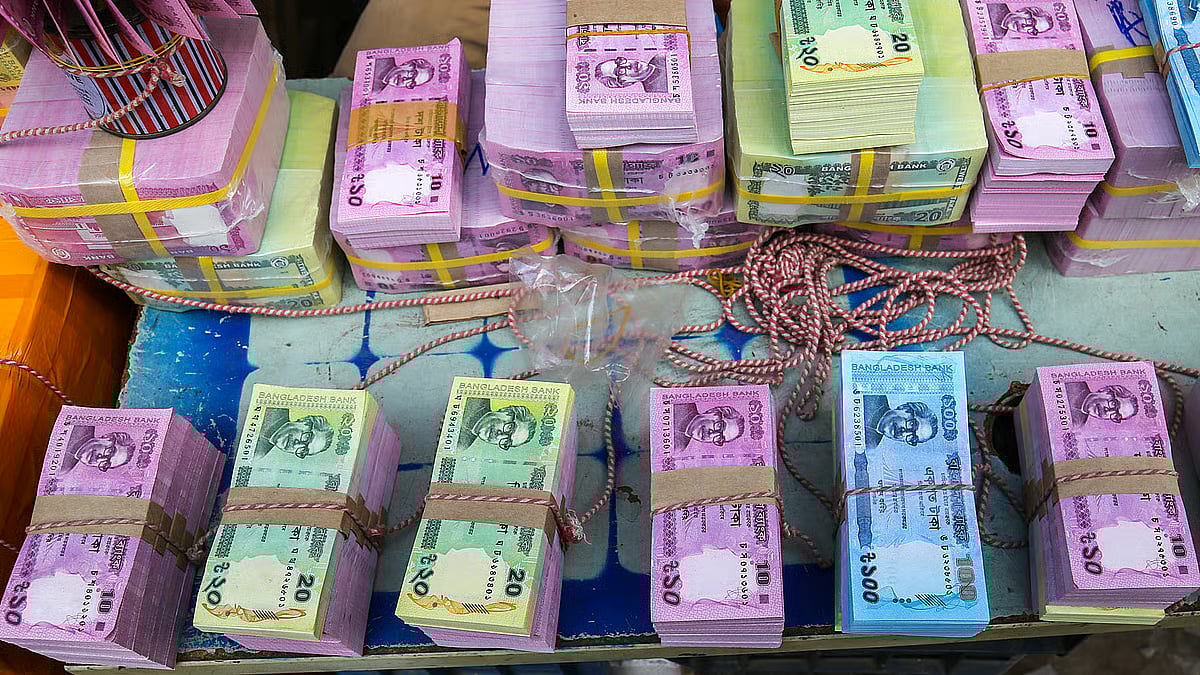
Bangladesh Bank will not release new banknotes for the general public ahead of Eid-ul-Fitr this year.
As a result, most people will have to celebrate Eid without new currency notes, and children and teenagers will also miss out on receiving fresh banknotes.
However, Bangladesh Bank has arranged new banknotes for its own officials and employees.
The central bank recently issued an internal order, and employees began receiving the new notes from Sunday. The move has drawn criticism from many officials within the institution.
Every year during Eid, demand for new banknotes rises significantly, as they are widely used as Eid salami (gift money).
Temporary stalls selling new and torn notes usually appear in several areas, including in front of Bangladesh Bank in Motijheel and around Gulistan in the capital.
Much of this trade takes place on sidewalks and becomes particularly busy during Eid.
However, Bangladesh Bank recently withdrew its decision to release new banknotes for Eid. Despite this, the bank has now arranged new notes for its own staff.
Bangladesh Bank spokesperson Arif Hossain Khan told journalists that the central bank has stepped back from releasing new currency notes in the market before Eid, meaning no new notes will be issued to the public this year.
Several Bangladesh Bank officials said that some officers advocate reforms in the banking sector but do not support reforms for themselves.
Whenever initiatives are taken to reform Bangladesh Bank, they said, staff collectively protest. While there are calls to reduce the use of new cash, officials themselves secure new cash for personal use.
How much new cash employees can receive
On 3 March, Bangladesh Bank issued an office order specifying how much new cash officials and employees can collect. According to the order, officials holding the ranks of Executive Director, Director, Additional Director, and Joint Director can each receive new banknotes worth up to Tk 183,000. Cleaning staff and other employees can receive up to Tk 68,000 in new notes.
Officials and employees will be able to collect the notes between 8 and 12 March, depending on demand.
Questions have also arisen because some employees may receive new banknotes worth more than their salaries and allowances. Many believe this could create opportunities for the notes to enter illegal transactions and eventually reach the sidewalk businesses that trade in new and torn currency notes.