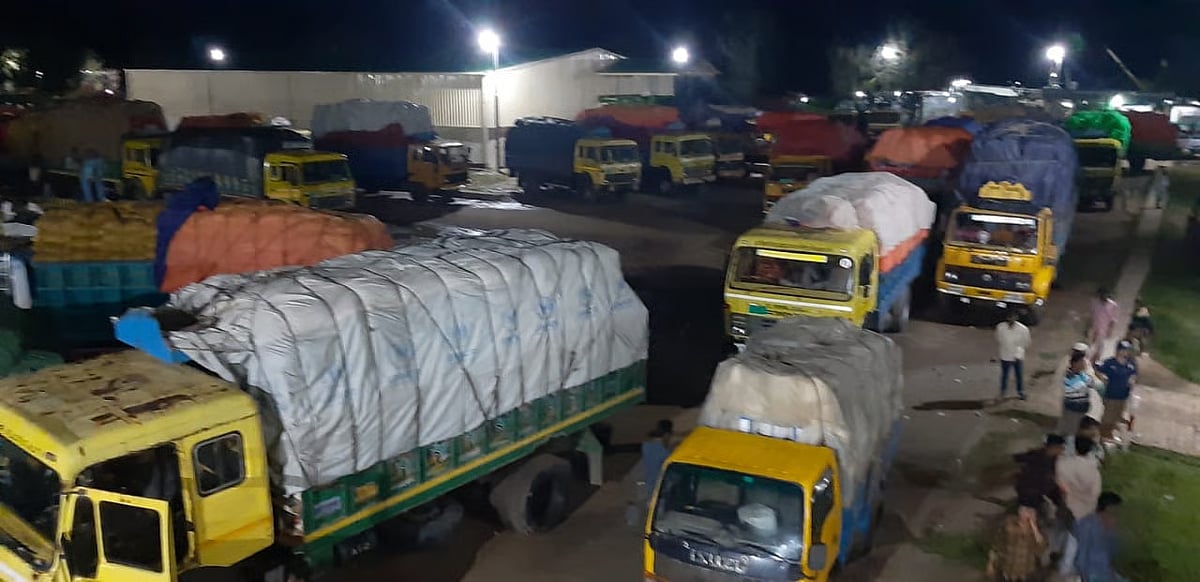
Transport operators have increased freight charges for trucks and covered vans due to a crisis of fuel. As a result, the cost of transporting essential commodities as well as import–export goods has risen. The increase in transport expenses has also raised concerns that product prices may go up.
Several traders in Dhaka and outside Dhaka said truck fares for transporting vegetables from Bogura to distant destinations have increased by as much as Tk 10,000 per truck. Meanwhile, the cost of carrying goods between Dhaka and Chattogram has gone up by Tk 5,000–6,000. Truck fares for transporting goods within Dhaka have increased as well.
The war involving Iran and the United States and Israel is disrupting oil and gas production and supply. To cope with the situation, the government has reduced the supply of fuel to filling stations. Limits have also been set on how much fuel different types of vehicles can receive at filling stations.
With rationing in place, people have been crowding filling stations day and night to refuel their vehicles out of panic. In many places, trucks and covered vans are receiving less fuel than the set limit.
Costs rising in the transport of essential goods
During the peak season, an average of 200 truckloads of vegetables and potatoes are sent daily from Mahasthan market in Bogura to wholesale markets in Dhaka, Chattogram and Sylhet.
Even two weeks ago, transporting 10–12 tonnes of vegetables from Mahasthan to the Riazuddin market in Chattogram cost Tk 24,000–25,000 per truck. The same shipment cost Tk 30,000 to Sylhet and Tk 16,000 to Dhaka’s Karwan Bazar or Shyambazar.
Traders at Mahasthan market said that due to instability in the global oil market caused by the conflict in the Middle East, the truck fare from Mahasthan in Bogura to Chattogram has now increased to Tk 35,000. The fare to Sylhet has risen to Tk 40,000. Transporting vegetables to Dhaka’s Karwan Bazar or Shyambazar now costs Tk 25,000 per truck.
Shafiqul Islam, president of the Mahasthan Market Raw and Dry Goods Traders’ Association in Bogura, told Prothom Alo, “I personally own six trucks. Filling stations are not providing more than 20 litres of fuel. The shortage of fuel is disrupting freight transport. Many owners have stopped operating their trucks due to the fuel shortage. As a result, farmers are facing losses.”
Impact on the construction sector
Meanwhile, the ongoing conflict in the Middle East has caused the price of steel rods in the country to increase in several phases. Since the war began, the price of rods of major brands has risen from Tk 90,000 per tonne to Tk 94,000 per tonne. Now the fuel crisis is adding extra costs to transporting those rods.
Akij Resource Group is involved in steel and cement businesses alongside its other ventures. The company is facing major difficulties in supplying its products due to the fuel crisis.
Toufiq Hasan, chief business development officer of Akij Resource, told Prothom Alo that trucks now have to wait three to four hours longer than usual at filling stations. As a result, they are unable to supply products according to demand, and delivery schedules are being disrupted.
Transport owners are demanding Tk 3,000–4,000 more per truck for transporting rods within Dhaka. According to Suman Chowdhury, general secretary of the Bangladesh Steel Manufacturers Association, trucks that previously could complete four to five trips are now able to make only one or two trips.
Concern among garment manufacturers
Export-oriented garment factories have to send finished products to container depots at ports in covered vans at their own expense. The increase in truck and covered-van fares due to the fuel shortage ahead of Eid has also worried garment manufacturers.
In recent days, the cost of hiring a covered van from Dhaka has risen from Tk 10,000–12,000 to Tk 15,000–16,000. From Chattogram, the fare has increased from Tk 15,000–16,000 to Tk 20,000–22,000.
Mohammad Hatem, president of the Bangladesh Knitwear Manufacturers and Exporters Association, told Prothom Alo, “Because of the fuel crisis, covered-van fares have already increased. Before the Eid holidays there will be heavy pressure to send goods from factories to the port in Chattogram. We are worried whether transport owners will increase fares further. If that happens, the pressure will mount on factory owners.”
What economists say
MA Razzaque, chairman of the private research organisation Research and Policy Integration for Development (RAPID), told Prothom Alo that rationing is a positive step to deal with the fuel crisis. However, if transport costs rise because of it, it could spike inflation.
Therefore, special consideration could be given to ensuring fuel supply for transporting essential goods. That supply must be properly monitored. To handle such sudden crises, there is no alternative to maintaining fuel reserves. The government should keep at least three months’ worth of fuel reserves, he added.
Prothom Alo’s Staff Correspondent, Bogura contributed reporting.