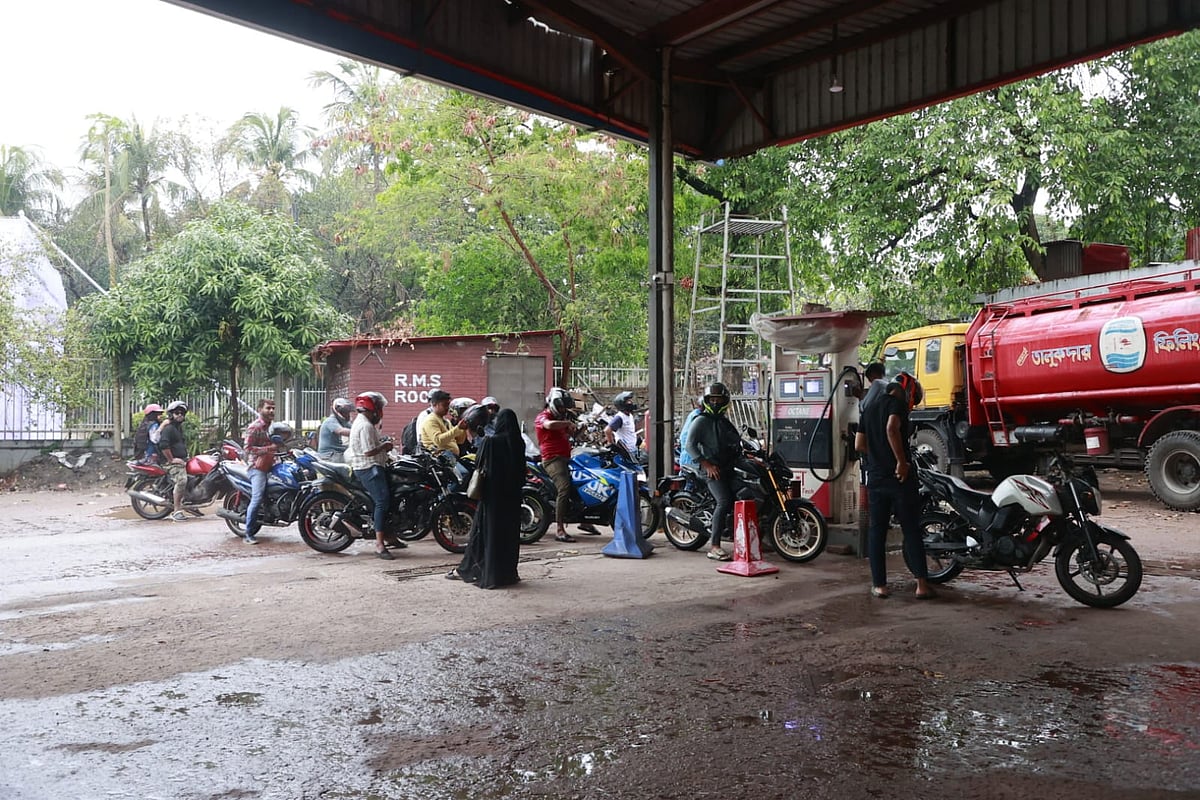
Fuel crisis: Ceasefire benefits will take time to materialise
Instability arose in the fuel market after the war began in the Middle East as global fuel supply declined, prices increased. The arrival of imported fuel vessels in the country began to be delayed.
Some suppliers expressed inability to deliver. Concerns grew over maintaining supply even by purchasing from alternative sources at double the price. In just one month, losses from fuel imports reached Tk 90 billion.
People concerned believe that the cost of fuel imports will begin to decline if the war stops. They say that fuel prices in the global market started to fall the day after the ceasefire was announced. However, due to uncertainty over the implementation of the ceasefire, prices rose again within a day. As a result, it will take time to reap the benefits of the ceasefire; relief is not immediate.
Two senior officials of the Energy and Mineral Resources Division said that long-term LNG contracts include a pricing formula based on a three-month average. Even if prices fall now, the benefits will not be reflected before June. Some purchases can be made at relatively lower prices from the spot market.
In addition, a reduction in fuel oil prices would bring relief. This would lower import costs, save dollars, and reduce pressure on subsidies. For now, there is little to do beyond monitoring the situation.
According to sources at Bangladesh Oil, Gas and Mineral Resources Corporation (Petrobangla), after the war began in the Middle East, Qatar and Oman halted LNG supply under long-term contracts. Supply from Oman will remain suspended until 18 May and from Qatar until 12 May. To cover the shortfall, the government is purchasing LNG from the spot market at double the price. Before the war, LNG cost $10 per unit; in April, it has been purchased at an average of over $20 per unit, with the highest price reaching $28.28 per unit. This has increased Petrobangla’s losses.
However, on the first day of the ceasefire last Wednesday, an offer was received to purchase one LNG cargo at $17.99 per unit.
Petrobangla officials said that there are plans to import 11 LNG cargoes in May, of which three have already been finalised. If the war stops, there will be an opportunity to purchase the remaining eight cargoes at lower prices. Recently, global prices dropped to $16 per unit. If this price holds, the cost per unit will decrease by $4. This would save $13.2 million per cargo, equivalent to Tk 1.65 billion (at an exchange rate of Tk 125 per dollar). That means purchasing eight cargoes at this rate could save the government Tk 13.2 billion. Petrobangla incurred a deficit of Tk 45 billion in April. If prices continue to decline, the deficit may decrease in May.
Currently, the country has the infrastructure to supply up to 1.10 billion cubic feet of gas per day from LNG. For this, 11 LNG cargoes are required each month. In April, nine cargoes are being imported, including eight purchased from the spot market. One cargo is expected to arrive from Angola under a second contract with Qatar. Currently, an average of 950 million cubic feet of gas is being supplied daily from LNG. Supply will increase if additional cargoes are imported next month.
Monir Hossain Chowdhury, spokesperson (Joint Secretary) of the Energy and Mineral Resources Division, told Prothom Alo that the ceasefire announcement had raised hopes due to falling global prices. However, instability returned on Thursday. Therefore, it is too early to say when the benefits will be realised; it may take a few more days to understand the situation.
Benefits will come if oil prices fall
Not only gas, but the war situation has also created additional pressure on the fuel oil sector. BPC has been making regular profits from fuel sales for a decade and earned Tk 43 billion in profit in the last fiscal year. Now, fuel oil is being imported at more than double the price. Despite this, the government has not increased fuel prices domestically in April. As a result, BPC is incurring losses of around Tk 45 billion in just one month.
BPC officials said fuel oil is purchased based on a five-day average price. Therefore, if global prices decline, benefits can be realised quickly. Among fuel oils, diesel is imported the most. In February, diesel was imported at an average price of $83 per barrel. In March, it rose to $186. In April, diesel prices surged to a high of $284 per barrel, and then fell slightly to $247. Following the ceasefire news, it dropped to $190, although the market turned upward again on Thursday.
According to Oilprice.com, a leading website publishing global oil and energy prices, Brent crude oil prices fell to $92 per barrel on Wednesday as an immediate reaction to the ceasefire announcement. On Thursday, it increased by more than $5. As of 11:30 am Bangladesh time, Brent crude rose to $97 per barrel. Before the war, the price was $70, which at one point had climbed to $119.
Khandaker Golam Moazzem, research director at the Centre for Policy Dialogue (CPD), told Prothom Alo that supply may increase and prices may fall if the war ends. However, it will take time for fuel prices to return to previous levels. Tariffs may be imposed in the Strait of Hormuz. In the coming months, an additional $2 to $2.5 billion may be required for fuel imports. Even if the war ends, its effects will linger, though the pace of inflation may slow somewhat.