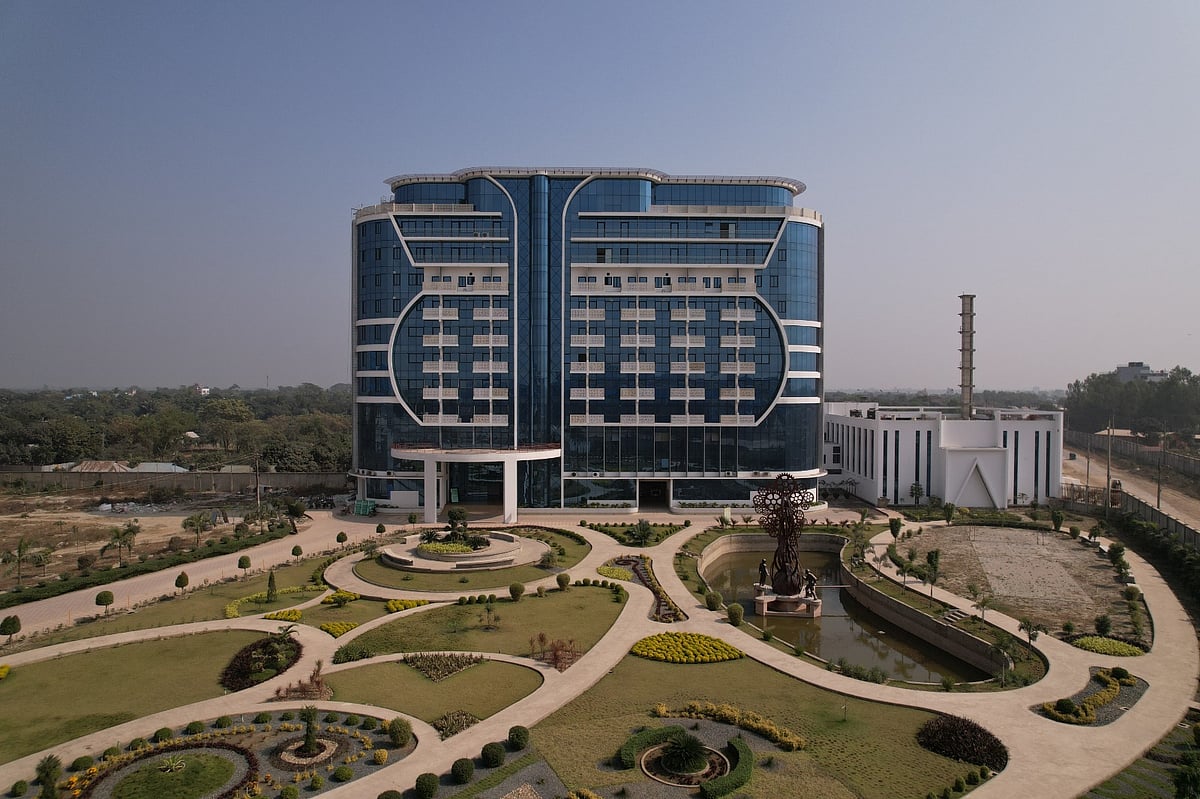
Factories lie idle amid gas shortage, yet loan interest payments continue
There are two factories side by side, one for glass manufacturing and another for rods. The total investment in these two factories amounts to approximately Tk 73. 2 billion Bangladeshi, most of which is sourced from domestic and foreign loans.
Annually, interest payments of nearly Tk 5.5 billion are required. However, the factories cannot commence operations due to the lack of a gas connection.
These factories are owned by Meghna Group of Industries (MGI) and are located in the Cumilla Economic Zone. The glass manufacturing facility was completed about two and a half years ago, and the rod factory finished construction one and a half years ago. When MGI invested, they were assured of a gas connection. Based on discussions with the government, they spent Tk 5. 5 billion on constructing gas lines and other infrastructures. However, they have not yet received the gas connection.
MGI's chairman, Mostafa Kamal, told Prothom Alo on 20th June that they are paying approximately Tk 450 million in interest per month due to the loans on these factories. This investment was made using foreign loans, which cannot be rescheduled, and the interest cannot be waived. Without gas, the factories cannot be operational.
He also stated that a total of 15,000 jobs were expected to be created across seven factories in the Cumilla Economic Zone, but everything is stalled due to the gas shortage.
He brought up the matter during a meeting with businessmen and Prime Minister Tarique Rahman on 20th June.
It's not just MGI; several small, medium, and large industrial groups are also in trouble because they haven't received gas connections for their factories. Some have even fallen into significant financial crises.
According to Bangladesh Oil, Gas & Mineral Resources Corporation (Petrobangla) sources, there are over 1,800 applications for industrial connections pending with six gas distribution companies, including Titas Gas Transmission and Distribution PLC.
About 550 of these companies have completed all processes and are awaiting connection (promised connection), meaning they have even deposited money for the gas connection but are not receiving it.
The Executive Chairman of Bangladesh Economic Zones Authority (BEZA), Ashiq Chowdhury, wrote a letter to the Secretary of the Ministry of Power, Energy & Mineral Resources on 20th April regarding the issue of not receiving gas connections for factories. In the letter, he mentioned five factories, two of which belong to MGI.
Ashiq Chowdhury said if gas connections aren't provided, the creation of new employment opportunities in the country will be stalled, and future domestic and foreign investors will be discouraged from investing.
Field visits
MGI's factories are located next to the Dhaka-Chittagong highway, 32 kilometers from Dhaka, in the Meghna Upazila of Cumilla. MGI is establishing a private economic zone there. The land area is 361 acres.
On 20th June, it was observed that the road leading from the highway to the economic zone is in very poor condition, with potholes filled with rainwater, making it challenging for vehicles to pass. Entering the Cumilla Economic Zone through the broken road, it was seen that the two factories' construction was complete, and work was ongoing on other factories and buildings for worker accommodation. The electrical and gas lines are ready, but the connections are not provided.
MGI officials stated that if they had been informed from the start that they would not receive gas, they would not have invested heavily to set up the factories. Investment in the glass factory, named Meghna Glass Industries Limited, is Tk 24. 4 billion, while the rod factory, named Meghna Re-Rolling and Steel Mills Limited, has an investment of Tk 48. 8 billion. MGI has taken loans from the International Finance Corporation (IFC), a World Bank Group organisation, for these two factories.
MGI is one of the leading industrial groups in the country, established in 1976, currently with more than 57 factories employing over 65,000 people. In the Cumilla Economic Zone, not only gas but also electricity connections for industries have not been received. MGI has repeatedly requested the government to repair the connecting road, but it has not been done.
MGI's General Manager (Accounts and Finance), Suman Chandra Bhowmick, told Prothom Alo that the previous Awami League government undertook a project to expand and repair the road with an estimated cost of Tk 13 billion, but the project was not approved. The interim government also did not approve the project due to a lack of funds. The road connects Meghna Upazila to the Dhaka-Chittagong highway, which is crucial for industries and the general public.
City Group in crisis
Similar to MGI, City Group, another leading industrial conglomerate in the country with around 40 subsidiaries employing over 15,000 people, is currently facing a crisis.
According to City Group, one of the reasons for their crisis is the lack of gas connections for their factories. In their privately established economic zone at Hossendi in Munshiganj's Gazaria on 108 acres of land, they have not been able to start five factories due to the lack of gas. Investment worth approximately Tk 140 billion is lying idle in their cement, sugar, paper, ship, and liquefied petroleum gas (LPG) factories.
City Group sources revealed that despite spending Tk 1.5 billion to construct a pipeline on their own, the government couldn't supply the gas. The factories could have been operational in 2022 if they had received the gas connection.
The group's Managing Director, Md Hasan, told Prothom Alo that they are incurring an interest expense of around Tk 50 million daily. They are uncertain about when they might receive gas. This loss has become unbearable.
AK Azad, Managing Director of Ha-Meem Group, encountered issues after setting up a textile factory in Mauna, Gazipur. He stated that two years ago, he deposited money for a gas connection, but the connection is yet to be provided, delaying the factory's operation.
Ashiq Chowdhury, in his letter regarding gas connections, also mentioned two factories, Swift Shield Bangladesh Limited and Resas Chemie Bangladesh Limited, located in the Jamalpur Economic Zone.
Investments of Tk 150 million in Swift Shield and Tk 940 million in Resas Chemie have been made. Providing gas connections to these factories would create employment for more than 1, 000 people, as stated in the letter.
The letter also mentioned Healthcare Life Science Limited, an investor in the National Special Economic Zone at Mirsharai, Chittagong, which is unable to start operations due to the absence of a gas connection. Up until now, the company has invested Tk 5 billion. Providing a gas connection would create employment for 7,000 people there.
TK Group has set up a factory named Karnaphuli Steel Mills in Chittagong with an investment of nearly Tk 10 billion, waiting for gas for the past five years.
Bangladesh Auto Industries Limited has established an electric vehicle and battery factory in the Mirsharai Economic Zone in Chittagong. The factory authorities stated their investment is approximately Tk 14 billion. Once operational, the factory would employ 1, 500 people in its first year and 5, 000 in three years. However, due to the gas crisis, the factory is yet to start. The Chairman of Bangladesh Auto Industries, Abdul Mannan Khan, mentioned to Prothom Alo that they are considering running the factory with cylinder gas as an alternative until the gas connection is received.
A decade and a half-long crisis
Due to the gas crisis in the country, the provision of new connections for industrial and commercial users was suspended as of 21st July 2009, and for residential users on 13th July 2010.
However, a high-level committee was formed under the leadership of then-Prime Minister’s Energy Advisor Tawfiq-e-Elahi Chowdhury, tasked with making emergency decisions on important industrial connections and increasing allocations (loads), providing gas connections to some factories. Nonetheless, there are allegations of corruption against this committee.
During the Awami League government's tenure, which ended with the July mass uprising, emphasis was placed on gas imports rather than on increasing domestic gas production. The import of liquefied natural gas (LNG) started in 2018. By 2022, with foreign currency reserves dwindling, importing gas became increasingly challenging, compounded by rising global market prices. The Awami League government created enormous debts in the energy sector, with continuing repercussions.
Gas prices were increased several times with promises of increased supply, notably raising industrial gas prices by 150 per cent to 178 per cent in January 2023. During the interim government’s tenure last year, the Bangladesh Energy Regulatory Commission (BERC) increased gas prices for new connections and load increases by 33 per cent on 13th April. However, the supply did not increase, prolonging the wait.
After the BNP government assumed office, a meeting was held on 17th May in the Secretariat, chaired by Energy Minister Iqbal Hasan Mahmud, to discuss gas connections for industries in detail. However, the meeting did not result in any decisions.
Currently, approximately 2. 7 billion cubic feet of gas is supplied daily in the country, whereas the demand is for 3. 8 billion cubic feet. Over 1. 2 billion cubic feet are supplied to the industrial sector. Petrobangla sources state that fulfilling the promised connections would necessitate an additional 350 million cubic feet of gas.
The Secretary of the Ministry of Power, Energy & Mineral Resources, Mohammad Saiful Islam, stated to Prothom Alo that the government is considering providing gas to certain factories. However, not all factories within the same industrial group will receive gas; rather, a thought process is ongoing regarding giving some gas to everyone. He also mentioned that efforts are being made to increase local production to mitigate the crisis.
What’s the solution?
Production from domestic gas fields is declining at a concerning rate. According to data from the Energy Division, Bangladesh has 29 gas fields, and with the current extractable reserves, production at the current rate can continue for seven to eight years. The current government is emphasising drilling more wells and exploring marine gas, despite the fact that discovering new gas fields and extraction is a time-consuming process and questions arise regarding massive costs and subsidies associated with imports.
When asked about the potential resolutions, two analysts from the energy sector, M Shamsul Alam, Energy Advisor of the Consumers Association of Bangladesh (CAB), and Khondaker Golam Moazzem, Research Director of the Center for Policy Dialogue (CPD), stated they do not see an immediate solution.
According to Shamsul Alam, ensuring good governance and reducing costs within the energy sector is essential. Decisions relying on imports should be avoided. He further mentioned that no production sharing agreements should be made in marine gas exploration that would impede the country's ability to purchase its own gas.
Golam Moazzem suggested considering the provision of gas connections to those who have been promised, but the government should refrain from giving new promises of gas connections to industries.
He also highlighted that the gas crisis will persist for the next four to five years, necessitating a focus on increasing internal production and management during this period. Renewable energy can be considered as an alternative, and measures should be taken from now to resolve the gas crisis in the medium term.