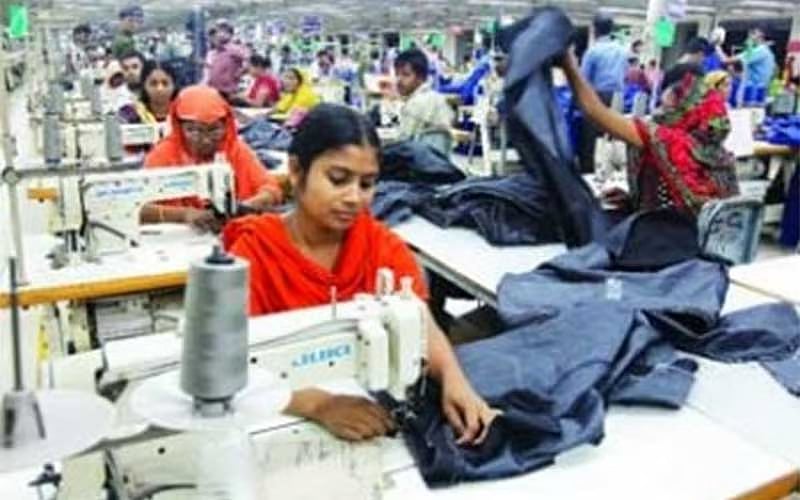
Bangladesh retains top denim exporter to Europe; China, India, Vietnam are also ahead
Bangladesh has retained its leading position in denim garment exports to the European Union (EU). However, the country’s denim exports declined in the first eight months of this year (January–August), while exports from competitors such as China, Egypt, Vietnam and India grew rapidly.
According to data from Eurostat, the EU’s statistical office, EU member states imported denim garments worth 2.95 billion euros from countries around the world in the first eight months of this year. This represented a 4.40 per cent decline compared with the same period last year.
Bangladesh’s denim exports to the EU fell more sharply than the bloc’s overall imports.
The country exported denim garments worth 870 million euros in the first eight months of this year, down 5.85 per cent from the same period last year. Bangladesh now accounts for 29.40 per cent of the EU denim garment market.
Pakistan ranks second among denim garment exporters to the EU. The country exported denim worth 530 million euros in the first eight months of this year, a decline of 7.88 per cent compared with the same period last year. Pakistan currently holds a 17.78 per cent share of the EU denim garment market.
Türkiye and Tunisia rank third and fourth, respectively, among denim garment exporters to the EU. Türkiye’s denim garment exports fell by 21 per cent in the first eight months of this year, reaching 440 million euros.
Meanwhile, Tunisia, in Africa, exported denim worth 220 million euros. This represented a 6.44 per cent decline compared with the same period last year.
Competing countries are gaining ground
The figures for the three countries immediately behind Bangladesh in the EU denim export market do not tell the whole story. Four competing countries are rapidly increasing their denim garment exports.
For example, while Bangladesh’s exports fell by nearly 6 per cent in the first eight months of this year, Vietnam’s rose by 45 per cent.
According to Eurostat data, China’s denim garment exports to the EU rose by 17.70 per cent year on year in the first eight months of this year, reaching 200 million euros. China now accounts for 6.67 per cent of the market.
Similarly, Egypt’s denim garment exports to the EU increased by 31.46 per cent to 200 million euros between January and August. Egypt also holds a 6.67 per cent share of the market.
Cambodia and Morocco, which follow in the rankings, recorded declines of 6.47 per cent and 14.48 per cent, respectively, in their denim garment exports. During the first eight months of this year, Cambodia exported denim worth 140 million euros, while Morocco’s exports amounted to 60 million euros.
Meanwhile, Vietnam exported denim garments worth 50 million euros to the EU in the first eight months of this year, a 45 per cent increase compared with the same period last year.
India also exported denim garments worth 30 million dollars between January and August, recording growth of 18.62 per cent.
Bangladesh’s denim exports recover in August
Although Bangladesh lagged behind in the EU market earlier this year, its denim garment exports rose by 12.71 per cent in August, reaching 134.1 million euros. Overall EU imports of denim garments also increased during the month, rising by 11.23 per cent to 4.3 billion euros.
Pakistan recorded faster export growth than Bangladesh. Its denim exports rose by nearly 15 per cent in August to 87.7 million euros. During the same period, Türkiye’s exports fell by 13 per cent, while Tunisia’s increased by around 5.5 per cent.
Meanwhile, China’s denim exports grew by around 17.5 per cent in August. Egypt recorded an increase of 59.5 per cent. Cambodia’s exports rose by nearly 11 per cent, while Vietnam’s surged by 56 per cent. India’s exports increased by 52 per cent.
Mohiuddin Rubel, a former director of the Bangladesh Garment Manufacturers and Exporters Association (BGMEA) and additional managing director (AMD) of Bangladesh Denim Experts, told Prothom Alo: “Although orders remained low during the first five months of the year, the following three months were somewhat better. As a result, the rate of export decline is slowing. However, competing countries have recorded higher export growth than us. One of the main reasons is that we cannot offer buyers competitive prices. Factories are struggling with high gas and electricity costs, as well as other challenges. This is pushing up production costs. Moreover, our product range is less diversified than that of our competitors.”
In response to another question, Mohiuddin Rubel said: “Vietnam has signed a free trade agreement (FTA) with the EU, while India is in the final stages of negotiating one. As a result, buyers are becoming increasingly interested in sourcing denim garments from these two countries. Once Bangladesh graduates from the least developed country (LDC) category, it will lose preferential market access under the Generalised System of Preferences (GSP) after a specified transition period. We must therefore take effective steps to negotiate FTAs as well to secure duty-free market access.”