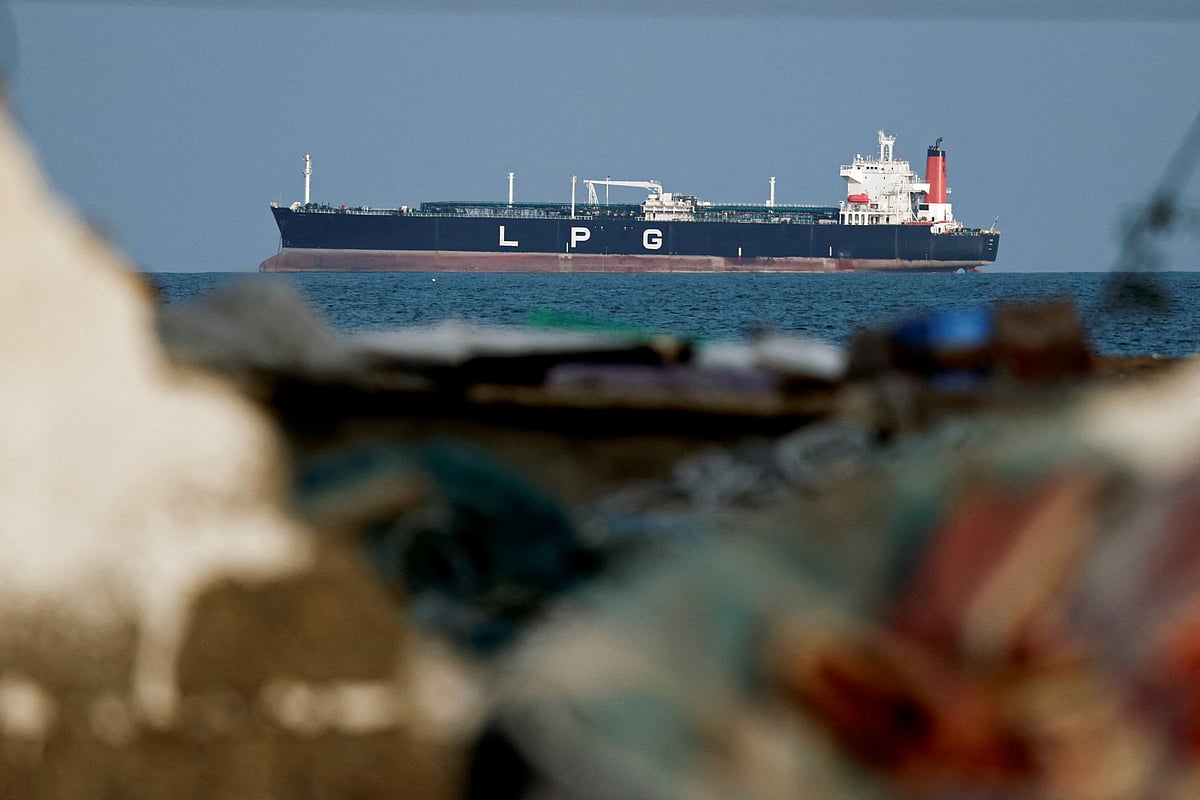
LPG: Omera tops imports, US largest source
Four companies account for 76 per cent of the total liquefied petroleum gas (LPG) imported into the country each year. These are Omera Petroleum of East Coast Group, Petromax LPG of the Netherlands, Meghna Fresh LPG of Meghna Group, Jamuna Spacetech Joint Venture, and BM Energy (BD).
Omera Petroleum imports the highest share, accounting for 19 per cent of total imports. Petromax LPG is second with 17 per cent, while Meghna Fresh LPG and Jamuna Spacetech Joint Venture each hold 16 per cent.
In one year, Bangladesh imported LPG worth over $1.27 billion, which is approximately Tk 156.6 8 billion in local currency (calculated at Tk 123 per dollar). These figures were obtained by reviewing letters of credit (LCs) opened by banks for LPG imports from February 2025 to the end of March.
Azam J Chowdhury, chairman of East Coast Group, the parent company of Omera LPG, said, “When we started this business, our projection was that the LPG market would grow as an alternative fuel in the country. Gas connections cannot be extended to every household, and it is not advisable to increase gas usage at the household level. That is why we made significant investments in LPG as an alternative fuel.”
He added that LPG imports are being somewhat disrupted due to the impact of the Iran war. At the same time, rising prices in the international market have pushed up domestic prices. He expects market volatility to ease once the war ends.
Reviewing LCs shows that the United States is the largest source of LPG imported into Bangladesh. In addition, significant volumes come from the United Arab Emirates (UAE), Oman, Iraq, and Saudi Arabia. Together, these countries account for about 78 per cent of total LPG imports.
However, Singapore ranks as the top exporting country to Bangladesh, followed by the UAE and India. Combined, these three countries account for around 68 per cent of LPG imports, as they are major trading hubs in addition to producers.
In Bangladesh, LPG is mainly imported by the private sector. It is transported by large vessels via sea routes from the Middle East and Southeast Asia to Chattogram or Mongla ports. During import, LPG remains in a pressurised liquid state. It is then transferred to smaller vessels and unloaded at terminals owned by private companies, where it is stored before being bottled into cylinders and distributed via tankers and specialised vehicles to dealers and retailers.
Market shares
Data from one year shows that a handful of major companies dominate LPG imports in Bangladesh. Omera Petroleum leads with a 19 per cent share, importing LPG worth $236.6 million.
Petromax LPG follows with a 17 per cent share, importing $218.5 million worth of LPG. Meghna Fresh LPG accounts for 16 per cent, valued at $207.9 million.
Jamuna Spacetech Joint Venture also holds 16 per cent, importing LPG worth $200.4 million.
Lutfar Raihan Khan, head of marketing at Jamuna Spacetech Joint Venture, said, “We are among the top five companies in the LPG business. There are no issues with LPG imports.”
BM Energy (BD), part of Smart Group, accounts for 8 per cent of imports, valued at $102.5 million.
United Aygaz LPG of United Group imports 7 per cent, or $87.7 million worth. The company began operations in 2021 as a joint venture with Turkey’s Aygaz.
Delta LPG imports 4 per cent, worth $45.1 million. India’s Seacom Group invested in this business of Chattogram-based TK Group in 2020.
JMI Industrial Gas and Premier LP Gas each account for 3 per cent of imports. Bashundhara LP Gas, SKS LPG, and TMSS LPG each import 2 per cent.
Padma LPG, Dubai Bangla LP Gas, and Energypac Power Generation each account for 1 per cent of total imports.
Other importers include City LPG, Universal Gas and Gas Cylinder, and Gas & Gear Bangladesh.
Sources of LPG
According to bank documents, Singapore, the UAE, and India lead in opening import LCs. However, the natural origin of LPG mainly lies in the United States, UAE, Oman, Iraq, and Saudi Arabia.
Businesses in Bangladesh import LPG from 18 countries. Over the past year, 20.93 per cent of LPG came from the United States, 18.96 per cent from the UAE, and 16.27 per cent from Oman.
Iraq supplied 12.13 per cent, Saudi Arabia 9.30 per cent, and Australia 7.34 per cent.
Other sources include Malaysia (4.93 per cent), Thailand (4.22 per cent), Kuwait (2.17 per cent), and Singapore (1.98 per cent). Additional sources are Qatar, Argentina, Kazakhstan, France, Nigeria, Vietnam, Turkey, and India.
Although these are the countries of origin, LPG is often imported through major trading hubs. For example, Singapore accounted for 29.52 per cent of LPG imports last year, worth $376 million.
The UAE was the second-largest trading source with 26.24 per cent ($334.2 million), followed by India with 11.88 per cent ($151.3 million).
Other import sources include Thailand (7.16 per cent), Turkey (4.62 per cent), France (3.74 per cent), Malaysia (3.38 per cent), Iraq (2.78 per cent), Oman (2.46 per cent), and Saudi Arabia (2 per cent).
Additional countries involved in LPG trade with Bangladesh include Norway, Sri Lanka, the United States, South Korea, Indonesia, Argentina, Qatar, Australia, and Austria.