Fuel crisis
Evening shop closures slash sales by half
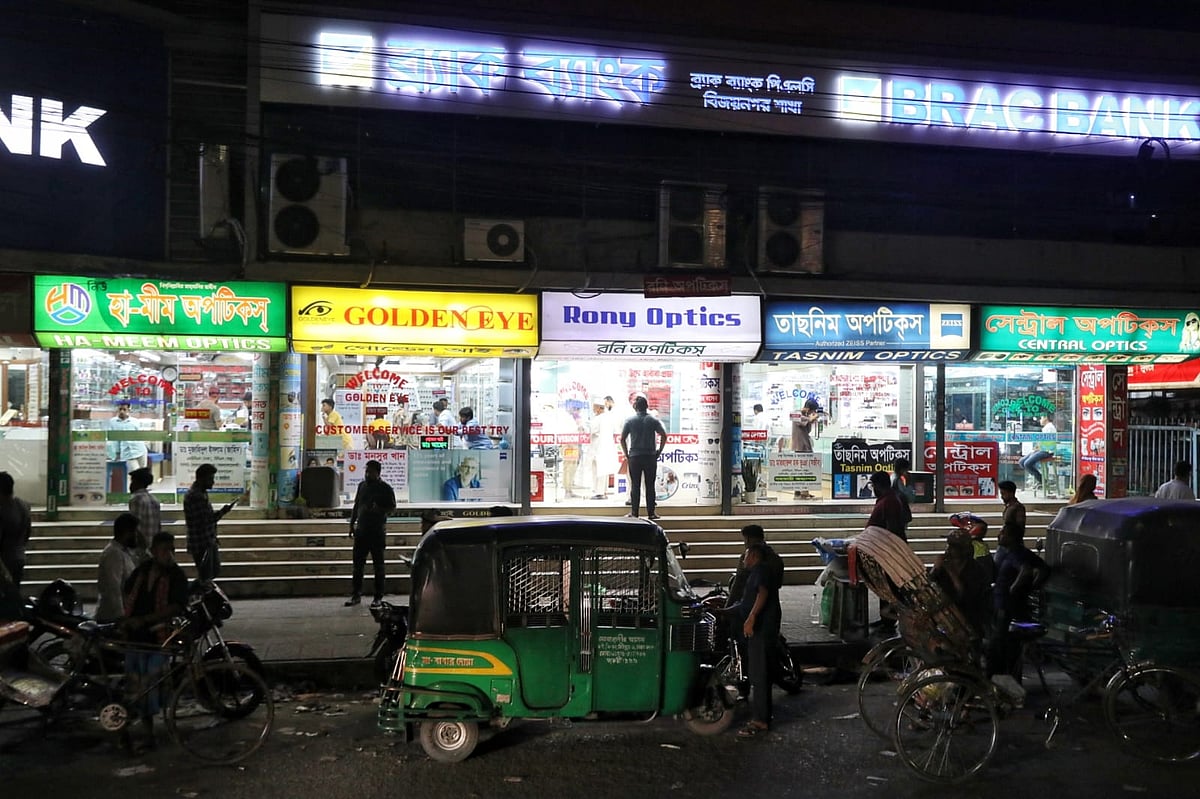
Shops and shopping malls have been closing in the evening for three consecutive days to address the energy crisis.
As a result, the duration for sales has decreased by 2-3 hours compared to before.
This has led to a reduction in sales by half for businesses, ranging from large brands dealing in ready-made garments, footwear, and household products to smaller enterprises.
Owners of several ready-made garments, footwear, and jewelry brands told Prothom Alo that typically, about 40 per cent of sales occur from morning to evening, while the remaining 60 per cent happen from evening to night.
Thus, with the closure of shops and malls in the evening, sales have naturally declined. If this situation persists, a large segment of businessmen will struggle to pay their employees' salaries and bear shop rents. Moreover, the reduced sales will also lead to a decrease in government revenue from VAT.
In an alternative proposal to save electricity, these businessmen suggested that there is little customer footfall at shops and malls in the morning from 2-3 hours. Therefore, shops could be open from 1 PM to 9 PM. This would minimise the negative impact on employment, government revenue, and business activities while simultaneously reducing electricity use at some point during the day.
In the backdrop of the global energy crisis caused by the Middle East war, a cabinet meeting chaired by Prime Minister Tarique Rahman last Thursday decided to reduce the working hours of public and private offices by one hour. At the same time, it was decided that shops and shopping malls (markets) would close at 6 PM, which was implemented on Friday.
However, yesterday, the State Minister for Energy and Power announced that shops and malls could remain open until 7 PM instead of 6 PM.
Even though the shop opening hours have been extended by one hour, several businessmen said that it would not be very beneficial. According to them, a significant portion of customers come shopping after their offices close. With the gap between office closing and shop closure now extending from two to three hours, it won't be of much benefit. The time should be extended by another two hours.
When asked, Apex Footwear's Managing Director Syed Nasim Manzur told Prothom Alo, "We need such a balanced policy when taking energy-saving initiatives that ensures energy saving while not hindering economic growth and business operations. A good alternative in this case would be to keep shops and malls open from 1 PM to 9 PM. We are prepared to take various steps to save electricity if necessary."
According to the Shop Owners Business Association, there are about seven million shops and businesses across the country. Many small and large industries are involved in supplying products to these establishments. Overall, millions of people people are directly and indirectly involved in the retail sector.
According to the Bangladesh Bureau of Statistics (BBS), in the fiscal year 2024-25, the contribution of retail and wholesale businesses to GDP was approximately 15 per cent.
Shops are closing, while some remain open. Although the decision to close shops and shopping malls at 6 PM was implemented last Friday, many did not adhere to it. Around 6:45 PM, New Market shopkeepers in Dhaka were seen doing business. The New Market eventually closed around 8 PM.
When asked, Dewan Aminul Islam, owner of Siraj Jewelers in New Market, said, "Last Friday and Saturday, sales at our establishment and surrounding 8-10 jewelry shops were almost nil. Actually, 4-5 hours are needed for shopping after office. Otherwise, sales won't pick up."
On Saturday evening in the Jigatola area of Dhanmondi, most business establishments were seen closing, complying with the government decision. At the time, many buyers returned after coming to buy goods at various shops. Several ceramic and ready-made garment shops were seen open on Elephant Road around 9 PM, although the buyers' presence was low.
The lifestyle brand ''Sara'' has 17 sales centres. Their sales fell by about half last Friday and Saturday. Confirming the matter, Snowtex Group's Managing Director (MD) SM Khaled, the parent company of Sara Lifestyle, told Prothom Alo, "On the way home from the office or when back home, many go out shopping with family. Due to the restrictions, that opportunity has become limited. It would be highly convenient if shops were open from 1 PM to 9 PM."
There is a lot associated with sales. As the country's economy grows, brands of various products, including ready-made garments, shoes, and cosmetics, are being developed. The business of those brands is also increasing. Currently, 8.4 million to 12 million people are directly and indirectly involved with the production and sale of branded products. Several businessmen reported that the government receives a significant portion of VAT from brand sales centres.
Businessmen further stated that only 8-10 per cent of the National Grid's electricity is used in commercial sectors like offices, hospitals, and retail sales. Of that, only 2 to 3 per cent of electricity is used in retail stores. By closing shops in the evening to achieve this limited electricity-saving benefit, there is a concern of reduced productivity, decreased government revenue, and disruption to the entire supply chain of retail sales. Measures like limiting the use of lifts, halving unnecessary lighting, and using energy-saving lights can be implemented in this case.
The president of Fashion Initiative, an organisation of fashion house owners, Azharul Haque Azad, told Prothom Alo, "Keeping shops open during office hours won't save electricity. Customers usually don’t go out during the day due to the heat. Overall sales have fallen below 50 per cent. If the situation doesn't improve, costs like salaries, allowances, and shop rent cannot be met. Therefore, the maximum effort should be made to keep business and economy running."
Expert opinion is that reducing shop hours to save energy will increase pressure on businesses.
Initiatives to save energy need to be taken while keeping business pressure minimal, said Khandker Golam Moazzem, Research Director of the private research institution Centre for Policy Dialogue (CPD).
He said, "The government could engage in discussions with business people on this issue. It can be experimentally observed for a week how much electricity is saved under the current time limit. The following week, based on the proposal of businesses, shops and malls can be kept open from 1 PM to 9 PM and monitored. Then, whatever is effective, the government can finalise that."