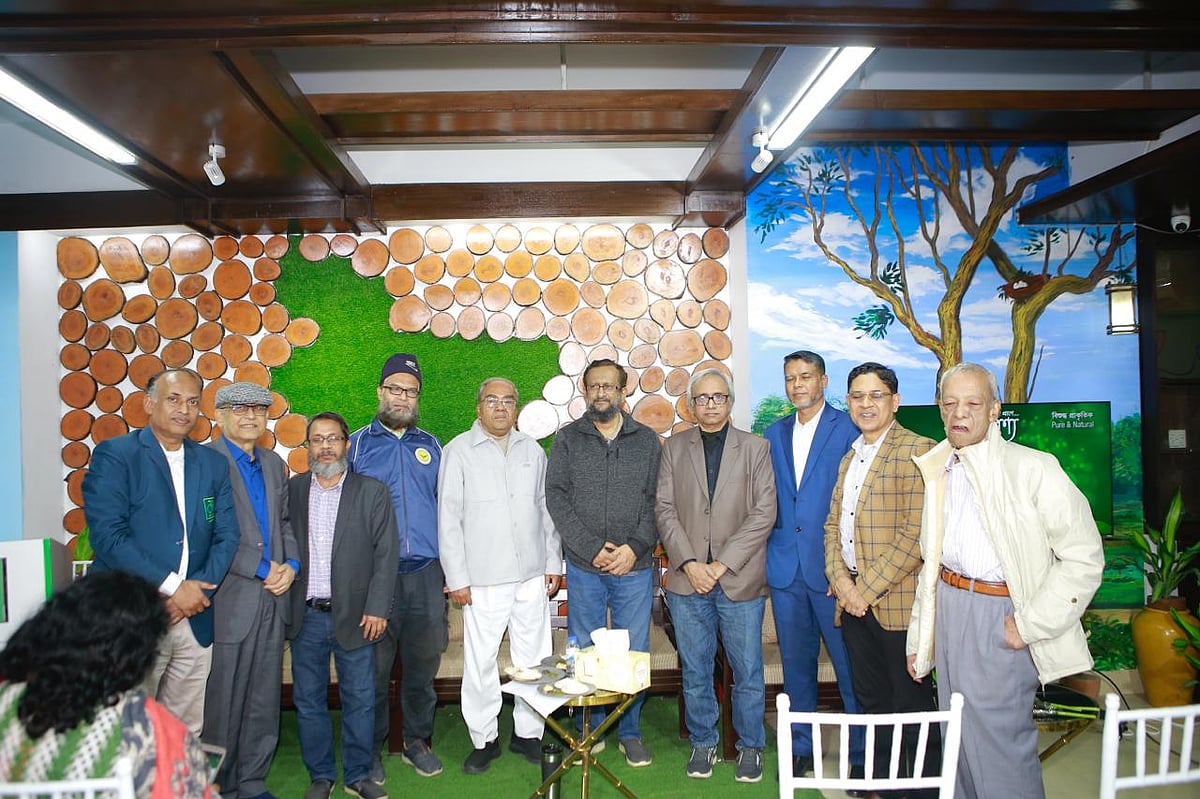
'Shuponno' outlet provides safe, chemical-free food produced through agroecological farming
With the aim of making safe, nutritious, and environmentally friendly food products produced through agroecological farming accessible to consumers, the first outlet of ‘Shuponno’ was officially inaugurated at Lalmatia (2/7, Block–B) in the capital on Friday afternoon. Speakers at the inauguration ceremony emphasized that there is no alternative to consuming safe, chemical-free, and nutrient-rich food in order to ensure a healthy life. Food produced through agroecological farming, they noted, is capable of creating a sustainable balance between nature, the environment, and human health.
The event was presided over by Joarder Nausher Ali, FCA, Chairman of Tilottoma Bangla Group and founder of the Tilottoma Organic Agriculture Farm in Gazipur. In his address, he called upon all stakeholders to come forward and actively contribute to advancing this movement for safe and sustainable food.
The Chief Guest of the program was Fazlul Kader, Managing Director of Palli Karma-Sahayak Foundation (PKSF). He stated that there is no alternative to adopting agroecological farming practices if Bangladesh is to be saved from long-term agricultural degradation. Otherwise, he warned, the fertility of the country’s arable land will be completely exhausted. He described agroecological farming not merely as organic agriculture, but as “beyond organic.”
Special guests who spoke at the event included former Secretary Md. Selim Reza, Consultant of the Partner Project of the Ministry of Agriculture Dr. Mahbubur Rahman, Sanwar Hossain, AIP, natural food expert Shahid Ahmed, food and acupressure specialist Alamgir Alam, Editor of United News of Bangladesh (UNB) Mahfuzur Rahman, Executive Director of Web Foundation Mohsin Ali, and Managing Director of bddl properties ltd MA Baten Khan.
In their speeches, the speakers explained that agroecological farming is a science-based agricultural system where crops are produced without the use of chemical fertilizers, pesticides, or harmful compounds. Instead, production is based on the interaction among biotic, abiotic, and physical components of a specific ecosystem. This approach preserves soil health, biodiversity, natural food chains, and the reproductive processes of plants and animals. As a result, it establishes a self-regenerating, environmentally sustainable, and long-term food production system without harming nature.
They further noted that agricultural products grown through agroecological methods contain nutrients at the highest biochemical and genetic levels. The natural characteristics of these foods are preserved across generations, contributing to improved immunity and overall human health. At the same time, this method ensures lower production costs, minimal waste generation, and optimal use of natural resources.
The speakers also pointed out that in today’s fast-paced and mechanized lifestyle, the risk of complex diseases is increasing, largely due to the consumption of unsafe, processed, and chemically contaminated food. In this context, initiatives like Shuponno can play a vital role in bringing about positive changes in people’s dietary habits. Shuponno, they emphasized, is not merely a food retail outlet; rather, it represents a broader movement toward a healthy lifestyle and conscious food consumption.
The Shuponno initiative has been made possible through the tireless efforts of agricultural expert Md. Mizanur Rahman, who has long been involved in the agroecological farming movement and serves as Project Director of Sukrishi and Shuponno. Speakers praised his contribution, stating that visionary, science-driven individuals like him are essential for translating sustainable agricultural concepts into reality. Special appreciation was also expressed for MA Baten Khan, Managing Director of BDDL, for his significant role in establishing the outlet and for continuously supporting such initiatives from behind the scenes.
At the conclusion of the program, the President and the Chief Guest jointly inaugurated the Shuponno outlet by cutting ribon. The organisers announced that Shuponno plans to expand its operations by establishing more outlets in Dhaka and across the country, with the goal of making safe, nutritious, and chemical-free food produced through agroecological farming accessible to people from all walks of life.