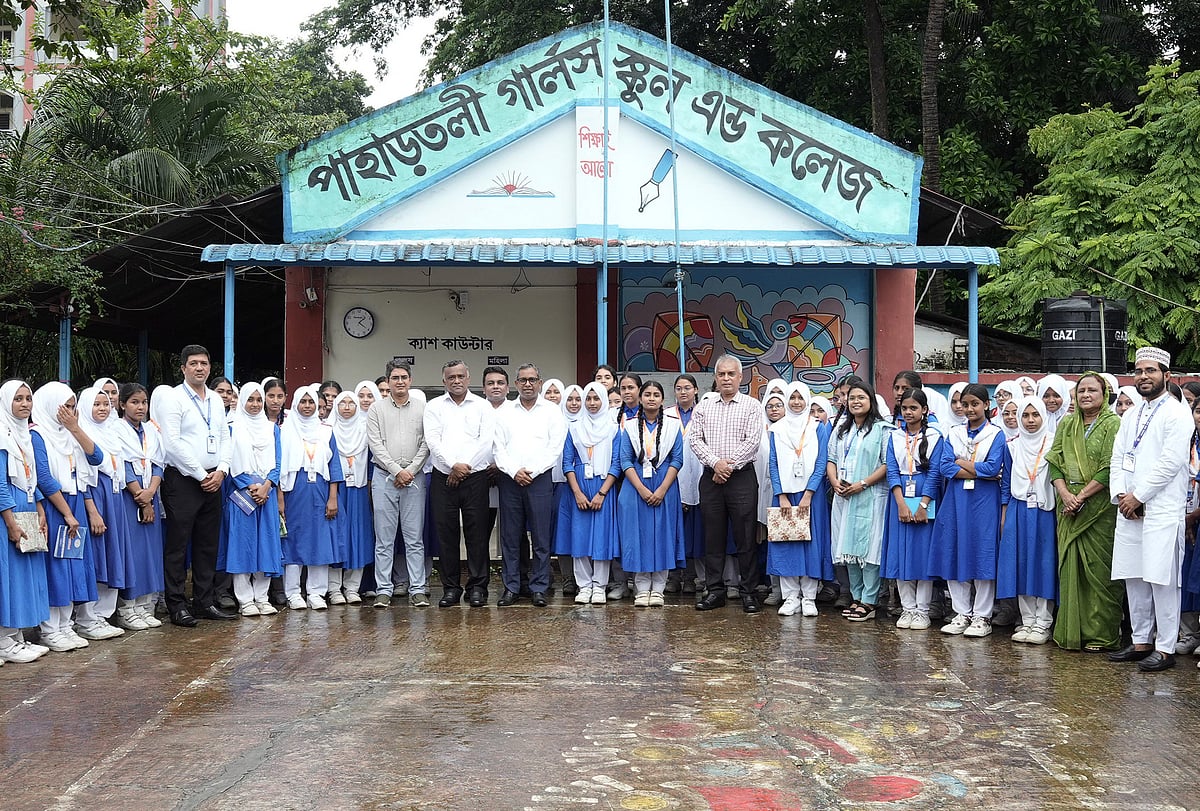
Unilever Bangladesh engages students to raise awareness on plastic waste management
Unilever Bangladesh Limited, one of the country's leading fast-moving consumer goods companies, has organised a special awareness programme at Pahartali Girls School and College in Chattogram in collaboration with Chattogram City Corporation (CCC) and Young Power in Social Action (YPSA), reports a press release.
The programme aimed to raise students' awareness of plastic waste management. Since 2022, the three organisations have been working to improve plastic waste management across the Chattogram City Corporation area. The event was part of this ongoing initiative.
Under the initiative, three-colour waste segregation bins have so far been installed at 111 schools and madrasas across the Chattogram City Corporation area. This is helping students gain a basic understanding of how to segregate waste by type and enabling them to practise the habit in their daily lives.
The awareness activities have reached more than 11,500 students from schools and madrasas. Workshops and awareness activities are also being organised with the participation of university teachers and students.
In addition, teachers and students receive regular training and the necessary support to share the message of plastic waste management with their families, friends and surrounding communities.
The initiative places particular emphasis on driving positive behavioural change across the broader community.
The programme at Pahartali Girls School and College was attended by Ruhul Quddus Khan, chief executive officer (CEO) and managing director (MD) of Unilever Bangladesh; SM Tarek Saifullah, factory director of Unilever Bangladesh Limited; and Md Arifur Rahman, founder and chief executive officer of Young Power in Social Action (YPSA), along with officials from the partner organisations.
During his discussion with the students, Ruhul Quddus Khan highlighted the harmful effects of plastic waste and the importance of proper plastic waste management.
He encouraged students to develop habits such as disposing of plastic waste in designated places, reducing plastic use, segregating waste and participating in clean-up activities.
Alongside institution-based awareness, the initiative is working to strengthen plastic waste collection and management while improving the capabilities and safety of people engaged in the sector.
Operating across all 41 wards of Chattogram city, the initiative has so far collected more than 35,000 tonnes of plastic waste. It has trained 3,000 waste workers and 220 scrap dealers in plastic waste management, health and safety, and basic business skills.
Nearly 2,000 waste workers have received safety gear, while 1,827 have been brought under group insurance coverage.
In addition, door-to-door awareness activities have reached approximately 28,000 households with messages on waste segregation and responsible plastic waste management.
Representatives of the organising institutions said that such activities would continue in the future to encourage the next generation to play a more active and responsible role in protecting the environment.