Ecology
Invasive alien turtle species in Hatirjheel, how they arrived, why concerns are rising
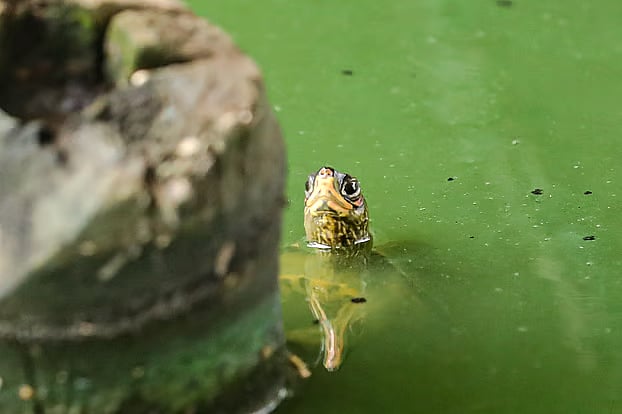
Amid the concrete landscape, Hatirjheel remains one of the largest aquatic ecosystems in Dhaka. However, in addition to various forms of pollution, this water body is now facing a new threat. The ‘red-eared slider’, one of the world's most aggressive invasive turtle species, has been spotted there.
Biodiversity experts warn that if not brought under control, this turtle could become a major crisis for the country's aquatic ecosystems, much like the suckermouth catfish (sakar fish).
These turtles were seen resting on tree roots, floating logs or other sunbathing spots across various parts of Hatirjheel. They have also been found in several other ponds in Dhaka.
Experts believe that many people who keep these turtles in aquariums as pets release them into water bodies like Hatirjheel once they grow too large. This is where the new danger begins.
Pet turtles, a threat to the nature
On 3 July, the Wildlife Crime Control Unit of the Forest Department conducted a raid in Mirpur in the capital and rescued 1,104 wild animals. Among them were 846 juvenile red-eared slider turtles. Additionally, 56 ‘common snapping turtles’, another invasive alien species, were rescued.
Officials from the Wildlife Crime Control Unit stated that these turtle species are entering Bangladesh illegally via airports through China and Thailand. A market for keeping alien turtles in aquariums has emerged among the middle- and the upper-class families in urban areas.
These turtles have been seen not only in Hatirjheel but also in several ponds at Dhaka University. These are omnivorous creatures. If they somehow spread into rivers, canals and other water bodies, they will pose a significant threat to the country’s aquatic ecosystems.Inspector Asim Mallik , Wildlife Crime Control Unit
However, after a few years, when the turtles grow large, many people no longer wish to keep them. They are then released into ponds, lakes or water bodies, causing long-term damage to the environment and nature.
Inspector Asim Mallik of the Wildlife Crime Control Unit, who led the raid, told Prothom Alo that these turtles have been seen not only in Hatirjheel but also in several ponds at Dhaka University.
Stating that these are omnivorous creatures, he reiterated the warning, saying if they somehow spread into rivers, canals and other water bodies, they will pose a significant threat to the country’s aquatic ecosystems.
Asim Mallik added that the common snapping turtles rescued from Mirpur are even more dangerous. While the red-eared slider typically weighs five to six kilograms, the common snapping turtle can weigh between 35 and 40 kilograms. Both species are omnivorous and extremely harmful.
Why this turtle is a cause for concern
The red-eared slider is native to the Mississippi River basin in the south-central United States. It is a medium-sized freshwater turtle.
The presence of this turtle in the university lake is very alarming. We have already seen how the suckermouth catfish has spread from the Buriganga to the Shitalakshya, Turag and even to the Meghna estuary.Professor MA Aziz, Zoology Department, Jahangirnagar University
According to the California Department of Fish and Wildlife website, its range extends from the Mississippi basin through the Gulf of Mexico to West Virginia. The website further notes that it is currently one of the most traded pet turtles in the world, popular globally as an ornamental aquarium animal.
This species can damage the ecosystems of other regions by consuming various aquatic plants and animals. Furthermore, the website states that these turtles are carriers of various pathogens and can spread these germs among native species.
A public health study conducted back in 1975 in the United States found evidence of Salmonella spreading to humans from this turtle species. A female turtle can lay eggs up to six times a year, with as many as 30 eggs per clutch.
The World Wildlife Fund (WWF), an international wildlife conservation organization, has warned on its website against releasing this species into the wild, stating that if these turtles are released outside their natural habitat, they can damage the local ecosystem.
Entering the country illegally
Wildlife Crime Control Unit Inspector Asim Mallik stated that an individual named Kazi Shahid Ullah Dastagir was arrested during the Mirpur raid. During initial interrogation, he revealed that the turtles were being stockpiled for sale both domestically and abroad. An investigation is underway to uncover his entire network.
A public health study conducted back in 1975 in the United States found evidence of Salmonella spreading to humans from this turtle species. A female turtle can lay eggs up to six times a year, with as many as 30 eggs per clutch.
Asim Mallik noted that various alien wild animals, including turtles, are entering the country via airports in luggage. Additionally, wildlife trafficking is occurring through land ports, sea ports and border routes.
According to the official, there is a lack of modern technology at airports to detect these animals. There is also a capacity gap in identifying and monitoring Facebook pages where these animals are bought and sold. This is why it is often not possible to take swift action.
A threat similar to the suckermouth catfish
Professor MA Aziz of the Zoology Department at Jahangirnagar University stated that such invasive species could bring about another severe environmental and natural disaster, similar to the suckermouth catfish (sakar fish).
He told Prothom Alo, "The presence of this turtle in the university lake is very alarming. We have already seen how the suckermouth catfish has spread from the Buriganga to the Shitalakshya, Turag and even to the Meghna estuary."
Stating that the spread of suckermouth catfish became evident during a year-long study, MA Aziz said the illegal import of these invasive species must be stopped immediately.
He also urged the government to bring online and Facebook-based trading pages under the law, increase surveillance at airports and land ports, and enhance capacity to identify these wild animals.
A few years ago, there was little discussion about suckermouth catfish in Hatirjheel. That fish has now spread beyond Dhaka to rivers and ponds across the country. Experts fear that the same scenario may unfold for the red-eared slider if action not taken in time.