Hasina’s plan to return to Bangladesh, extradition request are separate matters: India
India’s Ministry of External Affairs (MEA) has said that former Bangladesh prime minister Sheikh Hasina’s plan to return to her country voluntarily and Dhaka’s request for her extradition are two separate matters.
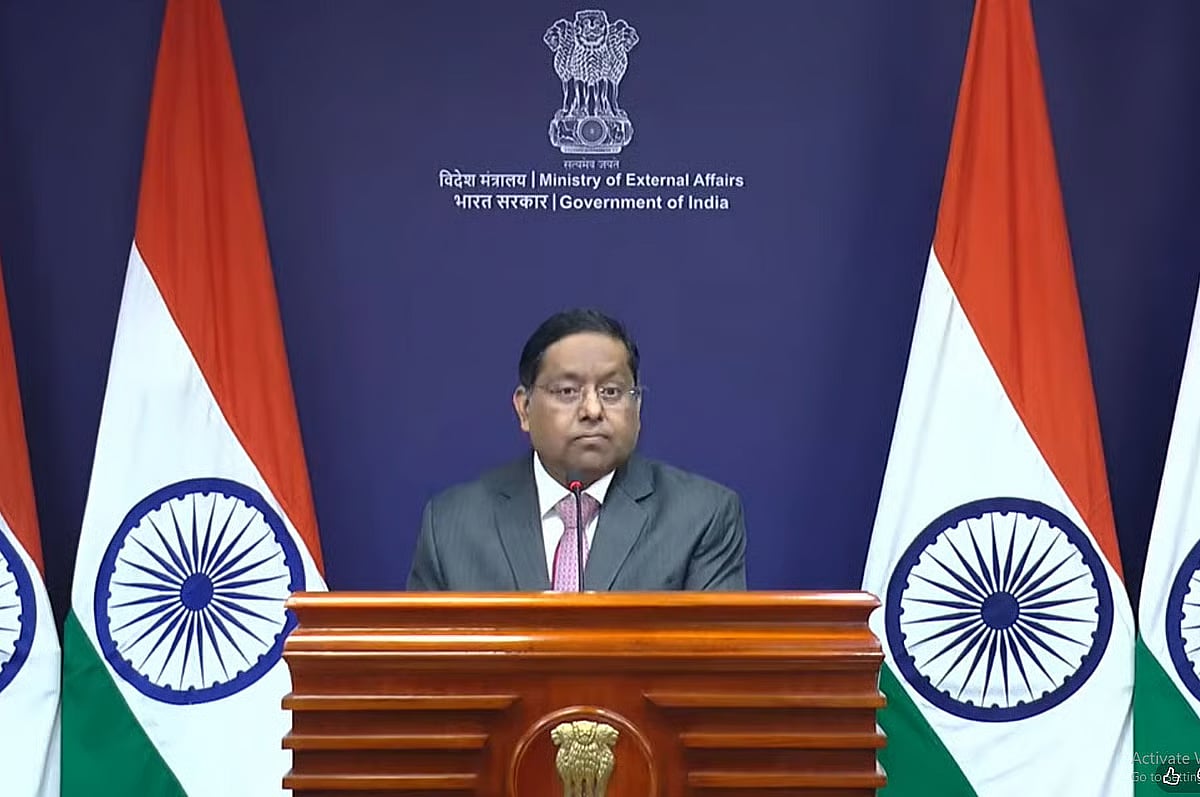
MEA spokesperson Randhir Jaiswal made the remarks in response to questions from journalists during a briefing at the ministry in New Delhi on Wednesday evening.
Jaiswal said there were two issues. One was the request for Hasina’s extradition, which was being examined in accordance with India’s established procedures. The other was a citizen wishing to return voluntarily to her country with the necessary travel documents. He said the latter was separate from the extradition request.
Sheikh Hasina fled to India on 5 August 2024 after being ousted from power amid a mass uprising. She has remained in India since then. On 17 November 2025, International Crimes Tribunal-1 sentenced her to death in a case involving crimes against humanity committed during the July mass uprising.
The Bangladesh government has repeatedly requested India to send Hasina back. It has also formally sought her return under the existing extradition treaty between the two countries.
A Reuters report published on Tuesday said Hasina, who has been living in India since her ouster, planned to return to Bangladesh on 16 December, according to her spokesperson. She has also requested that arrangements be made for a Biman Bangladesh Airlines aircraft, the national flag carrier, to bring her home from Delhi.
In response, the Bangladesh government said Hasina had been sentenced to death and must be returned under the extradition treaty. Prime Minister’s Adviser Zahed Ur Rahman said on Tuesday that the matter would be discussed with India.
Several questions were raised about the issue during Wednesday’s briefing at the Indian Ministry of External Affairs, including whether there had been any new developments regarding Hasina’s extradition.
In response, Jaiswal said the matter was being examined in accordance with established procedures.
A journalist also asked about reports that Hasina’s aides had said Bangladesh should send an aircraft to bring her back, while some members of the Bangladesh government had said she would be brought back in handcuffs.
Responding to these questions, Jaiswal said the matter concerned Bangladesh’s former prime minister and the country’s current government, and that India had no role to play in it.
He then explained the distinction between the two issues, saying that extradition and voluntary return to one's home country were separate matters.
During the briefing, journalists also asked about reported attacks on Hindu minorities in several parts of Bangladesh, including Narail and Pabna. One journalist mentioned that Narail was the ancestral home of the in-laws of former Indian president Pranab Mukherjee and asked how India viewed the violence.
In response, Jaiswal said attacks on Hindu minorities in Bangladesh were a matter of concern. He urged the Bangladesh government to thoroughly investigate all such incidents and bring those responsible to justice.
Following the incident in Narail, the district police issued a press release saying reports circulating on Facebook about vandalism, arson and looting of Hindu homes in Bendar Char village were false and fabricated. There are no Hindu settlements in the Bendar Char area, the statement said. It also said there had been no attacks on any Hindu families or their business establishments.
Journalists also raised the issue of Awami League leaders, whose political activities are banned in Bangladesh, travelling to the Benapole-Petrapole border crossing after taking refuge in India. They reportedly told the media that they planned to visit other land border crossings as well to assess the possibility of Hasina returning by land.
Jaiswal was asked whether the Indian government was playing a facilitating role in these visits.
He avoided answering the question directly, saying that matters concerning travel points were between Bangladesh’s former prime minister and the current government of Bangladesh
Jaiswal also had no new information to share regarding the renewal of the Ganges Water Sharing Treaty. Reiterating India's earlier position, he said decisions on the sharing of waters of the Ganges and all other transboundary rivers flowing through the two countries were taken through the established framework of the Joint Rivers Commission (JRC).
He was also asked about reports that the Indonesian Navy had intercepted a ship bound for Bangladesh, allegedly carrying large quantities of explosives and equipment for manufacturing weapons. Journalists asked whether India was aware of the matter.
In response, Jaiswal said the government had taken note of reports on the incident. He added that India closely monitors developments in neighbouring countries that may affect its security interests and takes appropriate measures when necessary.