Bangladeshi patients in distress as authorities tighten restrictions on Kolkata hotels, guest houses
It felt as though a great misfortune had struck Md Rafiqul from Netrokona. Exactly one month ago, when his elder brother Shafiqul was diagnosed with cancer, local physicians advised chemotherapy.
It was decided that he would be taken to a hospital in Kolkata for treatment. With great difficulty, medical visas were obtained, and somehow managing the necessary funds, Rafiqul arrived in Kolkata at the end of August with his patient brother and his wife, Salma Begum.
They checked into a guest house in Central Kolkata. They did not have to wait long; Shafiqul was discharged after spending a night in the hospital to receive his chemotherapy. They were scheduled to stay at the same guest house for three more days for a few additional tests. However, despite having accepted an advance payment, the guest house owner forced them to vacate on the very first night.
Protests proved futile; around 10:30 pm, the guest house owner handed back the remaining money and turned them all out into the street with their luggage. Out of options, they were forced to lay out plastic sheets on the pavement to make a bed for the patient and themselves for the night.
Even after morning came, desperate attempts to book other nearby guest houses or hotels yielded little success. It was found that most guest houses adjacent to the hospital were locked, with pieces of white paper bearing the word "CLOSED" stuck to the doors.
Those guest houses that remained open had suddenly hiked their tariffs several-fold. Finding no way out, not only the patient but the entire family ended up taking shelter on the pavement.
Reliving the ordeal, Rafiqul, who is in his mid-50’s, broke into tears. He kept asking repeatedly, "Why is this being done to us? What is our crime?"
Over the last decade and a half, several state-of-the-art corporate hospitals have emerged around the EM Bypass in eastern Kolkata. The list includes Ruby, Desun, Fortis, Manipal, Narayana R.N. Tagore, and Peerless. In early 2024, Bangladeshi nationals accounted for 15 to 20 per cent of the patients receiving treatment at these medical facilities.
This scene was not confined to Central Kolkata alone; a similar picture was witnessed over three weeks across areas adjacent to major corporate hospitals—including Desun, Manipal, Peerless, and Narayana R.N. Tagore—along the Eastern Metropolitan (EM) Bypass on the eastern fringes of the city.
Local residents said that several guest houses and hotels have been temporarily shut down following administrative orders. It has been learnt that during a drive conducted by the Kolkata Municipal Corporation (KMC), only 41 hotels managed to meet the preliminary fire safety standards.
Seizing the opportunity, these municipal-cleared guest houses are charging exorbitant rents, taking advantage of Bangladeshi medical tourists caught in a bind. Low-income patients arriving from Bangladesh and their relatives have been the hardest hit. They had never imagined encountering such a plight in a foreign land.
On 19 August, a devastating fire at a private hotel on Marquis Street in Central Kolkata claimed nine lives, including at least seven Bangladeshi nationals, raising grave questions about the city's hotel safety mechanisms.
Investigations revealed that the hotel lacked valid approvals across multiple areas, including fire safety clearances. In the wake of this incident, the Kolkata Municipal Corporation launched a massive inspection drive to regulate unauthorised hotel and guest house businesses across the city.
After inspecting 960 hotels and guest houses during the drive, the KMC issued notices against 919 establishments, ordering their temporary closure.
Administrative scrutiny intensified particularly over small and budget hotels situated in densely populated areas such as Park Street, Esplanade, Marquis Street, Lindsay Street, Sudder Street, and Collin Lane.
The closure of budget guest houses and the resulting lack of accommodation are forcing Bangladeshi people to look elsewhere. Many of them are now reportedly showing interest in travelling to cities such as Delhi, Chennai, and Bengaluru for treatment.
The drive uncovered several guest houses operating without approval in mixed-use buildings for years. Due to the absence of fire safety compliance and other essential licences, the main entrances of most of these establishments have been padlocked by the municipality.
Regarding the matter, Kolkata Municipal Commissioner Smita Pandey made it clear that no compromise would be made on public safety.
Over the last decade and a half, several state-of-the-art corporate hospitals have emerged around the EM Bypass in eastern Kolkata. The list includes Ruby, Desun, Fortis, Manipal, Narayana R.N. Tagore, and Peerless.
In early 2024, Bangladeshi nationals accounted for 15 to 20 per cent of the patients receiving treatment at these medical facilities. Following July of that year, internal political instability in Bangladesh hampered the trend of patients travelling to India for medical treatment.
Following the political transition, a minor rift in Bangladesh-India diplomatic relations led to a significant decline in patient numbers. Finally, the precautionary measures enforced by the administration in the wake of the Central Kolkata fire have caused Bangladeshi citizens to lose interest in seeking medical care in the West Bengal capital.
The closure of budget guest houses and the resulting lack of accommodation are forcing Bangladeshi people to look elsewhere. Many of them are now reportedly showing interest in travelling to cities such as Delhi, Chennai, and Bengaluru for treatment.
Just as signs of recovering from the business slump began to appear, the state government's decree disrupted it all. Now there is no choice left but to wind up the business altogether.A tour operator on Collin Street, Kolkata
To tackle this severe crisis in the medical tourism sector, Kolkata’s corporate hospitals have already stepped into action. Hospital authorities have entered into agreements with several approved guest houses to arrange accommodation for Bangladeshi patients visiting Kolkata.
Furthermore, to instill confidence in prospective patients, hospital officials are dispatching their own teams to Bangladesh.
In a recent interview given to an all-India newspaper published from Kolkata, Rupak Barua, CEO of Woodlands Hospital, stated, "We will explain to them the importance of staying in safe hotels. Over the next two weeks, a list of several guest houses and hotels in the Alipore area will be sent to those coming to our hospital for treatment.”
“This arrangement is being made in consultation with the Bangladesh High Commission so that they can book their accommodation prior to departure. Many have already made bookings, while others have sought our assistance in this regard,” he added.
Rents at guest houses and hotels in Alipore, known as an upmarket locality of Kolkata, are quite steep. Consequently, small budget hotels and guest houses had become the main reliance for Bangladeshis.
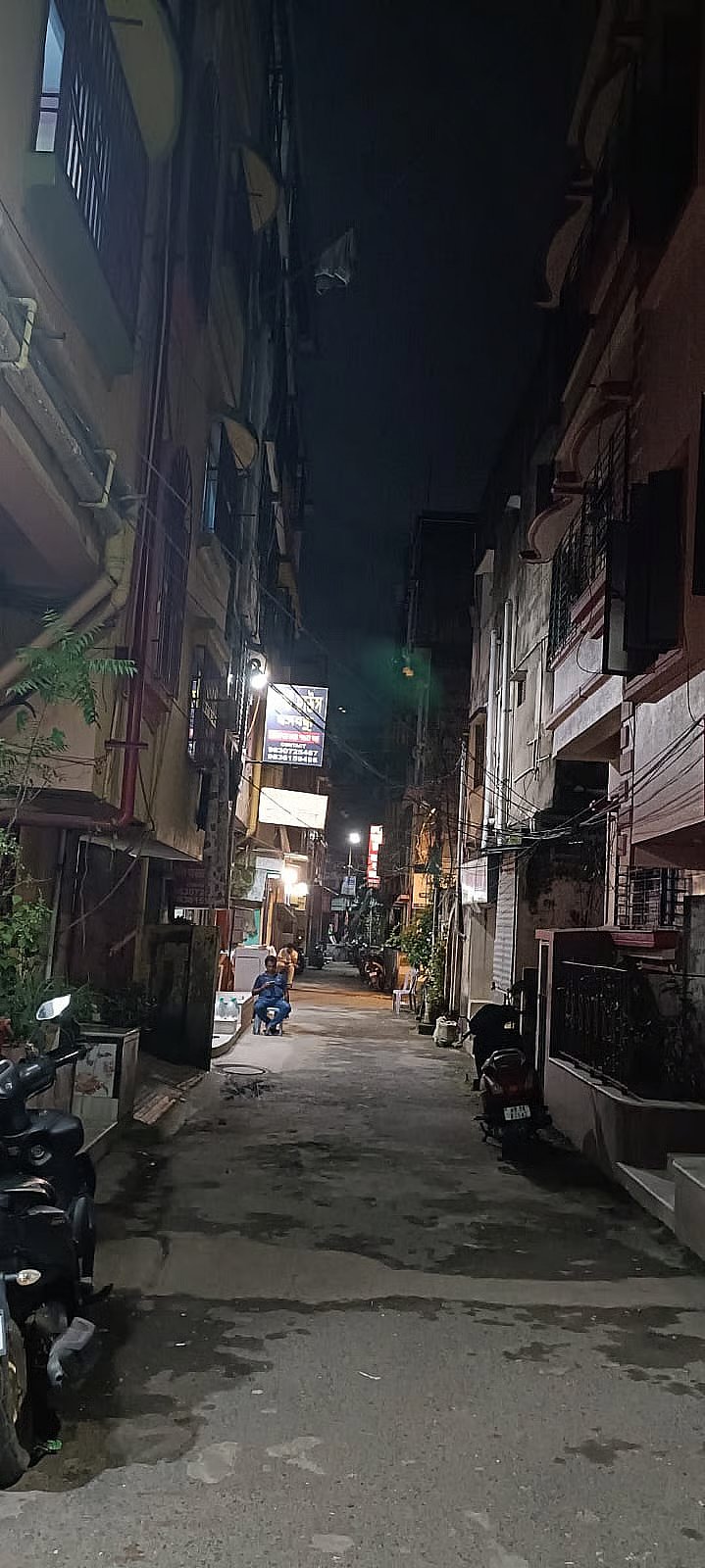
Numerous low-cost guest houses and small hotels had sprung up primarily to cater to Bangladeshi patients in areas such as Marquis Street, Free School Street, Sudder Street, EM Bypass, Garia, Santoshpur, Mukundapur, Patuli, and Kalindi.
However, due to the municipality's recent crackdowns, owners of these guest houses are now forced to keep their doors shut. Fire brigade authorities are demanding structural blueprints of 100 to 150-year-old buildings to issue fire safety clearances, which has proven extremely difficult to procure. As a result, despite a willingness to make necessary structural modifications, their future hangs in the balance due to legal and documentation complications.
Nevertheless, out of respect for the law, business owners have temporarily halted operations and are counting the days in anticipation of a swift resolution so that the city's tourism and commerce can return to normalcy.
The Mukundapur region adjacent to the EM Bypass houses numerous guest houses tailored for Bangladeshi visitors. Ranjan Paik, manager of one such guest house in Sarkarpara near the Narayana R.N. Tagore Hospital, shared that municipal inspectors raided at least 30 guest houses and hotels across local areas like Stadium Nagar and Sarkarpara. Several owners were unable to produce valid fire safety certificates, police clearance certificates, or trade licences before the officials.
According to him, the KMC directed them to keep the guest houses closed until valid documentation is secured.
Ranjan Paik claimed that because obtaining all required documents through official channels threatens to be a lengthy process, most owners are being forced into illegal financial compromises with a section of municipal officials to save their businesses. In this context, an unofficial "package deal" of Rs 100,000 is reportedly in operation.
Meanwhile, with guest houses padlocked, eateries, pharmacies, and foreign exchange counters are also on the verge of ruin. Due to political turmoil, the influx of Bangladeshi patients into Kolkata hospitals had already begun to ebb toward the end of 2024.
However, as diplomatic relations between India and Bangladesh improved over recent months, the crowd of patients from the neighbouring country had begun to swell once again.
Recent administrative actions have poured cold water on hopes for a revival in the hospital and ancillary sectors. Understandably, this has dampened the spirits of small business owners, including eatery operators, currency exchangers, and travel agents.
When asked about the situation, a tour operator on Collin Street expressed clear annoyance.
Speaking in a harsh tone, he remarked, "Just as signs of recovering from the business slump began to appear, the state government's decree disrupted it all. Now there is no choice left but to wind up the business altogether."