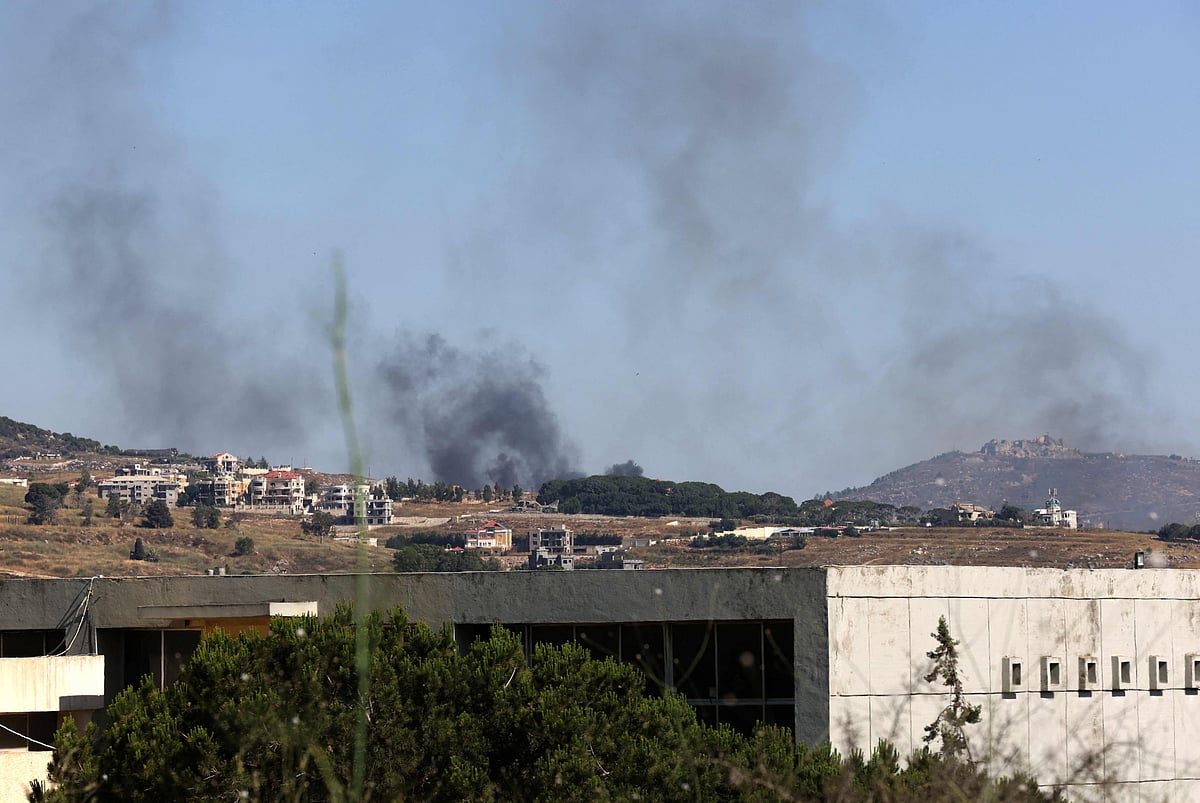
Lebanon says 18 killed in strikes, Israel reports deaths of 4 soldiers
Lebanon said 18 people were killed Friday in Israeli airstrikes in the south, while Israel's military reported its first soldiers killed there since the sealing of a US-Iran deal to halt the Middle East war, including in Lebanon.
Israel had said it was striking Hezbollah targets overnight and into the morning, while the Iran-backed militant group said it was attacking Israeli forces around the southern town of Nabatieh.
"The intensive Israeli airstrikes carried out from midnight until this morning have prevented the evacuation of the martyrs and wounded, and have resulted in a preliminary toll of 18 martyrs and 33 wounded" in at least 10 villages and towns, the Lebanese health ministry said.
The strikes were the deadliest since Iran and the United States agreed to halt the wider Middle East war on Monday.
The Israeli military, meanwhile, said Lieutenant Colonel Dor Gedalia Ben Simhon had "fallen in combat" along with three other soldiers it did not immediately identify.
In a separate statement it reported a reserve officer was severely wounded "as a result of an explosive drone impact in southern Lebanon", with four other soldiers lightly injured in the incident.
The soldiers' deaths prompted a furious reaction from far-right Israeli National Security Minister Itamar Ben Gvir.
"With all due respect to the Americans, Israel must make it clear to the entire world that the blood of our sons and the security of our citizens are not up for bargaining. All of Lebanon must burn," Ben Gvir said in a statement.
US officials including President Donald Trump have expressed frustration at Israel's campaign in Lebanon, which it has pursued in spite of the US's negotiations with Iran, as well as a separate ceasefire agreed in April that was meant to halt the fighting there.
The Israeli military had said in an earlier statement that it was carrying out strikes in response to "repeated violations of the ceasefire" by Hezbollah.
"During the night, the army struck and continues to strike Hezbollah terrorists and infrastructure in several areas in southern Lebanon," it said.
Hezbollah said early Friday that it had targeted Israeli troops "with a barrage of rockets and mortar shells" near the Ali al-Taher hills, a strategic feature overlooking the town of Nabatieh.
It had also reported attacking Israeli tanks, saying forces "consisting of an armoured platoon and an infantry platoon (tried) to infiltrate towards the northern side of the Ali al-Taher hills".
"The clashes are still ongoing," it said.
Hezbollah drew Lebanon into the Middle East war in early March by attacking Israel to avenge the killing of Iran's supreme leader at the start of the US-Israeli military campaign.
Israel retaliated with broad strikes across Lebanon and by launching a ground invasion in the south, which borders Israel and has long been under Hezbollah's sway.
The hostilities have continued despite the US-Iran agreement.
On Thursday, Hezbollah said it had been fighting Israeli forces attempting to advance from the town of Arnoun towards the outskirts of Kfar Tibnit, also near Nabatieh.