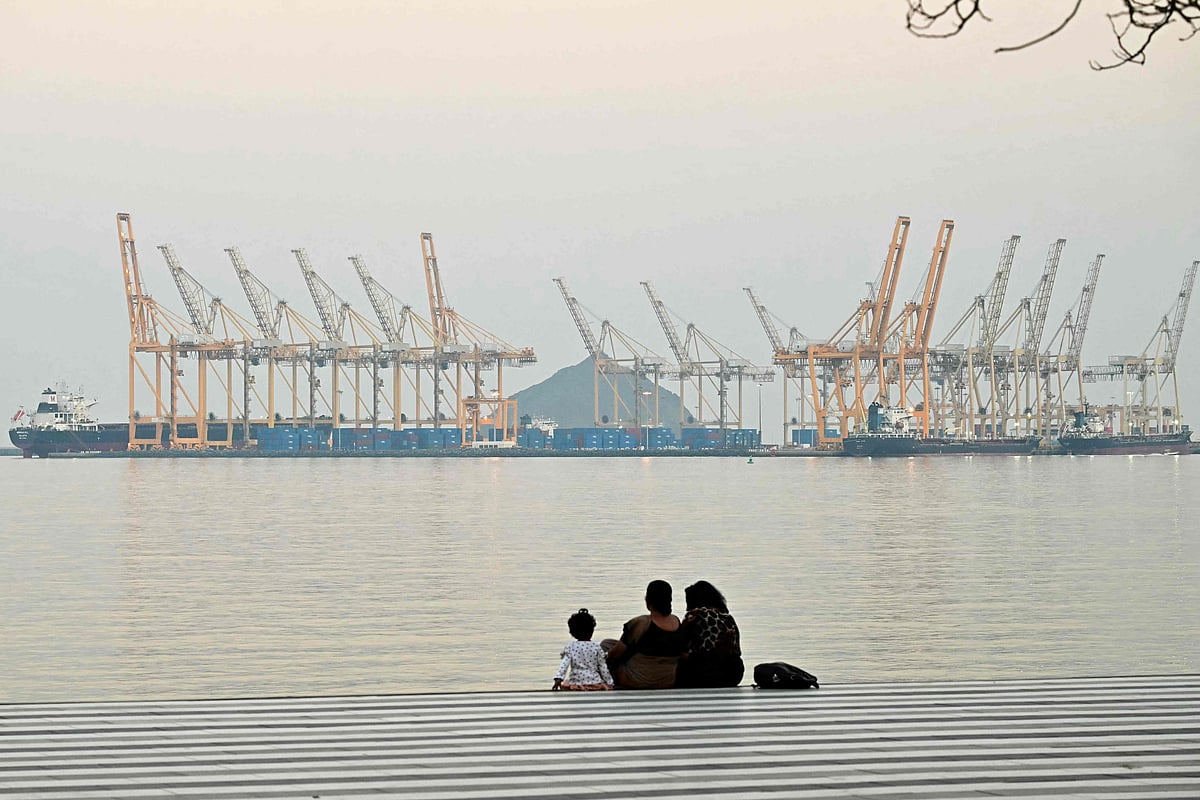
Shipping companies tell vessels to steer clear of Gulf
Two major shipping groups on Saturday suspended navigation through the Gulf as conflict flared between the United States, Israel and Iran, piling onto a growing maritime slowdown in the region.
The announcements came as Iran’s Revolutionary Guards had warned several ships that the Strait of Hormuz, the vital waterway for oil from the Gulf, was “basically closed”, Iran’s Tasnim news agency reported.
France’s CMA CGM issued a statement telling its vessels in the Gulf to “take shelter” and also suspended passage through the Suez Canal because of the regional conflict.
“All ships currently in the Gulf, or on route to the Gulf, have received the instruction, with immediate effect, to take shelter,” said the statement from CMA CGM, the world’s third-largest container shipping company.
“Passage through the Suez is suspended until further notice and ships will be rerouted around the Cape of Good Hope,” which would prolong the journey by thousands of kilometres, the statement added.
Hapag-Lloyd, the world’s fifth-largest container shipping company, said it was suspending all transit through the Strait of Hormuz, which connects the Gulf to the open seas, “until further notice.”
Several shipping lines, including Danish giant Maersk, warned clients of possible delivery delays as ships re-routed.
The United States for its part warned ships to stay away from the Gulf due to ongoing military activity.
The strait, which Iranian officials have often threatened to block in the event of a US attack, is a key transit point for global oil trade.
According to data from maritime analytics site Marine Tracker, traffic through the trade artery has plummeted and a slew of oil tankers have turned around or been stopped at the strait.
The EU’s naval mission to the Red Sea confirmed that vessels had received radio messages from the IRGC saying the Strait was blocked to traffic, despite no formal closure order.
The Strait of Hormuz is frequently the scene of ship seizures and attacks.
The vital corridor links the Gulf to the Indian Ocean and is situated between Iran and Oman’s Musandam exclave, situated at the tip of a peninsula.
Shipping association BIMCO said that commercial ships with Israeli or American ties could be at risk of being targeted.
Approximately 20 million barrels of crude oil passed through the narrow waterway daily in 2024, equivalent to nearly 20 percent of global liquid oil consumption, according to the US Energy Information Administration (EIA).
Airlines continued to suspend flights across parts of the Middle East on Sunday, as AFP reporters in Tehran said they heard fresh strikes in the Iranian capital—the source of which was not immediately clear.