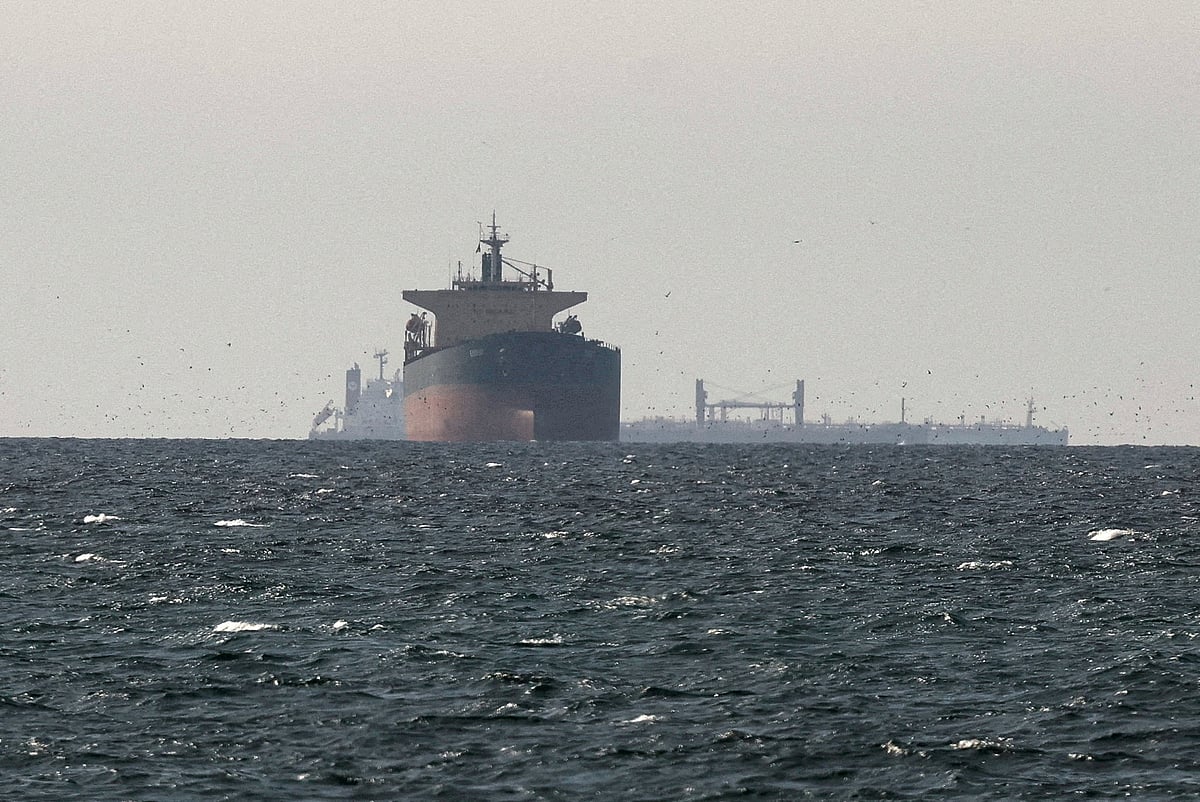
Oman says Hormuz talks with Iran, Gulf states postponed
Oman has announced the postponement of a meeting Monday between Iran and Gulf countries on the Strait of Hormuz, the major flashpoint in the Middle East war.
Iran’s foreign ministry had said there would be a meeting hosted by Oman where the future of the strait, vital for global oil and gas flows, would be negotiated.
Tehran said Iraq and Gulf countries would take part, without specifying which states, but no country in the region had confirmed its participation while Bahrain ruled out attending.
“It has been decided to postpone to a later date the regional meeting that was to be held on Monday in Salalah, in order to create conditions conducive to a constructive dialogue,” the Oman News Agency said on Sunday.
Omani Foreign Minister Badr Albusaidi said on X that “we remain determined to promote dialogue that contributes to stability and lasting cooperation in our region”.
The Strait of Hormuz has been subjected to an Iranian and a later US blockade since 28 February when the US and Israel launched strikes on Iran, prompting a wider war across the region.
A June accord between Washington and Tehran faltered on disagreements over Hormuz, and a blistering offensive in recent days by Yemen’s Houthi rebels has given the Tehran-allied group leverage over a second critical waterway, the Bab al-Mandab.
More than six months into the Middle East war, the Hormuz blockade continues to drive up oil prices, which soared past $100 a barrel this week.
Oman and Iran have been discussing for several weeks how to manage the crucial waterway.
The strait was free to transit before the war, but Iran now requires vessels to obtain permission and is considering a mechanism to impose service fees.
Ships that do not comply are regularly targeted by Iranian strikes, while the United States periodically bombs the Iranian coastline to challenge the Islamic republic’s control of the strait.