Israel hits Iran petrochemical complex after Trump threats
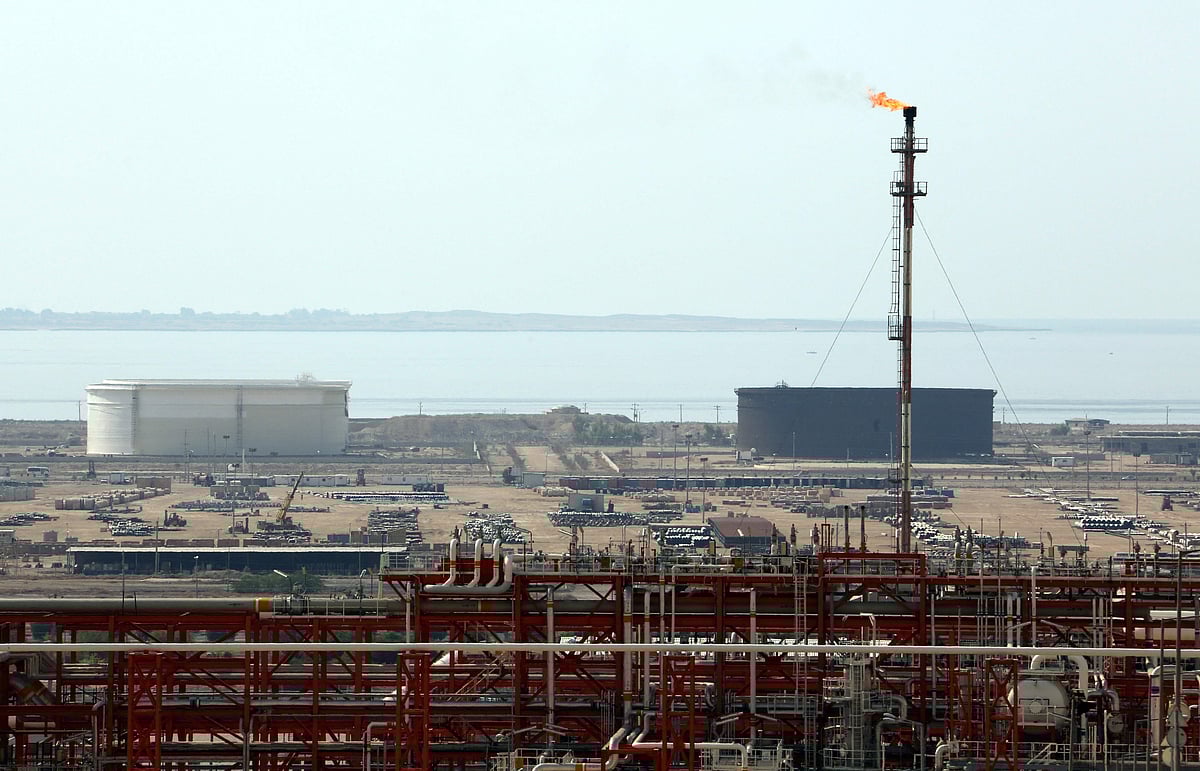
Israeli strikes hit Iran’s largest petrochemical complex Monday, as the Islamic republic defied threats from US President Donald Trump to devastate civilian infrastructure if it does not reopen the Strait of Hormuz.
The White House said Trump has yet to approve any draft deal to end fighting, following media reports on a possible ceasefire proposal.
A 45-day ceasefire is “one of many ideas, and POTUS (Trump) has not signed off on it,” a White House official told AFP, ahead of a press conference by Trump at 1700 GMT at which he is due to address the conflict.
Trump had given Iran until 0000 GMT Wednesday to open the Strait of Hormuz, a waterway that is crucial to global oil and gas flows, or else face strikes on bridges and power plants.
In a stark, expletive-laden social media post on Sunday, Trump demanded: “Open the Fuckin’ Strait, you crazy bastards, or you’ll be living in Hell.”
Iran has remained defiant, with an army spokesman saying on Monday that the Islamic republic would keep fighting “‘as long as political leaders deem it appropriate”.
Strikes by Israel killed senior Iranian Revolutionary Guards commanders, while Iran hit back across the region with drones and missiles, warning of “much more devastating” attacks should Trump follow through on his threat.
Iran virtual blockade of Hormuz has sent oil and gas prices soaring and pushed countries around the world to enact measures to contain the fallout.
The Revolutionary Guards, however, said Hormuz “will never return to its former status, especially for the US and Israel”.
Strikes
On Monday, Israel said it had struck Iran’s largest petrochemical facility in Assaluyeh on Iran’s Gulf coast, where local media reported multiple explosions.
Iran’s National Petrochemical Company said it was assessing the damage after a fire was brought under control at the plant, state media reported.
Israeli Defence Minister Israel Katz said it accounted for about 50 per cent of Iranian petrochemical production worth “tens of billions of dollars”.
Iranian media reported “minor damage” after a second complex near Shiraz in central Iran was also hit.
Meanwhile International Atomic Energy Agency (IAEA) chief Rafael Grossi warned against further strikes near Iran’s Bushehr nuclear plant, saying one recent impact hit just 75 metres (245 feet) from the perimeter.
Israel targets Guards chiefs
Iran’s Guards posted on Telegram Monday that their intelligence chief Majid Khademi had been killed at dawn in US-Israeli strikes.
“We will reach anyone who seeks to harm us,” Israeli Prime Minister Benjamin Netanyahu said, after Katz confirmed the country’s military was behind the strike.
Israel’s military also said it had killed Asghar Bagheri, commander of the Guards’ Quds Force special operations unit, on Sunday.
Bagheri “was involved in attacks targeting Israeli and American individuals worldwide,” a military statement said.
While the violence continued to spiral, reports signalled a potential push to halt the fighting.
Citing US, Israeli and regional sources, US news website Axios said a deal mediated by Pakistan, Egypt and Turkey for a 45-day ceasefire to allow for negotiations on a more permanent peace was under discussion.
Egypt’s Foreign Minister Badr Abdelatty had on Sunday confirmed he was engaging in talks with governments across the region as well as US envoy Steve Witkoff and Iran’s Foreign Minister Abbas Araghchi.
Iran has repeatedly denied it is engaged in any negotiations with the US or Israel.
Oil squeeze
The war, which erupted on 28 February with US-Israeli strikes on Iran that killed supreme leader Ayatollah Ali Khamenei, has engulfed the Middle East and roiled the global economy.
The worldwide oil squeeze has hit aviation, with Indonesia on Monday saying it would increase a jet fuel surcharge and low-cost carrier Air Asia X announcing ticket price hikes of up to 40 per cent.
South Korea will send ships to fetch oil from Saudi Arabia’s Red Sea port of Yanbu, avoiding Hormuz altogether, a ruling party MP said, while Taiwan’s government said it too would take the Red Sea route.
Gulf nations allied with the US have also been sucked into the war. From Sunday to Monday they reported a wave of fresh strikes, with Kuwait saying six were hurt in an attack on a residential area.
The UAE said Monday its air defences were responding to a missile and drone attack, and that one person was injured in an industrial area of Abu Dhabi.
Iran has continued to launch attacks at Israel, where the military and medics said four bodies were recovered from a residential building in the northern city of Haifa that was struck by a missile.
Iranian media reported several attacks on residential areas of Tehran, while the state broadcaster said gas outages hit parts of the capital after a strike on a university.
On another front, Lebanon has increasingly been dragged into the war since the Iran-backed armed group Hezbollah targeted Israel on 2 March.
Israel has struck back and invaded parts of southern Lebanon, with army chief Lieutenant General Eyal Zamir visiting troops there Sunday and pledging to intensify strikes.
AFP journalists saw a large plume of smoke rising over Beirut’s southern suburbs on Monday after an Israeli strike that the army said targeted Hezbollah.